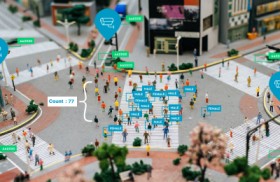
AI-based video analytics refers to the use of artificial intelligence (AI) techniques to analyze and extract valuable insights from video data. This technology has gained significant attention across various industries due to its ability to automate tasks, improve efficiency, and enhance security. In this essay, we’ll explore what AI-based video analytics is, how it works, and its applications across different sectors.
What is AI-Based Video Analytics?
AI video analytics software involves the application of machine learning algorithms to analyze video content and extract useful information automatically. It enables computers to understand, interpret, and derive meaning from visual data, much like how humans perceive and comprehend images and videos.
The core components of AI-based video analytics include computer vision, deep learning, and data analytics techniques. Computer vision algorithms process raw video feeds, extract relevant features, and identify objects, patterns, or anomalies within the footage. Deep learning models, particularly convolutional neural networks (CNNs), are commonly used for tasks such as object detection, tracking, and recognition. Data analytics algorithms then analyze the extracted information to generate insights and actionable intelligence.
How Does AI-Based Video Analytics Work?
AI-based video analytics typically follows a multi-step process:
- Data Acquisition: The first step involves collecting video data from various sources, such as surveillance cameras, drones, or video streams. This data may be stored locally or in the cloud.
- Preprocessing: Raw video data often contains noise, irrelevant information, or inconsistencies. Preprocessing techniques such as noise reduction, stabilization, and frame alignment are applied to enhance the quality and usability of the footage.
- Feature Extraction: Computer vision algorithms analyze the preprocessed video frames to extract meaningful features, such as objects, shapes, textures, and motion patterns. Techniques like edge detection, optical flow estimation, and feature point detection are utilized for this purpose.
- Object Detection and Recognition: Deep learning models, particularly CNNs, are employed to detect and recognize objects within the video frames. These models are trained on large datasets to accurately identify specific objects, people, vehicles, or other entities of interest. Object detection algorithms localize objects by drawing bounding boxes around them, while recognition algorithms classify them into predefined categories.
- Tracking and Analysis: Once objects are detected, tracking algorithms monitor their movement and behavior over time. This enables the system to analyze trajectories, interactions, and anomalies within the video footage. Advanced tracking techniques incorporate motion prediction, Kalman filtering, and data association methods to maintain accurate object identities across frames.
- Event Detection and Alert Generation: AI algorithms analyze the tracked objects and their interactions to detect events or anomalies of interest, such as security breaches, traffic congestions, or crowd disturbances. When an event is detected, the system generates alerts or notifications to inform operators or trigger automated responses.
- Post-Processing and Reporting: The final step involves post-processing the analyzed data to generate insights, statistics, or visualizations. Reports, dashboards, or interactive interfaces may be created to present the findings in a comprehensible format for decision-makers.
Applications of AI-Based Video Analytics
AI-based video analytics has a wide range of applications across various industries:
- Surveillance and Security: It is extensively used for real-time monitoring of public spaces, airports, critical infrastructure, and commercial premises to detect and prevent security threats, unauthorized access, or suspicious activities.
- Traffic Management: AI-based video analytics optimizes traffic flow, detects traffic violations, and monitors road conditions to improve safety and efficiency on highways, urban streets, and intersections.
- Retail Analytics: Retailers utilize video analytics to analyze customer behavior, track foot traffic, and optimize store layouts for better product placement and marketing strategies. It also helps in preventing theft and reducing shrinkage.
- Smart Cities: In smart city initiatives, video analytics is employed for various purposes such as managing public transportation, monitoring environmental conditions, enhancing urban planning, and ensuring public safety.
- Healthcare: Video analytics assists healthcare providers in monitoring patient activities, ensuring compliance with medical protocols, and enhancing security within healthcare facilities.
- Industrial Automation: In industrial settings, video analytics is used for quality control, monitoring production processes, ensuring worker safety, and detecting equipment failures or anomalies.
- Entertainment and Media: In the entertainment industry, video analytics is utilized for content recommendation, audience engagement analysis, and personalized advertising.
Conclusion
AI-based video analytics harnesses the power of artificial intelligence and computer vision to analyze video data and extract valuable insights automatically. By leveraging advanced algorithms and deep learning techniques, it enables real-time monitoring, event detection, and intelligent decision-making across various sectors including security, transportation, retail, healthcare, and entertainment. With ongoing advancements in AI technology, the potential applications of video analytics continue to expand, driving innovation and efficiency across industries.
 Nextbrain Technologies