In today’s digital age, libraries and museums are evolving from traditional repositories of knowledge and artifacts into dynamic spaces for learning, engagement, and community interaction. As these institutions strive to enhance visitor experience and operational efficiency, the integration of advanced technologies like People Counting software is becoming increasingly essential. This in-depth analysis explores how People Counting software can transform libraries and museums, focusing on its benefits, implementation challenges, and the future outlook.
Benefits of People Counting Software:
Improved Visitor Experience
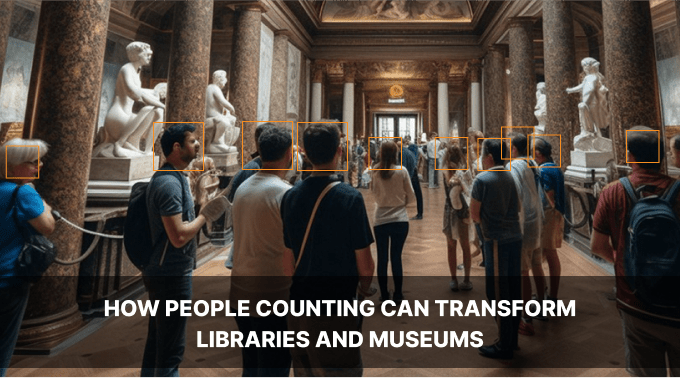
People Counting software enables libraries and museums to gather accurate data on visitor numbers and behaviors. By analyzing this data, institutions can optimize their spaces to enhance the visitor experience. For example, understanding peak visiting hours can help in scheduling additional staff or planning events that cater to larger audiences. Additionally, heat maps generated by these systems can identify popular exhibits or sections, allowing for better space utilization and crowd management.
Operational Efficiency
Accurate visitor data helps in streamlining operations. For instance, libraries can adjust their book restocking schedules based on foot traffic patterns, ensuring that popular books are always available. Museums can use this data to schedule cleaning and maintenance activities during low-traffic periods, minimizing disruptions to visitors. Moreover, insights into visitor flows can aid in the strategic placement of amenities like restrooms and cafes, enhancing overall operational efficiency.
Enhanced Safety and Security
People Counting software contributes to the safety and security of visitors. In emergency situations, real-time data on the number of people in different areas of the facility can be crucial for efficient evacuation. Furthermore, monitoring visitor numbers helps in maintaining compliance with safety regulations regarding maximum occupancy limits, ensuring a safe environment for all.
Data-Driven Decision Making
The data collected through People Counting systems provides a solid foundation for strategic decision-making. Libraries and museums can leverage this data to justify funding requests, plan future expansions, or modify existing exhibits based on visitor engagement levels. Data-driven insights can also support targeted marketing efforts, identifying demographic trends and visitor preferences to tailor promotional activities effectively.
Enhanced Funding and Sponsorship Opportunities
Quantifiable visitor data can be instrumental in securing funding and sponsorships. Potential donors and sponsors are more likely to invest in institutions that can demonstrate high visitor engagement and effective use of space. Detailed analytics from People Counting software can showcase the impact and reach of the institution, making a compelling case for financial support.
Implementation Challenges:
Initial Costs and Integration
One of the primary challenges in implementing People Counting software is the initial cost. High-quality sensors and sophisticated analytics platforms require a significant investment. Additionally, integrating this software with existing systems can be complex, requiring technical expertise and potentially leading to temporary disruptions in operations.
Privacy Concerns
The collection of visitor data raises privacy concerns, particularly in terms of how the data is stored, used, and protected. Institutions must ensure compliance with data protection regulations and implement robust security measures to safeguard visitor information. Transparent communication with visitors about data collection practices is also essential to maintain trust.
Data Accuracy and Reliability
The accuracy of People Counting software can be affected by various factors such as lighting conditions, the layout of the space, and the movement patterns of visitors. Ensuring high accuracy requires regular calibration and maintenance of the sensors, which can be resource-intensive. Additionally, discrepancies in data can lead to incorrect insights, affecting decision-making processes.
Staff Training and Adaptation
Implementing People Counting software necessitates training staff to use the new systems effectively. This includes not only technical training but also educating staff on interpreting data and integrating insights into daily operations. The adaptation period can be challenging, requiring time and effort to achieve a seamless transition.
Future Outlook:
Integration with Advanced Technologies
The future of People Counting software lies in its integration with other advanced technologies such as artificial intelligence (AI), the Internet of Things (IoT), and augmented reality (AR). AI can enhance data analytics capabilities, providing deeper insights into visitor behaviors and preferences. IoT devices can offer real-time data collection and monitoring, while AR can create interactive and immersive experiences based on visitor data.
Personalized Visitor Experiences
As People Counting software evolves, it can enable more personalized visitor experiences. For example, by tracking visitor preferences and behaviors, libraries and museums can offer tailored recommendations for exhibits, books, or events. This level of personalization can significantly enhance visitor satisfaction and engagement.
Sustainable Operations
Data from People Counting software can support sustainability initiatives. By understanding visitor patterns, institutions can optimize energy usage, reducing lighting, heating, or cooling in areas with low traffic. This not only lowers operational costs but also contributes to environmental conservation efforts.
Enhanced Community Engagement
People Counting data can help libraries and museums to better understand their communities and tailor their offerings accordingly. By identifying trends and preferences within different demographic groups, these institutions can design programs and exhibits that resonate more deeply with their audiences, fostering stronger community connections.
Global Benchmarking and Collaboration
With the widespread adoption of People Counting software, libraries and museums can engage in global benchmarking, comparing their performance and visitor engagement metrics with similar institutions worldwide. This can foster collaboration, knowledge sharing, and the adoption of best practices across the cultural sector.
Conclusion:
The integration of People Counting in libraries and museums holds transformative potential. By providing accurate data on visitor numbers and behaviors, it enables these institutions to enhance visitor experiences, streamline operations, ensure safety, and make informed strategic decisions. While challenges such as initial costs, privacy concerns, and data accuracy need to be addressed, the benefits far outweigh the drawbacks. As technology continues to advance, People Counting software will play an increasingly vital role in shaping the future of libraries and museums, driving innovation, sustainability, and community engagement.
 Nextbrain Technologies