In the high-stakes environment of automotive parts manufacturing, ensuring the safety of workers is paramount. The complexity and hazards associated with the manufacturing processes necessitate stringent safety measures, including the mandatory use of Personal Protective Equipment (PPE). With advancements in technology, computer vision AI has emerged as a powerful tool in enhancing PPE detection and enforcement, thereby significantly improving safety standards and operational efficiency. This article explores the multifaceted benefits of computer vision AI in PPE detection within the automotive parts manufacturing sector.
The Role of PPE in Automotive Manufacturing
Personal Protective Equipment (PPE) such as gloves, safety goggles, helmets, and protective clothing is crucial in protecting workers from potential injuries and accidents. In an industry where machinery and manual operations coexist, the risk of accidents due to negligence or improper use of PPE is high. Ensuring that every worker adheres to PPE protocols is a challenging task, traditionally reliant on manual supervision which is prone to human error and inefficiency.
How Computer Vision AI Works in PPE Detection
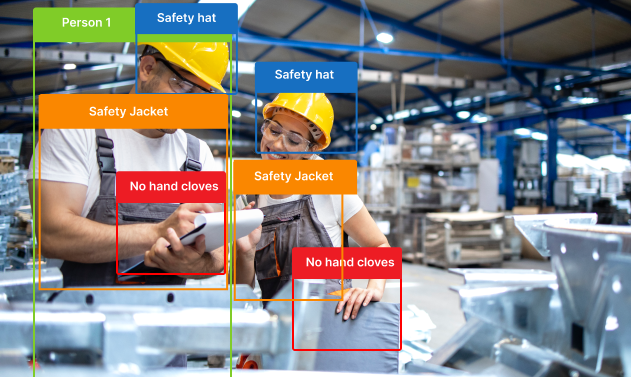
Computer vision AI leverages machine learning algorithms and neural networks to process and analyze visual data captured by cameras installed in manufacturing facilities. These AI systems are trained to recognize various types of PPE and can detect whether workers are wearing the required safety gear. The system works as follows:
- Image Acquisition: Cameras strategically placed around the facility capture real-time images and videos of the work environment.
- Preprocessing: The captured data is preprocessed to enhance image quality and remove noise, ensuring accurate detection.
- Object Detection: Using convolutional neural networks (CNNs), the AI system identifies and classifies objects within the image, focusing on detecting PPE items.
- Analysis: The AI analyzes whether the detected PPE meets the safety standards and if workers are wearing them correctly.
- Alerts and Reports: If non-compliance is detected, the system can immediately alert supervisors and generate reports for further action.
Benefits of Computer Vision AI in PPE Detection
Enhanced Safety Compliance
One of the primary benefits of computer vision AI in PPE detection is the enhancement of safety compliance. The AI system continuously monitors workers, ensuring that PPE is worn at all times. This constant vigilance is beyond the capability of human supervisors, leading to a higher adherence rate to safety protocols. By minimizing the instances of non-compliance, the risk of workplace injuries is significantly reduced.
Real-time Monitoring and Immediate Response
Computer vision AI provides real-time monitoring capabilities, which is crucial in a dynamic manufacturing environment. The system can instantly detect PPE violations and trigger immediate responses such as alarms or notifications to supervisors. This prompt action can prevent potential accidents, ensuring that corrective measures are taken without delay.
Reduction of Human Error
Manual supervision is susceptible to human error, fatigue, and oversight. Computer vision AI eliminates these drawbacks by providing consistent and accurate monitoring. The AI system’s ability to function continuously without fatigue ensures that no violation goes unnoticed, thereby maintaining a high standard of safety.
Data Collection and Analysis
The implementation of computer vision AI allows for the collection of vast amounts of data related to PPE compliance. This data can be analyzed to identify patterns, trends, and areas of improvement. For instance, if certain times of day or specific workstations have higher rates of non-compliance, targeted interventions can be designed. This data-driven approach enhances the overall safety strategy of the manufacturing facility.
Cost Efficiency
Although the initial investment in computer vision AI technology can be significant, the long-term benefits outweigh the costs. By reducing workplace injuries, companies can save on medical expenses, compensation claims, and downtime. Additionally, the improved safety record can lower insurance premiums and enhance the company’s reputation, leading to potential business advantages.
Integration with Other Systems
Computer vision AI systems can be integrated with other digital solutions such as manufacturing execution systems (MES) and safety management systems. This integration allows for a more holistic approach to safety and operational efficiency. For instance, if a PPE violation is detected, the MES can adjust workflows to ensure that the affected area is safe before continuing operations.
Training and Education
The data and insights gained from computer vision AI can also be used to improve training programs. By understanding common compliance issues, training sessions can be tailored to address specific weaknesses. Additionally, workers can be educated on the importance of PPE through real-time feedback provided by the AI system, fostering a culture of safety.
Case Study: Implementation in Automotive Parts Manufacturing
A leading automotive parts manufacturer implemented a computer vision AI system to enhance PPE detection across its facilities. The system, equipped with high-resolution cameras and advanced AI algorithms, monitored key areas including assembly lines, welding stations, and material handling zones.
Results:
- Compliance Rate: Within six months, the compliance rate increased from 85% to 98%, significantly reducing the number of PPE-related incidents.
- Incident Reduction: The number of reported accidents and near-misses dropped by 40%, highlighting the system’s effectiveness in preventing potential injuries.
- Operational Efficiency: The facility experienced a 20% increase in operational efficiency as supervisors were able to focus on other critical tasks instead of manual monitoring.
- Cost Savings: The reduction in workplace injuries led to a 25% decrease in associated costs, including medical expenses and downtime.
Challenges and Future Directions
Initial Setup and Calibration
Setting up a computer vision AI system requires careful planning and calibration to ensure accuracy. Factors such as camera placement, lighting conditions, and the variety of PPE used need to be considered. Initial setup can be time-consuming and may require expert intervention.
Continuous Improvement
AI systems need continuous training and updates to adapt to new types of PPE and changing work environments. Regular maintenance and software updates are necessary to keep the system effective and accurate.
Privacy Concerns
The use of surveillance cameras can raise privacy concerns among workers. It is crucial to address these concerns by clearly communicating the purpose of the AI system and ensuring that data is used responsibly and ethically.
Future Developments
The future of computer vision AI in PPE detection looks promising, with potential advancements including:
- Enhanced Algorithms: More sophisticated algorithms capable of detecting subtle compliance issues and improving overall accuracy.
- Wearable Technology Integration: Integration with wearable technology that can provide additional data points, such as worker vitals and movement patterns.
- Predictive Analytics: Leveraging AI to predict potential safety risks based on historical data and trends, allowing for proactive measures to be implemented.
Conclusion
Computer vision AI, particularly AI video analytics software, has proven to be a powerful tool in enhancing PPE detection in automotive parts manufacturing. By ensuring high compliance rates, providing real-time monitoring, and reducing human error, AI video analytics software significantly improves workplace safety and operational efficiency. As technology continues to evolve, the integration of advanced AI systems, such as AI video analytics software, in safety protocols will become increasingly indispensable, shaping the future of manufacturing safety standards.
 Nextbrain Technologies