Footfall counters, also known as people counters, are devices used in retail to measure the number of customers entering and exiting a store. These counters provide valuable data that can be leveraged to solve various challenges in the retail industry. Below, we delve into how footfall counters address real-world retail problems, enhancing operational efficiency, customer experience, and ultimately driving profitability.
Enhancing Customer Experience
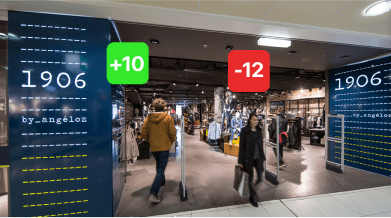
Optimizing Store Layout and Design:
Footfall data helps retailers understand customer movement patterns within the store. By analyzing which areas receive the most traffic, retailers can strategically place high-margin products in these hotspots to maximize sales. Conversely, underperforming sections can be re-evaluated and redesigned to improve their attractiveness.
Reducing Queue Times:
Understanding peak shopping times through footfall data allows retailers to allocate staff more efficiently. By ensuring more cashiers are available during busy periods, retailers can reduce queue times, enhancing the customer experience and reducing cart abandonment rates.
Improving Store Navigation:
Insights from footfall counters can indicate where customers might be facing difficulties in navigation. This data helps in redesigning aisles and signage to make the shopping experience smoother and more intuitive, thereby increasing customer satisfaction and potentially boosting sales.
Operational Efficiency
Optimal Staffing Levels:
Footfall counters provide precise data on customer influx, enabling managers to schedule staff based on actual demand rather than estimates. This ensures that the store is neither understaffed nor overstaffed, which can significantly impact labor costs and customer service quality.
Cleaning and Maintenance Schedules:
By analyzing footfall patterns, retailers can schedule cleaning and maintenance during off-peak hours, minimizing disruption to customers. This leads to a cleaner and more pleasant shopping environment without inconveniencing shoppers.
Inventory Management:
Footfall data can be correlated with sales data to understand the conversion rate and inventory turnover. This information helps in maintaining optimal stock levels, reducing instances of stockouts or overstocking, both of which can be costly.
Strategic Insights and Marketing
Evaluating Marketing Campaigns:
Footfall counters enable retailers to measure the effectiveness of marketing campaigns by comparing traffic before, during, and after promotions. This data helps in determining the return on investment (ROI) for different marketing strategies and refining future campaigns for better results.
Customer Segmentation and Personalization:
Advanced footfall counters can gather demographic information, such as age and gender. This data allows retailers to segment their customer base and tailor marketing efforts and product assortments to meet the specific needs and preferences of different customer groups, enhancing personalization.
Competitive Benchmarking:
Retailers with multiple locations or those in shopping malls can use footfall data to benchmark performance against other stores. Understanding relative performance helps in identifying areas for improvement and adopting best practices from top-performing locations.
Financial Benefits
Rent Negotiations:
For retailers in leased spaces, footfall data can be a powerful tool during rent negotiations. Demonstrating high customer traffic can justify lower rent increases or secure more favorable lease terms, directly impacting the bottom line.
ROI Analysis of Store Improvements:
Investments in store improvements, such as refurbishments or layout changes, can be evaluated for their effectiveness by comparing footfall data pre- and post-investment. This ensures that capital expenditures are justified and are contributing to increased customer traffic and sales.
Safety and Compliance
Occupancy Management:
During times of heightened safety concerns, such as the COVID-19 pandemic, footfall counters help monitor and manage store occupancy levels to ensure compliance with health guidelines and regulations. This not only ensures the safety of customers and staff but also helps in avoiding fines and penalties.
Emergency Evacuation Planning:
Footfall data provides insights into peak occupancy times and patterns, which are crucial for effective emergency evacuation planning. Knowing the busiest times and areas of the store helps in designing evacuation routes and procedures that can save lives in emergencies.
Advanced Analytics and Predictive Insights
Predictive Analytics:
Integrating footfall data with advanced analytics can provide predictive insights into future customer behavior. Retailers can forecast busy periods, seasonal trends, and potential impacts of external factors such as weather or events, allowing for proactive planning.
Customer Journey Mapping:
Detailed footfall analysis can help map the complete customer journey from entry to purchase. Understanding this journey enables retailers to identify bottlenecks and optimize every touchpoint to enhance the overall shopping experience and increase conversion rates.
Conclusion
AI video analytics software has become an essential tool for retailers, enabling them to optimize business processes, meet customer demands, and craft effective marketing strategies. In today’s dynamic retail environment, businesses are reassessing how to satisfy the increasing expectations of consumers while enhancing the customer experience. By implementing AI-driven software, retailers can gain a competitive edge. Nextbrain’s AI retail analytics software provides actionable insights that can significantly improve store performance. Contact our experts to learn more about our people counting solutions.
 Nextbrain Technologies