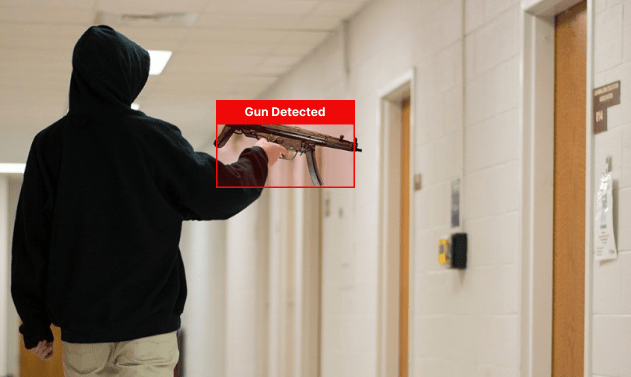
In today’s rapidly evolving world, ensuring public safety is a paramount concern for cities, organizations, and institutions. The integration of artificial intelligence (AI) into security systems has emerged as a transformative approach, enhancing the ability to detect weapons and violent behavior in real-time. This article explores how AI-powered detection systems are revolutionizing public safety by offering advanced, real-time intelligence to prevent incidents before they escalate.
The Evolution of Security Intelligence
Historically, security measures relied heavily on manual monitoring and traditional surveillance methods. Security personnel would review footage from CCTV cameras, analyze reports, and respond to incidents based on predefined protocols. While these methods provided a foundational level of security, they were often reactive rather than proactive.
With the advent of AI, particularly in the realm of AI in detecting weapons and violence, the landscape of security intelligence has shifted dramatically. AI systems are now capable of analyzing vast amounts of video data in real-time, identifying potential threats with unprecedented accuracy and speed. This shift from manual to automated processes allows for more proactive measures, potentially preventing violent incidents before they occur.
How AI Detection Works
AI detection systems for weapons and violence typically utilize advanced algorithms and deep learning techniques to process video feeds from security cameras. Here’s a breakdown of how these systems operate:
- Data Collection: High-resolution cameras placed in strategic locations capture continuous video footage. These cameras may be installed in public spaces, transportation hubs, educational institutions, and other areas requiring enhanced security.
- Preprocessing: The raw video data is preprocessed to improve clarity and remove noise. This step is crucial for accurate detection, as it ensures that the AI system can focus on relevant features and ignore irrelevant information.
- Feature Extraction: AI algorithms analyze the video data to identify key features indicative of weapons or violent behavior. For instance, the system may detect the shape and movement of objects to determine if they resemble known weapon profiles.
- Threat Detection: Using deep learning models, the system classifies objects and actions in the video feed. For example, if the AI identifies an object that resembles a firearm or observes aggressive movements consistent with violence, it triggers an alert.
- Alert Generation: When a potential threat is detected, the system generates real-time alerts for security personnel. These alerts include detailed information such as the location, time, and nature of the threat, enabling a swift response.
- Continuous Learning: AI systems continuously learn and adapt based on new data and feedback. This iterative learning process improves the system’s accuracy over time, reducing false positives and enhancing threat detection capabilities.
Benefits of AI Detection Systems
The integration of AI in detecting weapons and violence offers several key benefits:
- Enhanced Accuracy: AI systems can analyze video feeds with high precision, distinguishing between real threats and harmless objects. This level of accuracy minimizes the risk of false alarms and ensures that security personnel can focus on genuine threats.
- Real-Time Monitoring: Unlike traditional methods that rely on post-incident analysis, AI detection systems provide real-time monitoring. This immediate feedback allows for quicker responses, potentially preventing incidents before they escalate.
- Scalability: AI-powered systems can handle large volumes of data and scale to cover extensive areas. This scalability is particularly valuable in environments with multiple surveillance points, such as airports, stadiums, and city centers.
- Proactive Security Measures: By identifying potential threats early, AI systems enable proactive security measures. For instance, if the system detects a person carrying a weapon, security personnel can intervene before the individual reaches a sensitive area.
- Reduced Human Error: Manual monitoring is susceptible to human error and fatigue. AI systems, on the other hand, operate continuously without the risk of distraction or oversight, ensuring consistent and reliable surveillance.
- Cost Efficiency: While the initial investment in AI technology may be significant, the long-term benefits include reduced reliance on human security personnel and fewer incidents requiring costly interventions.
Case Studies and Applications
Several real-world applications and case studies highlight the effectiveness of AI detection systems:
- Public Transportation: In some metropolitan areas, AI detection systems have been implemented in subway stations and bus terminals. These systems monitor passenger behavior, detecting suspicious activities such as the presence of weapons or aggressive behavior. In one instance, an AI system successfully identified an individual carrying a concealed firearm, leading to a timely intervention by security personnel.
- Educational Institutions: Schools and universities have adopted AI-powered surveillance to enhance campus security. By monitoring common areas such as hallways and entrances, these systems can detect potential threats and alert campus security, thereby improving the overall safety of students and staff.
- Event Venues: Large event venues, such as sports stadiums and concert halls, use AI detection systems to ensure the safety of attendees. These systems can identify weapons or violent behavior in crowded environments, allowing security teams to address potential threats before they escalate.
Challenges and Considerations
While AI detection systems offer numerous benefits, there are also challenges and considerations to address:
- Privacy Concerns: The use of AI in surveillance raises privacy issues. It’s essential to balance security measures with individual privacy rights, ensuring that surveillance systems are used responsibly and ethically.
- False Positives: Although AI systems are highly accurate, they are not infallible. False positives can occur, leading to unnecessary disruptions. Continuous refinement of algorithms and regular updates are necessary to minimize false alarms.
- Integration and Maintenance: Implementing AI detection systems requires integration with existing security infrastructure and ongoing maintenance. Ensuring compatibility and regular updates is crucial for optimal performance.
- Data Security: The handling and storage of video data must comply with data protection regulations. Ensuring robust security measures to protect sensitive information is vital.
The Future of AI in Public Safety
As technology advances, the future of public safety is increasingly intertwined with AI-driven solutions. AI Video Analytics software is one of the most promising innovations in this field. This cutting-edge technology leverages artificial intelligence to analyze video footage in real-time, offering enhanced surveillance capabilities and automated threat detection.
AI Video Analytics software is set to revolutionize public safety by providing more accurate and timely insights into potential risks. By processing vast amounts of video data, this software can identify suspicious behavior, monitor crowd movements, and detect anomalies that might indicate security threats. The integration of AI allows for proactive responses, reducing the time required to address potential issues and improving overall public safety measures.
Looking ahead, the role of AI Video Analytics software will likely expand, incorporating more advanced features such as predictive analytics and deeper integration with other smart city technologies. This evolution will not only enhance the efficiency of public safety operations but also contribute to creating safer urban environments.
Conclusion
It can be concluded that future developments will majorly focus on advancing the speed and accuracy of detection models integrating more advanced AI capabilities. It expands the use of open-source tools and datasets effectively improving the capability to detect and respond to threats. Are you in search of AI detection software for your working facility infrastructure? At Nextbrain, we have a core team of dedicated professionals with years of experience in developing expert solutions for different businesses. Nextbrain provides a comprehensive evaluation and industry-leading solutions for protecting and connecting different environments.
Connect with our professionals to know more about AI detection of weapons and violence.
 Nextbrain Technologies