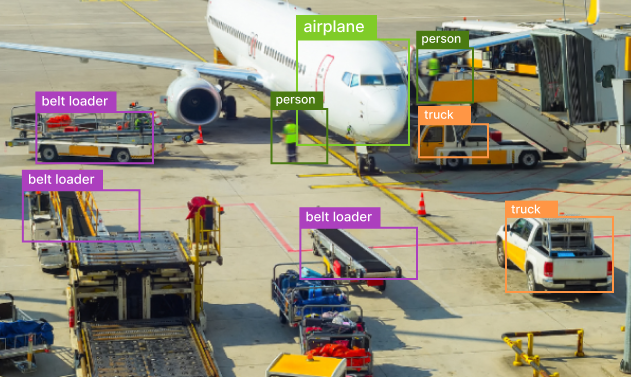
The aviation industry, with its high demand for precision, safety, and efficiency, increasingly integrates advanced technologies to enhance operations. Among these innovations, computer vision—a form of artificial intelligence (AI) enabling machines to interpret and analyze digital images—plays a transformative role. By employing computer vision, aviation has improved airport security, streamlined operations, and elevated safety standards. With the growth of airlines and air traffic, airports are increasingly adopting this technology to enhance operational efficiency and address the critical challenges in aviation.
Challenges Facing the Aviation Industry
The aviation industry faces a myriad of challenges that impact both day-to-day operations and long-term sustainability. Here are some key obstacles:
- Safety: Safety remains the foremost priority in aviation, with extensive regulations, training programs, and advanced safety protocols in place. Ensuring passenger and crew safety requires constant vigilance and robust systems that can quickly identify and address potential risks.
- Security: With persistent threats from terrorism and other security concerns, aviation authorities are under constant pressure to maintain and upgrade security protocols. Adapting to new threats and implementing preventive measures are essential for passenger safety and confidence.
- Cost Control: Operating an airline is costly, and expenses related to airport maintenance, labor, fuel, and airport fees heavily impact profitability. Balancing operational efficiency and service quality without inflating costs is an ongoing challenge for airlines.
- Regulatory Compliance: The aviation industry is regulated at multiple levels—local, national, and international. Compliance requires time, resources, and adaptations to new regulatory demands, which can be challenging without the support of streamlined digital tools.
Key Applications of Computer Vision in Aviation
1. Enhanced Security and Surveillance
The aviation industry leverages AI Video Analytics Software along with computer vision and IoT technologies to enhance security and surveillance measures. This software enables object detection, facial recognition, and passenger behavior monitoring through IP cameras, detecting potential security breaches, theft, and vandalism. By using AI Video Analytics Software, the aviation sector can identify threats in real-time, streamline operations, and improve passenger flow throughout airport facilities. The technology empowers security personnel to respond more effectively, contributing to an overall safer and more secure environment.
2. Real-Time Passenger Tracking
Computer vision technology also facilitates the real-time tracking of passenger movements. By monitoring crowd density and analyzing passenger behavior at checkpoints, boarding gates, and baggage handling areas, computer vision enables airports to manage crowd flow and ensure a smooth experience. Security risks can be flagged in real time, and processes at security checkpoints and boarding gates can be streamlined for efficiency and passenger safety.
3. Predictive Maintenance
The demand for predictive maintenance in aviation is growing, with market forecasts estimating growth from USD 1.5 billion in 2020 to USD 3.8 billion by 2025. Computer Vision for Aviation Safety enhances predictive maintenance by identifying potential faults in aircraft components and predicting maintenance needs to enable timely repairs. This proactive approach prevents costly breakdowns and boosts operational safety by detecting issues before they escalate. Through real-time monitoring, computer vision systems analyze wear and tear on aircraft, allowing airlines to optimize maintenance schedules, minimize downtime, and ensure safe and reliable operations.
4. Object Detection and Recognition
Object detection is a vital application of computer vision that enhances safety and operational efficiency in aviation. In airport settings, computer vision detects and tracks objects, such as unattended baggage or misplaced items, in real time. It also contributes to security screening, baggage scanning, and runway surveillance. For example, cameras equipped with computer vision algorithms help identify prohibited items in baggage, expediting the scanning process while ensuring safety compliance.
5. Intelligent Baggage Handling
Computer vision enhances baggage handling by using deep learning to automate baggage tracking, minimizing the chances of lost luggage. Machine vision systems read baggage labels, track trolley locations, and match baggage data with the airline database. Additionally, AI-driven object detection identifies suspicious items in luggage, playing a significant role in security. These advancements streamline baggage logistics and improve the efficiency of ground operations.
6. Facial Recognition for Passenger Verification
Facial recognition, a widely adopted technology powered by computer vision, verifies passenger identities at check-in, security checkpoints, and boarding gates. The system compares a passenger’s face with pre-registered images, allowing for a seamless boarding process. It also enhances security by identifying potential threats or unauthorized individuals. Airports use these facial recognition systems to ensure all passengers have boarded and to identify suspects if security incidents arise.
7. Cargo Inspection
Cargo security is crucial in aviation. With computer vision algorithms, AI-powered cargo inspection systems can detect dangerous items like explosives, weapons, or narcotics. By employing deep learning, these systems analyze image data from cargo inspections and can quickly flag suspicious patterns. Neural networks trained on annotated images can recognize threats efficiently, helping streamline cargo screening processes and reduce the time needed for inspections.
8. Airport Perimeter Security and Surveillance
Computer vision-based surveillance systems enhance airport security by monitoring perimeters for unauthorized access or suspicious activities. Cameras equipped with AI can identify potential security threats, detect individuals attempting to breach restricted areas, and analyze patterns of movement. This level of security is essential for airports, where monitoring extensive areas manually is challenging. AI systems enable airports to respond to threats faster, maintaining a secure environment for passengers and staff.
9. Crowd Monitoring and Management
Computer vision helps airport authorities manage crowds by monitoring real-time data on crowd density, movement patterns, and unusual activities. These systems reduce false alarms during security checks and allow airport personnel to manage large crowds effectively, which is particularly useful during peak travel seasons. They can also detect unusual events like fire or smoke in real time, adding an extra layer of safety.
10. Missile Guidance in Defense Applications
Beyond civilian applications, computer vision plays a critical role in military aviation for missile guidance and target detection. Advanced image processing and AI sensors in missile systems provide precision in targeting by identifying objects based on their motion and location. This technology enhances targeting accuracy, making it essential for defense systems that require precise and reliable guidance.
Key Takeaways
Computer vision technology is revolutionizing the aviation industry, enabling advancements in safety, efficiency, and operational accuracy. From streamlining security processes to ensuring predictive maintenance, computer vision applications are becoming integral to airport and airline operations. However, adopting these technologies requires overcoming challenges, such as data processing demands and integration with existing systems. Despite these hurdles, the benefits of computer vision are substantial, and its role in aviation will likely continue to grow as technology evolves, paving the way for safer and more efficient air travel.
 Nextbrain Technologies