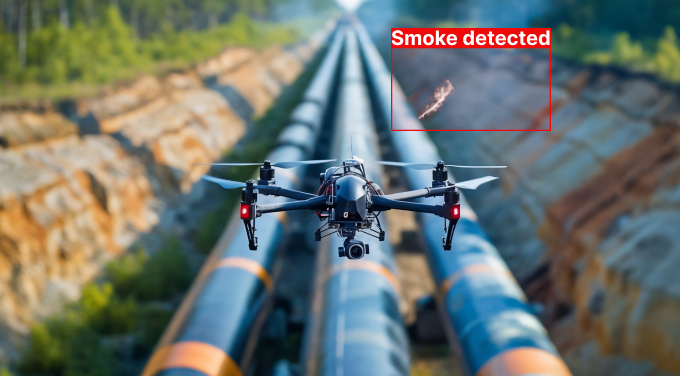
The oil and gas industry relies heavily on an extensive pipeline network to transport resources across vast distances, ensuring a steady supply to meet global demand. Maintaining pipeline integrity is crucial for ensuring workplace safety and operational efficiency. Traditional inspection methods often involve high costs due to manual assessments and basic sensors, which can be time-consuming and less effective. However, drones equipped with advanced computer vision technology are transforming pipeline inspections by increasing efficiency by up to 80%, providing real-time monitoring, and delivering predictive insights for proactive maintenance.
In this article, we will explore the key challenges associated with pipeline inspection and how the integration of computer vision technology enhances monitoring capabilities for the oil and gas industry.
Challenges in Pipeline Inspection Across the Oil & Gas Industry
Maintaining pipeline integrity presents several challenges for the oil and gas industry, including:
Remote & Hazardous Locations
Pipelines often traverse challenging terrains such as mountains, deserts, offshore areas, and dense forests, making accessibility a significant challenge.
Corrosion & Environmental Wear
Pipelines are constantly exposed to harsh environmental conditions, increasing the risk of corrosion and wear. Factors such as extreme temperatures, moisture, and chemical exposure can degrade pipeline structures over time, leading to leaks and potential hazards.
Cracks & Leaks Under Pressure
Small cracks and leaks can rapidly expand under high-pressure conditions, posing severe risks, particularly in urban areas. Without early detection, these leaks can lead to costly shutdowns and environmental damage.
Manual Inspection Limitations
Traditional manual inspections are labor-intensive, time-consuming, and often ineffective in identifying early-stage leaks or structural weaknesses. Inspectors face difficulties accessing high-pressure zones, increasing the likelihood of undetected issues.
Regulatory Compliance Requirements
Stringent regulatory standards mandate frequent pipeline inspections, adding to the complexity and cost of operations. Ensuring compliance requires efficient monitoring solutions that can provide accurate and timely data.
Importance of Drone Inspection for Pipeline Integrity
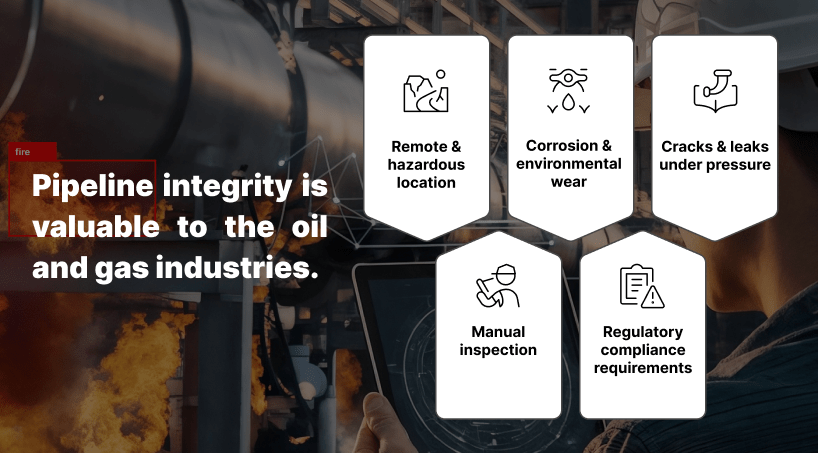
Pipeline integrity is critical to the safety and efficiency of oil and gas operations. Computer Vision for the Oil and Gas industry has revolutionized inspection processes, making them more effective, accurate, and cost-efficient. Drones equipped with vision AI are now the preferred choice for modern pipeline integrity management, automating inspections and enhancing monitoring capabilities.
Key Benefits of Drone Pipeline Inspections
Predictive Maintenance
Drones powered by computer vision AI can detect defects at an early stage, enabling proactive maintenance. They identify leaks, structural weaknesses, and other potential hazards, allowing operators to take corrective measures before significant damage occurs.
Speed & Cost-Effectiveness
Traditional inspections require expensive scaffolding, rope access, and manual evaluations. In contrast, drone-based inspections are automated, reducing labor costs and minimizing operational disruptions.
Enhanced Worker Safety
Drones mitigate the risks associated with human exposure to hazardous conditions such as toxic gas emissions, high-pressure leaks, and extreme surface temperatures. This significantly improves worker safety and reduces the need for personnel to access dangerous locations.
Improved Regulatory Compliance
Regular inspections are essential for complying with industry regulations. Pipe inspection drones facilitate consistent monitoring, ensuring that pipelines meet safety and environmental standards.
Zero Downtime
Drones can inspect pipelines in real-time, even when they are in operation. Vision AI-powered drones can analyze pipeline conditions and gather critical data without requiring planned downtime, minimizing disruptions to production.
High-Quality Data Collection
Drones equipped with high-resolution sensors capture a wide range of data, including surface temperature variations, hidden leaks, and structural anomalies. Multi-spectrum imaging ensures detailed assessments of pipeline conditions.
Automated Data Processing
Machine learning algorithms and deep learning models enable drones to process visual data in real-time. Cloud-based systems facilitate instant analysis, ensuring continuous monitoring and immediate anomaly detection.
Remote Operational Control
Modern drones are capable of long-range monitoring without the need for manual intervention. This enhances operational efficiency and ensures that pipeline integrity is maintained without on-site personnel.
Scalability for Large-Scale Inspections
Drones powered by vision AI can efficiently inspect extensive pipeline networks, making them ideal for large-scale operations. Their scalability enables comprehensive monitoring of pipelines spanning diverse terrains.
Defects Identified During Drone Pipeline Inspections
Cracks & Fractures
High-resolution imaging detects hairline cracks, fractures, and weld defects, preventing minor issues from escalating into significant failures.
Corrosion Detection
Vision AI-powered drones identify corrosion on both interior and exterior surfaces, helping prevent severe wear and potential ruptures.
Leak Detection
Thermal imaging and pattern recognition technologies detect leaks by analyzing temperature changes and identifying surface irregularities.
Dents & Deformations
Drones identify structural deformities such as dents and bulges, which can compromise pipeline integrity if left unaddressed.
Coating Failures
Drones detect areas where protective coatings have deteriorated, exposing pipelines to environmental risks and corrosion.
Advantages of Using Computer Vision for Pipeline Inspection with Drones
Speed & Efficiency
Computer vision AI significantly enhances the speed and efficiency of pipeline inspections, enabling large-scale assessments with minimal downtime.
Accuracy & Consistency
Automated vision AI systems minimize human error, providing consistent and precise inspection results.
Automation & Safety
Computer vision-powered pipeline inspection systems reduce the need for human involvement in hazardous areas, enhancing safety and operational efficiency.
Real-Time Monitoring
Drones collect real-time data, enabling immediate alerts and proactive maintenance strategies to address potential risks before they escalate.
Final Thoughts
The integration of drones and computer vision technology is revolutionizing pipeline inspections in the oil and gas industry. By combining real-time monitoring, predictive analytics, and automated assessments, drone-based inspections enhance safety, reduce costs, and improve efficiency.
As a leading software development company, we specialize in AI video analytics software for various industries, including retail, healthcare, mining, and oil & gas. Our AI-powered computer vision solutions offer comprehensive pipeline monitoring, asset management, and real-time data analysis. By adopting drone technology integrated with computer vision, industries can achieve significant improvements in safety, cost reduction, and operational accuracy. The future of pipeline inspection lies in AI-driven automation, ensuring enhanced security, efficiency, and compliance for the oil and gas sector.
 Nextbrain Technologies