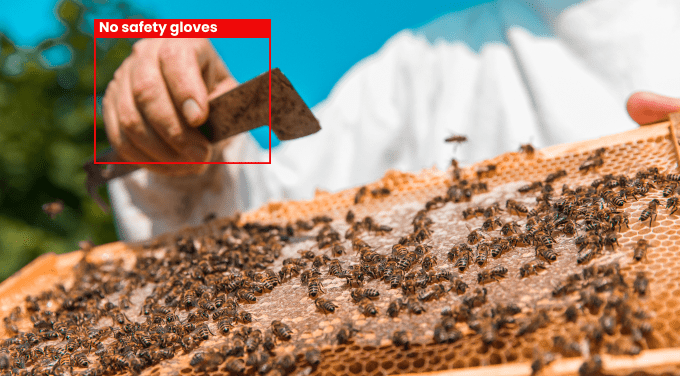
Beekeeping is an age-old practice that has long relied on human observation for honey production and pollination. According to recent research by Environment America Research & Policy Center, humans depend on bees to pollinate 73 out of 103 crops, making them essential to global food production. Traditionally, beekeepers monitored hive health and productivity through manual inspections—a time-consuming and often inefficient process. However, with advancements in artificial intelligence (AI) and Computer vision in beekeeping, beehive monitoring can now be automated, revolutionizing the industry.
Modern technology enables real-time hive health analysis, early disease detection, and pollen classification. With AI-driven monitoring, beekeepers can improve colony productivity and enhance pollination effectiveness. This article explores how integrating computer vision into beekeeping can optimize hive management, ensuring healthier colonies and increased honey production.
Challenges in Modern Beekeeping
Beekeepers face several challenges in maintaining colony health and productivity. Traditional techniques are labor-intensive, making hive management inefficient. Some key issues include:
Disease Detection
Bee colonies are highly vulnerable to pests and bacterial infections, which can spread rapidly. Early detection of diseases such as those caused by Varroa destructor mites is essential to maintaining a healthy hive and preventing colony collapse.
Foraging Behavior Surveillance
Understanding the foraging patterns of bees and the flowers they visit is crucial for optimizing pollination. However, tracking bee activity across large areas manually is impractical and inefficient.
Bee Population Monitoring
Keeping an accurate record of bees entering and exiting the hive is necessary to assess colony strength. Manual counting is nearly impossible, making automated tracking essential.
Environmental Threats
Climate change, habitat loss, and extreme temperature fluctuations significantly impact bee populations. Monitoring environmental conditions in real time is crucial for adapting hive management strategies accordingly.
By implementing AI-powered solutions, beekeepers can automate these processes, reducing workload and improving hive management efficiency.
AI-Powered Applications in Beekeeping
Computer vision and AI offer transformative solutions to beekeeping challenges. Let’s explore how AI-driven vision systems can enhance hive monitoring and pollination tracking.
Early Disease Detection
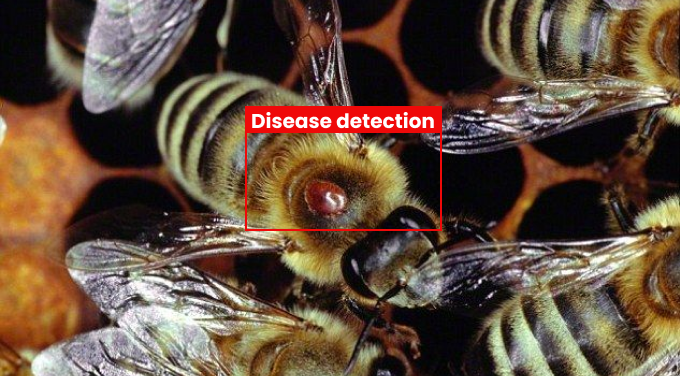
One of the most common threats to bee colonies is the Varroa destructor mite, which weakens bees and contributes to colony collapse disorder. AI-powered object detection systems can identify these mites early, allowing beekeepers to take preventive measures before infestations spread.
Flower Detection and Classification
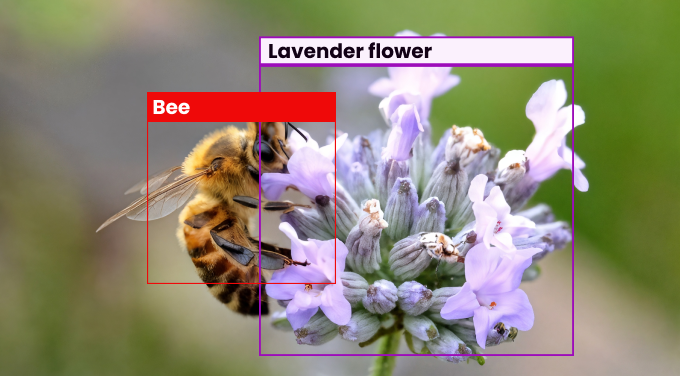
By identifying high-value nectar sources, AI-powered computer vision systems help beekeepers optimize honey yield and colony health. Drones equipped with AI cameras can analyze images of floral environments, classifying different flower species. This data enables beekeepers to strategically place hives in areas with abundant nectar sources, supporting sustainable pollination and honey production.
Activity Monitoring
Colony health can be assessed by tracking bee activity. Sudden declines in movement may indicate food shortages, environmental stress, or disease. Computer vision models analyze real-time video from hive entrance cameras, counting bees and tracking fluctuations in activity. AI can also identify bees that have successfully pollinated flowers by detecting pollen traces on their bodies.
Automated Task Execution
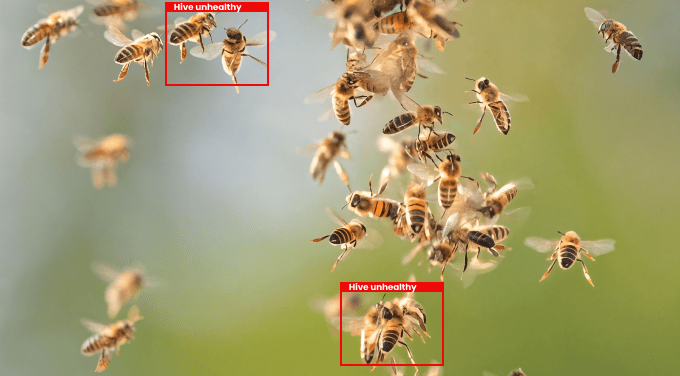
Computer vision can automate key beekeeping tasks, such as counting bees, analyzing hive frames, and identifying anomalies. AI-driven hive monitoring systems provide data-driven insights that help beekeepers maintain optimal hive conditions and maximize honey production.
Remote Monitoring
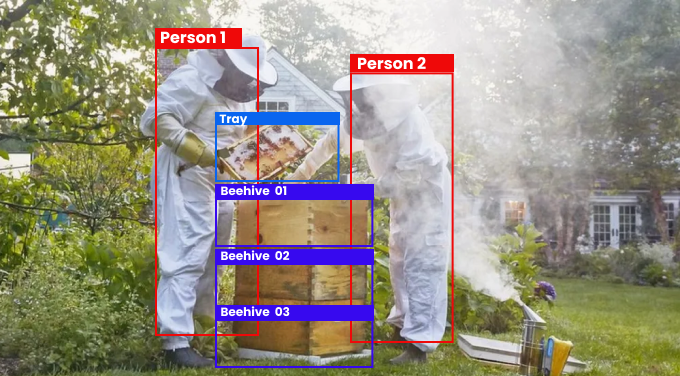
Beekeepers can monitor hive conditions in real time using AI-enabled surveillance cameras. These cameras, equipped with advanced computer vision models, classify and detect flower species while providing live updates on hive health, activity, and environmental changes.
Pollen Type Detection
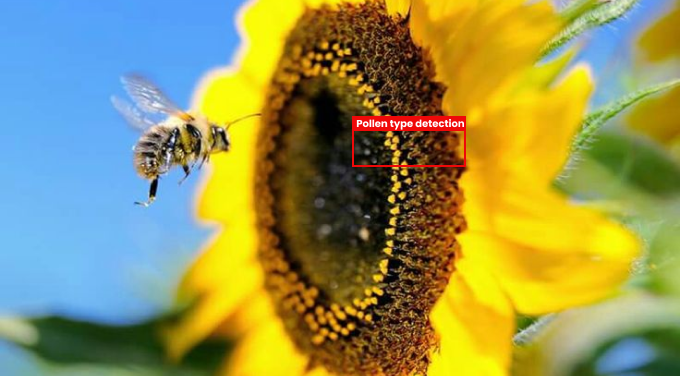
By analyzing pollen collected by bees, AI-powered computer vision models can differentiate between plant species based on microscopic pollen structures. This data helps beekeepers understand colony nutrition and adjust hive placement for better forage availability. AI-driven pollen analysis ensures bees have access to a diverse and nutrient-rich diet, improving colony resilience.
How Computer Vision Improves Hive Monitoring
Computer vision processes visual data from cameras and sensors to analyze hive activity. This technology enables real-time tracking of bee movement, environmental classification, and early detection of abnormalities. To integrate computer vision into beekeeping, the following steps are followed:
1. Data Collection
Images and videos of hive entrances, floral environments, and bee activity are gathered using cameras and drones.
2. Data Annotation
Images are labeled to identify pests, flowers, bees, and pollen types, ensuring accurate AI training.
3. Model Training
AI models are trained on datasets to recognize normal and abnormal bee activity, detect diseases, and classify preferred foraging sites.
4. Validation and Testing
The accuracy of the AI model is evaluated across different hive environments and lighting conditions to ensure reliability.
5. Deployment of Monitoring Systems
AI-powered computer vision systems are integrated into beehives, providing real-time analytics and actionable insights for beekeepers.
By following these steps, AI models can be customized to monitor specific beehive environments, allowing beekeepers to respond proactively to potential threats.
Conclusion
As beekeeping faces new challenges, AI-powered computer vision provides a transformative solution by automating disease detection, hive monitoring, and pollination tracking. From bee counting and disease identification to flower classification and pollen analysis, AI-driven solutions ensure healthier colonies and increased honey production.
As a leading computer vision development company, Nextbrain offers AI video analytics software tailored for various industries. Our software is designed to distinguish between bees carrying pollen and those returning to the hive empty-handed, providing valuable insights for beekeepers.
Want to explore AI-powered beekeeping solutions? Get in touch with our experts to learn more about AI-driven video analytics for hive monitoring.
 Nextbrain Technologies