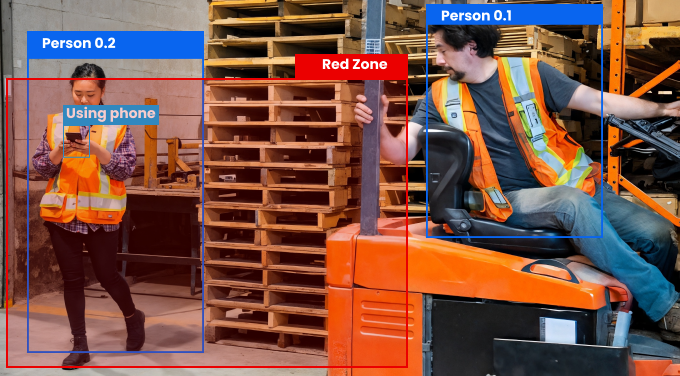
As businesses continue evolving toward automation and smart technologies, safety concerns in industrial environments are becoming more complex and critical. Organisations around the world are focusing on reducing risks, enhancing compliance, and protecting their workforce. According to a recent survey, more than 39% of organisations prioritize workplace safety to prevent costly accidents and operational disruptions. With this shift, advanced technologies like computer vision are playing a significant role in reinforcing Environmental, Health, and Safety (EHS) systems.
Industrial facilities, especially those involving automated systems, robotics, or hazardous processes, are prone to accidents and falls. In the United States alone, over 2 million non-fatal injuries were recorded in 2023. As a result, organisations are adopting intelligent solutions to proactively monitor their operations and respond to incidents in real time. One of the most impactful technologies in this space is Red Zone Monitoring powered by Computer Vision, which provides effective safety oversight in high-risk areas.
Understanding Red Zone Monitoring and Computer Vision
Computer Vision, a subset of Artificial Intelligence (AI), enables machines to interpret and process visual data. In industrial settings, it plays a crucial role in Computer Vision in Industrial Safety by continuously monitoring environments, detecting hazards, ensuring regulatory compliance, and raising real-time alerts about unsafe behavior.
Red Zones are specific areas within a facility that carry heightened safety risks due to ongoing hazardous activities, heavy machinery, or limited access requirements. These zones require strict monitoring because even a small human error can result in severe consequences. Using computer vision in these zones ensures continuous oversight, helping mitigate risks proactively.
Why Computer Vision Matters in Red Zone Monitoring
Traditional manual safety monitoring often fails due to human error or fatigue. Computer vision systems integrate with existing CCTV infrastructure and provide seamless surveillance, identifying breaches, PPE (Personal Protective Equipment) violations, and unauthorized access. They operate 24/7 without fatigue, ensuring consistent vigilance.
Key functions include:
- Identifying whether workers are wearing appropriate safety gear.
- Detecting entry into restricted areas.
- Recognizing hazardous behavior and environmental anomalies.
- Sending automated alerts for immediate intervention.
By analysing video data in real-time, these AI systems act as digital eyes on the ground—preventing incidents before they escalate.
Vision AI’s Role in Industrial Safety
1. Real-time Safety Protocol Compliance
Vision AI actively monitors for compliance with protocols, such as PPE use and hygiene standards. If a worker enters a red zone without proper equipment, the system flags the violation immediately and notifies safety personnel.
2. Detection of Unsafe Behavior
Any suspicious or risky behavior—such as loitering near hazardous equipment or improper handling of tools—is instantly detected. Alerts are sent to supervisors for rapid response, preventing potential incidents.
3. Fall and Collision Prevention
In environments like construction or manufacturing, where workers interact with machinery, Vision AI detects proximity breaches and alerts individuals to prevent accidents. This is particularly useful in areas with moving equipment like forklifts or robotic arms.
4. Equipment Monitoring and Predictive Maintenance
AI systems monitor machinery for signs of malfunction, overheating, or wear and tear. Predictive maintenance reduces downtime and ensures safer operations, preventing equipment failure-related injuries.
Industry Applications of Red Zone Monitoring
Construction
Construction sites are dynamic and high-risk, involving cranes, scaffolding, excavation, and moving equipment. Computer vision tracks site conditions, flags unauthorised access, and monitors compliance with safety standards. For example, if a worker enters a crane operation zone without PPE, the system alerts both the worker and the supervisor.
Oil & Gas
This sector faces one of the highest occupational risks. Red zones often include drilling platforms, flammable substance storage, and high-pressure systems. Computer vision monitors these areas for leaks, unsafe behavior, or unauthorised personnel, thereby reducing exposure to potentially catastrophic events.
Manufacturing
Manufacturing environments include automated assembly lines, fast-moving machinery, and robotic systems. Red zone monitoring powered by vision AI ensures workers comply with PPE mandates and avoids unauthorized access. Real-time alerts prevent accidents and reduce operational disruption.
Warehousing & Logistics
Logistics hubs involve constant motion—forklifts, conveyors, and human operators share the same space. Vision AI improves safety by tracking worker movements, identifying risky behavior like standing too close to moving machinery, and ensuring visibility gear is worn.
Healthcare
In hospitals and laboratories, safety concerns revolve around hygiene, infection control, and compliance. Computer vision ensures PPE usage, monitors access to restricted areas, and detects unsafe interactions that could lead to contamination or biohazard exposure.
Why Businesses are Turning to Vision AI for Safety
With manual oversight proving insufficient in high-risk, complex environments, computer vision offers a scalable, automated solution. Vision AI helps:
- Minimize accidents and liabilities.
- Improve regulatory compliance.
- Optimize safety team resources.
- Enable data-driven decision-making with real-time insights.
Companies that prioritise workplace safety are increasingly turning to smart solutions like these to secure both infrastructure and personnel.
Nextbrain’s Role in Workplace Safety with Vision AI
At Nextbrain, we develop intelligent computer vision solutions tailored for modern industrial safety needs. Our AI Video Surveillance software integrates advanced AI algorithms that ensure precision, speed, and adaptability across complex environments. From predictive maintenance to red zone monitoring, our technology equips businesses with the ability to make data-driven safety decisions.
Key features of Nextbrain’s vision AI systems include:
- High-accuracy real-time video analytics.
- Automated compliance checks and alerts.
- Industry-specific configurations (e.g., for manufacturing, healthcare, or construction).
- Scalable, secure infrastructure.
Whether it’s monitoring PPE compliance or detecting potential hazards before they escalate, our platform is engineered to ensure workplace safety with maximum efficiency.
Conclusion
Red zones—high-risk areas in industrial settings—demand constant, accurate monitoring. Traditional methods often fall short in identifying every potential hazard or behavioral anomaly. This is where computer vision comes in, offering unparalleled visibility and real-time risk mitigation. From construction to healthcare, Vision AI is helping organisations make safety proactive rather than reactive.
As industries continue to embrace automation, integrating computer vision into safety infrastructure isn’t just a trend—it’s becoming a necessity.
Thinking of implementing Vision AI for red zone monitoring in your facility? Let Nextbrain help you build a safer, smarter workplace.
Frequently Asked Questions
What is a red zone in industrial facilities?
A red zone is a designated high-risk area within a workplace where the potential for accidents or hazardous exposure is significantly higher. Access is typically restricted and monitored closely.
How does computer vision improve safety?
By analyzing live video feeds using AI algorithms, computer vision detects unsafe behavior, PPE violations, and unauthorised access in real time, enabling immediate response and preventing accidents.
How does the system work?
The system captures visual data via IP cameras, processes it through AI algorithms, and sends alerts when risk conditions or policy violations are detected.
Why choose Nextbrain’s vision AI solution?
Nextbrain’s model ensures high precision, fast response, and robust performance across industries. Our computer vision technology is tailored for real-time surveillance, predictive analytics, and decision-making—offering full safety coverage for critical work zones.
Let me know if you’d like this content adapted into a downloadable PDF, blog format, or SEO-optimized web page.
 Nextbrain Technologies