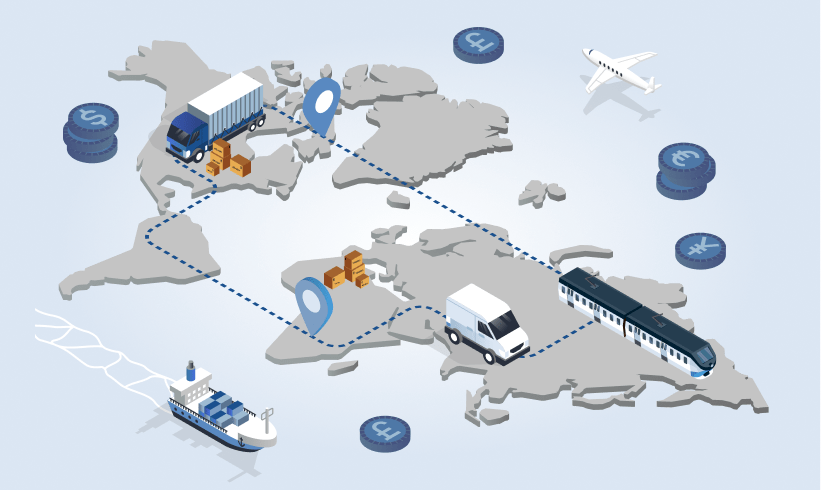
In today’s hyper-connected global marketplace, logistics and supply chain operations face mounting pressure to be faster, smarter, and more cost-efficient. From demand forecasting and inventory management to route optimization and predictive maintenance, every touchpoint is ripe for innovation. Enter Generative AI, a breakthrough technology that is reshaping the way supply chains operate.
Generative AI in supply chain management is rapidly gaining traction as companies seek to improve decision-making, streamline operations, and respond to disruptions in real-time. It’s helping businesses analyze massive datasets, uncover hidden patterns, and generate intelligent strategies that improve logistics performance and resilience.
According to recent studies, over 40% of supply chain businesses are already investing in Generative AI, a number that’s expected to rise sharply in the coming years.
Why Supply Chains Need AI Now More Than Ever
Traditional supply chains are often fragmented, data-heavy, and slow to adapt to disruptions. Generative AI offers a dynamic solution by analyzing vast datasets, recognizing patterns, and generating intelligent strategies that enhance decision-making and operational efficiency.
According to recent studies, over 40% of supply chain businesses are already investing in Generative AI a number that’s expected to rise sharply in the coming years.
What Is Generative AI in Supply Chain Management?
Generative AI refers to a class of artificial intelligence that can generate new data, predictions, or decisions based on the information it learns. In supply chain and logistics, this includes everything from predicting demand and generating optimized delivery schedules to simulating procurement strategies and improving warehouse planning.
At its core, Gen AI transforms traditional workflows by offering real-time, autonomous decision support.
Top Use Cases of Generative AI in Supply Chain & Logistics
1. Predictive Maintenance
AI algorithms monitor equipment performance and detect anomalies to predict mechanical failures before they occur, minimizing downtime and repair costs.
2. Inventory Optimization
Generative AI helps determine optimal stock levels based on demand fluctuations, seasonal trends, and historical data, avoiding both overstock and stockouts.
3. Demand Forecasting
Accurate demand predictions ensure smarter production planning, efficient resource allocation, and better service levels.
4. Route Planning and Delivery Optimization
By analyzing traffic, weather, and delivery schedules, AI generates real-time optimized delivery routes, cutting down on fuel costs and delays.
5. Procurement Automation
Gen AI can automate procurement workflows, suggest the best suppliers, and even simulate negotiations based on past performance.
6. Anomaly Detection
It identifies irregular patterns in logistics processes such as sudden delays or quality issues, enabling faster response and risk mitigation.
Benefits of Generative AI in Supply Chain Operations
- Enhanced Decision-Making through real-time data insights
- Reduced Operational Costs via automation and process optimization
- Greater Resilience with predictive models that anticipate disruptions
- Faster Response Times with automated alerts and real-time feedback
- Improved Customer Satisfaction through accurate delivery and inventory management
Before You Implement: Key Considerations
Thinking of integrating Generative AI into your operations? Consider the following:
- Assess current infrastructure and identify gaps
- Ensure high-quality data inputs for optimal model accuracy
- Train teams for a data-driven culture shift
- Start small, then scale with proven use cases
Why Choose Nextbrain for Generative AI Services?
At Nextbrain, a leading Generative AI development company, we specialize in delivering custom Generative AI solutions tailored specifically for supply chain and logistics operations. Our expert team combines deep industry knowledge with cutting-edge AI technologies to help you achieve measurable business outcomes, such as faster delivery times, optimized inventory, and improved decision-making.
We don’t just develop AI systems—we ensure they seamlessly integrate with your existing workflows, enabling you to scale with confidence and efficiency.
Conclusion
The future of the supply chain is intelligent, automated, and data-driven. Generative AI is not just another tool; it’s a transformative force capable of rewriting the rules of logistics.
If you’re looking to improve your supply chain performance, reduce risks, and boost efficiency, Generative AI is your next step forward.
Let’s Get Started
Ready to take your logistics operations to the next level?
Connect with the AI experts at Nextbrain today. We’ll help you design, develop, and deploy your custom Generative AI solution—built for real-world impact.
FAQs
1. What is the main difference between traditional AI and Generative AI in supply chains?
Traditional AI focuses on pattern recognition. Generative AI not only detects patterns but also generates insights, plans, and forecasts in a dynamic environment.
2. Can Generative AI be used in real-time logistics decision-making?
Yes! Gen AI can analyze live data streams to provide real-time recommendations on routing, inventory, and more.
3. Is Generative AI suitable for small and medium logistics businesses?
Absolutely. With tailored solutions, even SMEs can benefit from scalable, cost-effective AI models that optimize operations.
 Nextbrain Technologies