
Did you know that over 90% of goods globally are traded via the sea? International trade has always played a vital role in the global economy and will do so for years to come. However, we are also faced with difficult challenges such as congestion, delays, safety issues, and environmental issues in the maritime trade sector. However, the shipping industry is now leaning toward digitization, and AI-based computer vision is a revolutionary technology—transforming how ports and maritime facilities operate.
Today’s digital age—with numerous industries quickly embracing advanced technologies—offers enormous promise for maritime businesses. Over the past 2+ years, intelligent monitoring systems and real-time analytics have justified changing traditional port operations into smart ecosystems based on data.
This article considers how computer vision in ports can drive efficiency, safety, and sustainability in maritime trade.
The Importance of Smarter Ports
Conventional monitoring approaches often have the challenge of managing the complexity of modern ports, causing inefficiency and high costs. The way to remain competitive in the marketplace is smarter solutions that streamline processes, enhance safety, and limit unproductive operational time.
By combining AI-enabled computer vision with existing digital assets like port management software, ports shorten operational time by maximizing scheduling, automating inspections and reducing penalties attached to delayed freight and mismanaged cargo. Smarter ports are not only more resilient, but they position ports to handle demands for future growth in trade.
Computer Vision Applications in Port Facilities
Computer vision applications provide intelligence as well as real-time visibility into maritime operational activities. Below are the most meaningful.
- Shipping, Navigation and Route Tracking
Computer vision powered by AI can assist in identifying optimal shipping routes with less congestion and more fuel efficiency. Object detection algorithms for safe navigation detect other vessels and/or identify obstacles and/or unusual patterns in real-time.
- Cargo Tracking and Container Inspection
AI-enabled computer vision can identify and analyze containers by reading numbers, inspection seals and detectable damage. Automating container inspections avoids human errors, improves operations and cycle time, and mitigates fraud opportunities.
- Management of vessel traffic
By analyzing live video footage, maritime authorities can find spots of traffic congestion, improve schedules, and enhance the efficiency of criticism. This increases the level of safe navigation while reducing the time vessels spend waiting to dock at busy ports.
- Operator efficiency enabled by automation
Since computer vision can be incorporated into port equipment, there are smart cranes, robotic loaders, and fully automated yard management. This leads to reduced turn time, to increased efficiency, and a lower reliance on human labor.
- Workforce & Equipment safety
AI video surveillance can detect unsafe practices, malfunctioning equipment, or entering unauthorized areas. Proactive surveillance can limit the risk of workplace accidents, ensure compliance with safety practices, and reduce liability risk.
- Increased Security & Threat Detection
Computer vision systems can create more secure ports by detecting intrusions, monitoring suspicious behavior, or detecting smuggling attempts. By implementing AI video analytics software, ports can be monitored by automated surveillance 24 hours a day in a much more reliable, preventative way.
- Shipboard Surveillance
Multi-camera AI video surveillance systems can monitor sensitive activities during deck operations, loading and unloading cargo activities, and crew member behaviors. In addition to these activities, it can note irregularities, like not loading correctly and engaging in activity in unauthorized areas.
- Automated Container Inspections
Containers endure harsh environments. Throughout the day, vision-based surveillance, integrated with deep learning, can observe the degree of damage, the integrity of the technical aspects of the container, and the reliability of inspections to be faster than manual inspections.
- Predictive Maintenance for Port Equipment
By combining IoT sensors and computer vision, predictive maintenance can take place as they can detect early signs of wear in machinery and equipment. Observing asset conditions in real time prevents failures, prolongs the useful life of assets, and keeps ports operational.
Benefits of Computer Vision in Ports
There are many benefits to ports that adopt computer vision for maritime trade:
- Data-Driven Decisions – The analysis of visual data allows ports to make data-driven decisions at every phase of operation.
- Advanced Maritime Logistics – AI systems allow for logistics to be automated by tracking goods across all port services and shipping lanes.
- Reduced Labor Costs – Automated inspections of both facilities, and cargo, lead to a decrease in labor directed to manual labor.
- Route Forecasting Optimization – AI algorithms utilize video analytics to provide recommendations for fuel-efficient routes that are also safe.
Making the Maritime Environment Cleaner and Safer
Shipping industry sustainability is a priority. Obviously, computer vision in ports contribute to environmental safety and compliance.
Weather Monitoring and Predictive Insights
Powered by drones and vision-based monitoring, AI systems record weather conditions related to threats like storms and high winds in real-time. This allows vessels to adjust routes when conditions are dangerous and possibly minimize risks associated with accidents.
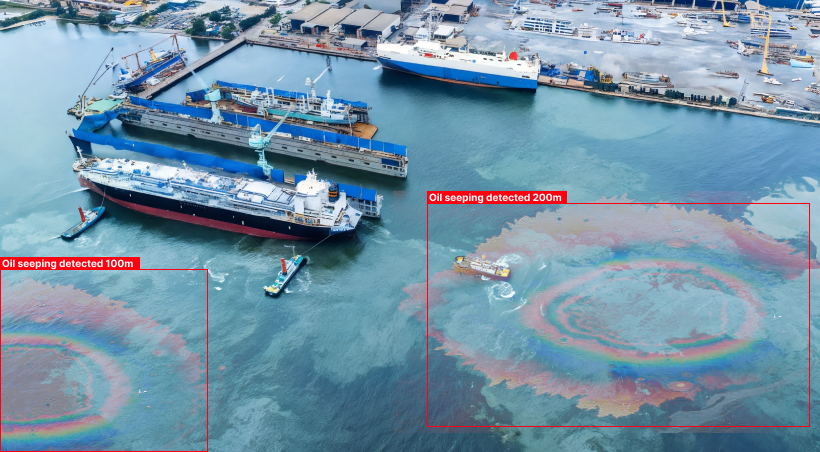
Detecting Oil Spills and Emissions
Visual intelligence with deep learning capability can assist in the detection of oil spills and abnormal emissions. Quick detection enables fast response that will minimize impacts to the environment beyond the initial incident.
Pollution Monitoring
Computer vision systems can scan recreational and commercial navigable waters for plastic waste, oil spills, and toxic materials. Additionally, these systems can also detect illegal dumping, necessary for maritime facilities to remain compliant with the latest environmental rules and regulations.
Concluding Considerations
Utilizing AI-assisted computer vision, maritime trade is fundamentally changing in ways that enhance efficiency, reduce human error, and promote safety across port operations. Computer vision is shaping the futures of smart and sustainable ports in ways that involve real time cargo tracking, vessel observation, predictive maintenance, and environmental protection.
Nextbrain is positioned as one of the leaders developing computer vision for port safety operations, establishing opportunities along the way for organizations to implement safer, smarter and more effective maritime business solutions. In a world where AI is transforming industries, we must consider the adoption of computer vision not as an option, but as a necessity for growing and remaining competitive.
Are you ready to begin the journey of smarter ports? Reach out to Nextbrain today!
Frequently Asked Questions
1. What is the importance of computer vision in maritime trade?
It automates inspections, tracks cargo, enhances security, and improves overall port efficiency.
2. Can computer vision reduce operational costs for ports?
Yes. Automated monitoring reduces manual inspections, downtime, and accidents—optimizing logistics and saving costs.
3. How does computer vision improve efficiency in ports?
It enables real-time tracking, predictive maintenance, and automated inspections that reduce delays and resource wastage.
4. Does computer vision improve security in maritime trade?
Yes. AI video analytics software detects threats, prevents smuggling, and enhances surveillance across restricted areas.
5. Can computer vision integrate with other port technologies?
Absolutely. It can integrate with IoT sensors, drones, and analytics platforms to create an interconnected maritime ecosystem.
 Nextbrain Technologies