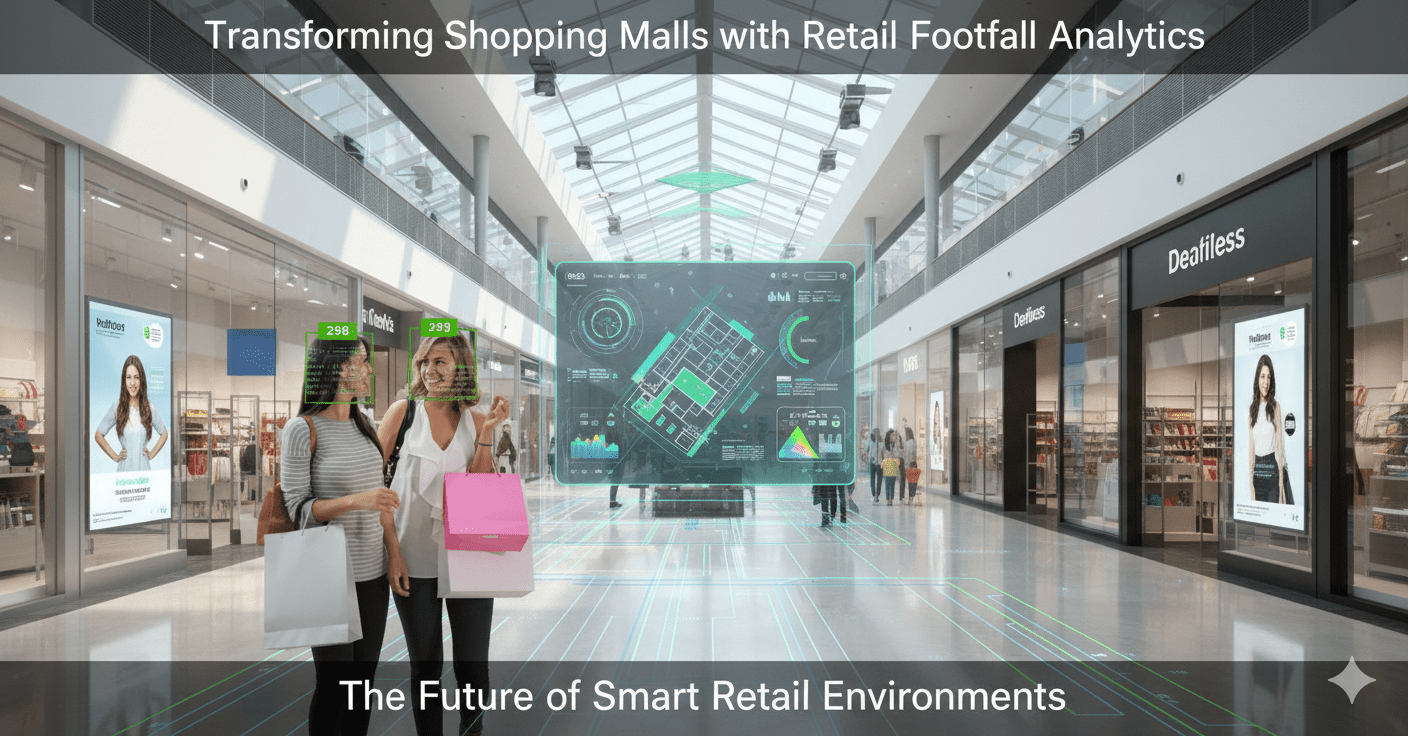
In today’s hyper-competitive retail world, shopping malls are evolving from traditional retail spaces into intelligent, data-driven environments. At the core of this transformation lies Retail Footfall Analytics, a revolutionary technology powered by AI, computer vision, and IoT sensors. This innovative solution enables malls to track, analyze, and understand customer movement patterns, reshaping how mall operators make strategic decisions, manage operations, and enhance the shopper experience.
This blog explores how Retail Footfall Analytics is redefining the modern shopping mall — benefiting both mall operators and customers alike.
What is Retail Footfall Analytics?
Retail Footfall Analytics involves tracking and analyzing how people move within a shopping mall — from entries and exits to movement between stores. Using advanced tools such as:
- AI-powered footfall counting software
- Smart cameras with computer vision
- Wi-Fi tracking and Bluetooth beacons
- Heatmaps and motion sensors
These technologies collect detailed insights that go beyond simple visitor counts. They uncover data about peak hours, dwell times, popular zones, and customer preferences, empowering mall operators to make informed, data-backed decisions.
How Retail Footfall Analytics is Transforming Shopping Malls
1. Smarter Store Layouts and Improved Navigation
Retail footfall analytics helps operators visualize how shoppers navigate through different areas of a mall using AI-generated heatmaps. These insights can be used to:
- Reorganize store layouts based on traffic intensity
- Optimize placement of kiosks, ATMs, and service counters
- Identify and eliminate navigation bottlenecks
By understanding movement flow, malls can design layouts that make it easier for customers to explore stores, discover new brands, and enjoy a seamless, engaging experience.
2. Data-Driven Tenant Performance and Leasing Strategies
Mall management no longer has to rely on assumptions when it comes to leasing decisions. With accurate traffic data, operators can:
- Justify premium lease rates for high-traffic zones
- Provide tenants with performance insights to help them improve sales
- Curate a balanced tenant mix that aligns with shopper preferences
This data-driven approach ensures that both tenants and mall operators benefit — tenants gain visibility and sales opportunities, while operators maximize revenue per square foot.
3. Precision Marketing and Campaign Measurement
Marketing without insights is a shot in the dark. Retail footfall analytics gives malls the ability to monitor real-time visitor data to:
- Launch promotions during high-traffic periods
- Measure the impact of in-mall advertisements or digital signage
- Identify which campaigns effectively drive footfall
By aligning marketing strategies with footfall data, mall operators can maximize ROI and ensure campaigns reach the right audience at the right time.
4. Enhanced Operational Efficiency
Footfall data is not only useful for marketing and leasing — it also optimizes daily mall operations. For instance:
- Cleaning schedules can be aligned with traffic peaks
- Security staff can be deployed based on visitor density
- HVAC systems can adjust settings automatically during busy hours
This leads to significant cost savings, better resource management, and improved customer satisfaction through consistently high service levels.
5. Understanding Customer Behavior and Patterns
Modern footfall analytics tools provide a granular view of shopper behavior, including:
- Ratio of new vs. returning visitors
- Average time spent in specific stores or areas
- Entry and exit patterns across different hours or days
These insights allow mall management to understand what drives customer engagement and loyalty. As a result, malls can create personalized experiences through targeted offers, curated store recommendations, and interactive engagement strategies.
Shopper Benefits: A More Seamless Mall Experience
While mall operators gain insights and revenue advantages, shoppers also enjoy tangible benefits from footfall analytics. Intelligent mall environments powered by AI and IoT create smoother, safer, and more personalized experiences such as:
- Reduced crowding and bottlenecks in high-traffic areas
- Smart navigation and digital wayfinding assistance
- Real-time notifications about offers or events
- Shorter waiting times at food courts and checkouts
- Improved safety with AI-driven crowd monitoring and alerts
Essentially, retail footfall analytics transforms malls into responsive ecosystems that adapt to the needs of every visitor.
The Power of AI and Footfall Counting Software
Traditional counting methods such as infrared sensors or manual clickers are quickly becoming outdated. Today’s AI-based footfall counting software delivers far greater accuracy and actionable intelligence.
Key advantages include:
- Differentiation between adults, children, and groups
- Exclusion of staff or service personnel from counts
- Identification of demographics such as age and gender
- Integration with CRM and loyalty programs for deeper insights
By leveraging these AI-powered systems, mall operators can make real-time, data-driven decisions that enhance both profitability and customer satisfaction.
Real-World Example: Smart Malls Leading the Way
Modern retail hubs across Dubai, Singapore, and India are already using footfall analytics and AI dashboards to transform mall operations. By combining camera-based analytics, facial recognition, and digital signage, these smart malls are creating immersive experiences that attract visitors and drive repeat visits.
These innovations prove that data-backed decision-making is no longer an option — it’s the foundation for the future of retail success.
Why Choose Nextbrain’s Footfall Counting Software for Shopping Malls?
Nextbrain has developed a powerful, AI-driven footfall counting software designed to meet the complex needs of modern shopping malls. Here’s what sets it apart:
- Real-Time Accuracy: Provides live data with over 98% accuracy using advanced AI and computer vision.
- Heatmaps with Dwell-Time Insights: Visualize footfall distribution and analyze how long shoppers spend in specific zones.
- Seamless Integration: Connect easily with existing CCTV systems, CRMs, and marketing tools.
- Actionable Reports: Generate daily, weekly, and monthly reports to enhance marketing, leasing, and operational decisions.
- Custom Alerts: Get notified about occupancy limits, unusual dwell times, or underutilized areas.
- Data Privacy Compliance: Designed to meet global data protection standards while ensuring actionable intelligence.
With Nextbrain, malls receive smart data, not just numbers — empowering them to create strategies that boost engagement, efficiency, and profitability
Final Thoughts: Data is Redefining the Future of Shopping Malls
Retail Footfall Analytics has redefined the retail business model — turning instinctive decision-making into insight-driven strategy. For shopping malls aiming to stay relevant and competitive in a digital-first era, adopting smart analytics solutions is no longer optional — it’s essential.
As customer expectations rise and competition intensifies, footfall data provides the foundation for smarter planning, better engagement, and sustainable growth.
Ready to Transform Your Mall with Smart Footfall Analytics?
Nextbrain offers cutting-edge AI-powered footfall counting software specifically built for shopping malls. Experience real-time analytics, dynamic heatmaps, and actionable insights that help you increase footfall, optimize operations, and deliver exceptional shopper experiences.
Contact Nextbrain today to schedule a demo and discover how intelligent retail analytics can elevate your mall’s performance and profitability.
Frequently Asked Questions (FAQs)
1. What is retail footfall analytics and why is it important for shopping malls?
Retail footfall analytics is the process of tracking and analyzing visitor movement inside malls using AI, computer vision, and IoT sensors. It helps mall operators understand customer behavior, optimize layouts, and make data-driven decisions that enhance both profitability and visitor experience.
2. How does AI-powered footfall counting software work?
AI-powered software uses smart cameras and machine learning models to detect and count individuals accurately. It can differentiate between adults, children, and staff, providing real-time insights on visitor flow and crowd density with over 98% accuracy.
3. What are the main benefits of using footfall analytics in malls?
The benefits include improved store layouts, smarter leasing decisions, targeted marketing campaigns, better operational efficiency, and a safer, more enjoyable shopping experience for customers.
4. How is Nextbrain’s footfall counting software different from traditional systems?
Nextbrain’s solution uses AI and computer vision to deliver precise, real-time data. Unlike infrared sensors or manual counters, it provides demographic insights, integrates with CRM systems, and offers visual heatmaps for better decision-making.
5. Is customer privacy maintained while using AI-based footfall analytics?
Yes. Nextbrain’s software adheres to global privacy regulations. It uses anonymized video analytics to gather insights without storing or sharing personal data, ensuring full compliance with data protection standards.
 Nextbrain Technologies