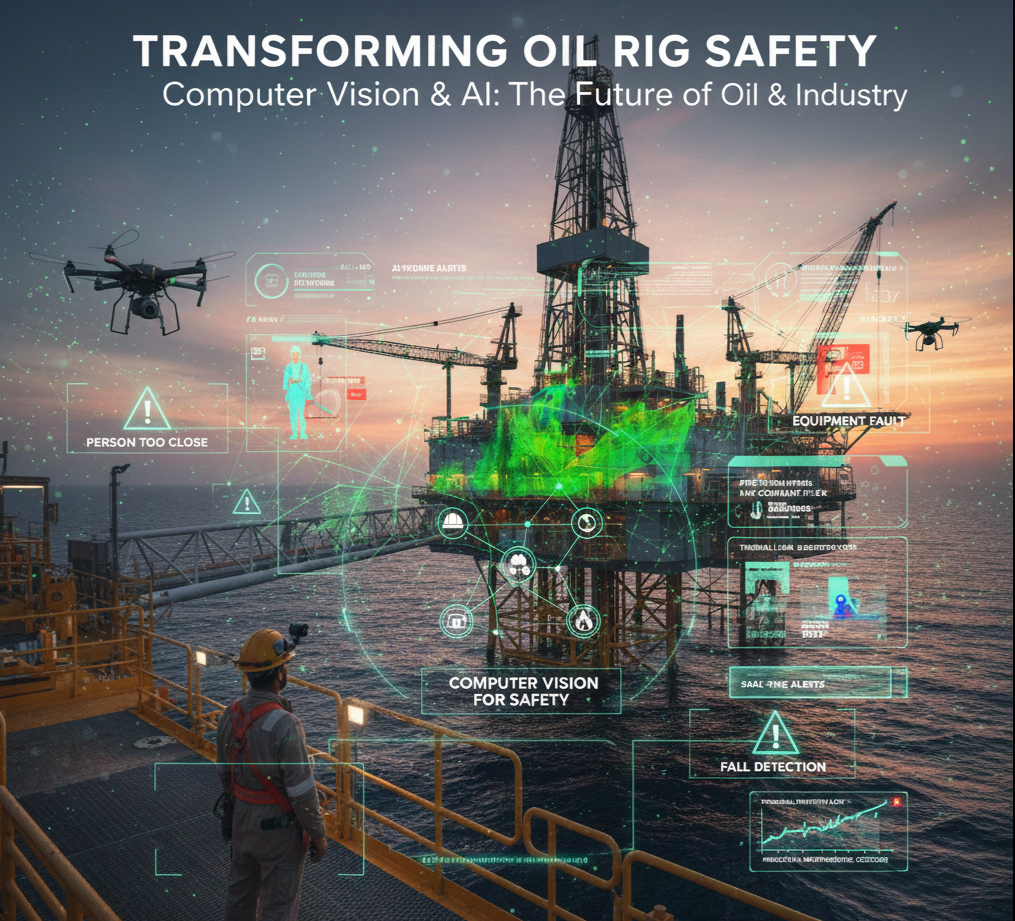
Offshore oil rigs are known for their complexity, operational scale, and exposure to high-risk environments. These massive structures function continuously, often under extreme weather conditions, deep-water challenges, and high-pressure extraction systems. Ensuring worker safety and smooth operations has always been a major priority for the oil & gas industry, but traditional monitoring systems often fall short when it comes to quick detection of hazards.
Today, technological advancements—particularly in artificial intelligence—are transforming how safety is managed. One of the most impactful technologies in this space is computer vision in oil rig safety, which leverages AI-driven video analytics to identify risks, analyze equipment health, and monitor worker activities in real time. This innovation is reshaping how companies tackle safety, predictive maintenance, and operational resilience.
In this article, we explore how computer vision is becoming indispensable for offshore rig operations, providing proactive safety intelligence, reducing human error, and enhancing workplace reliability.
Understanding the Demands of Offshore Oil Rig Operations
Oil rigs operate in remote, isolated environments where even small incidents can quickly escalate into life-threatening hazards. Workers handle heavy machinery, flammable materials, elevated platforms, drilling systems, and complex pipelines—making safety monitoring a demanding task.
Key challenges faced by offshore rigs include:
- High-pressure drilling systems
- Corrosion and mechanical wear caused by harsh climates
- Risk of blowouts, oil leaks, and fire hazards
- Limited visibility in underwater or enclosed sections
- Human fatigue and compliance lapses
- Difficult, time-consuming manual inspections
Because of these constraints, modern rigs require advanced, real-time monitoring solutions capable of responding instantly when abnormal conditions occur. This is where AI-powered computer vision creates remarkable value.
How Computer Vision is Transforming Oil Rig Safety
Computer vision uses cameras, sensors, and AI algorithms to analyze visual data and detect patterns, risks, or anomalies. On oil rigs, this involves 24/7 monitoring of equipment, workers, and the environment to ensure any deviations are identified immediately.
1. Real-Time Hazard Identification
With constant surveillance, AI video analytics detect potential risks such as:
- Smoke or fire
- Gas leaks
- Overheating equipment
- Intrusions in restricted zones
- Unsafe worker movements
- Falling objects
- Chemical spills
- Unattended machinery
Real-time alerts enable operators to respond instantly, preventing significant incidents and reducing operational downtime.
2. PPE and Worker Compliance Monitoring
One of the most frequent causes of offshore injuries is non-compliance with safety protocols. Workers may forget or overlook certain PPE items—helmets, gloves, eye protection, vests—especially in fast-paced environments.
Computer vision automatically checks for:
- Missing PPE
- Incorrect usage
- Unsafe proximity to machinery
- Unauthorized zone access
These automated systems ensure consistent safety enforcement without depending on physical supervisors for oversight.
3. Predictive Maintenance and Early Failure Detection
Offshore equipment is constantly subjected to pressure, humidity, and mechanical stress. AI-powered video analytics recognize early signs of:
- Component wear
- Structural instability
- Rust and corrosion
- Vibration anomalies
- Pipeline leaks
- Loose bolts or fittings
Predictive maintenance strategies help companies plan repairs before breakdowns occur—significantly reducing downtime and extending machinery life.
4. Supporting Emergency Response Readiness
In the event of a crisis such as fire, explosion, oil spill, or gas leak, response time becomes crucial. Computer vision aids emergency readiness by:
- Detecting abnormal smoke patterns
- Tracking worker locations for immediate evacuation
- Triggering automated safety protocols
- Guiding responders with real-time video intelligence
These capabilities strengthen the rig’s resilience to high-impact emergencies.
5. Enhancing Decision-Making with Data Insights
Every second of surveillance footage is converted into actionable insights using AI. This data helps safety managers:
- Analyze root causes of incidents
- Identify risk patterns
- Optimize workforce planning
- Implement smarter safety policies
- Improve long-term operational strategies
Data-driven decision-making leads to more proactive, rather than reactive, safety cultures.
6. Drone-Based Inspection for Hard-to-Reach Areas
Drones equipped with computer vision are becoming a major breakthrough for oil rig inspections. They can fly into areas that are too dangerous or inaccessible for humans.
These include:
- Underwater pipelines
- Elevated crane systems
- Flare towers
- Outer rig platforms
- Tight structural gaps
With high-resolution visual data and AI analysis, drones drastically reduce risk, inspection time, and operational costs.
Automating Routine Checks and Workflows
Routine inspections and safety checks are time-consuming when performed manually. Computer vision automates tasks such as:
- Monitoring pressure gauges
- Checking fluid levels
- Detecting operational irregularities
- Verifying equipment alignment
- Logging safety compliance data
This frees up human workers to focus on higher-level decision-making and complex tasks requiring expertise.
Nextbrain: Delivering Advanced AI Video Analytics for Oil Rig Safety
Nextbrain is a globally recognized AI development company offering specialized computer vision solutions for high-risk industrial sectors. With expertise in AI Video analytics software, Nextbrain provides end-to-end safety automation tailored for offshore oil and gas environments.
What Makes Nextbrain’s Solution Stand Out?
- Real-time AI monitoring covering equipment, pipelines, and worker behavior
- High-accuracy hazard detection including smoke, fire, gas leaks, and PPE violations
- Drone-enabled computer vision for structural and underwater inspections
- Predictive maintenance insights driven by machine learning
- Full integration with IoT sensors and rig management tools
- Automated audit and compliance reports
- Advanced dashboards for centralized safety oversight
Nextbrain’s solutions help offshore companies lower operational risk, prevent accidents, and ensure uninterrupted productivity while maintaining global safety standards.
To learn more about Nextbrain’s AI-powered computer vision technologies, contact the team today for a customized consultation.
Conclusion
The integration of computer vision into offshore oil rig operations is transforming safety standards across the globe. By detecting hazards instantly, automating inspections, monitoring PPE compliance, and strengthening emergency response frameworks, AI ensures that rigs operate with higher reliability and reduced risk.
As the oil & gas sector expands into deeper and more challenging waters, smart monitoring and predictive maintenance will play a decisive role in ensuring operational continuity. Computer vision enables companies to transition from a reactive approach to a proactive and preventive safety culture—one that puts worker protection and operational excellence first.
Frequently Asked Questions (FAQs)
1. How does computer vision improve oil rig safety?
Computer vision monitors equipment, workers, and the environment 24/7. It detects hazards like smoke, spills, PPE violations, and unsafe movements, helping prevent accidents and improving overall safety.
2. What types of hazards can computer vision detect on offshore rigs?
It can detect fire, smoke, gas leaks, corrosion, oil spills, falling objects, unsafe worker behaviors, and unauthorized access to restricted zones.
3. What role does computer vision play in predictive maintenance?
Computer vision identifies early signs of equipment wear, structural damage, and abnormal vibrations, allowing maintenance teams to fix issues before they escalate.
4. Can computer vision work with drones for inspections?
Yes. Drones equipped with AI can inspect underwater structures, high platforms, and dangerous zones—reducing human involvement in hazardous tasks.
5. Why should offshore companies choose Nextbrain’s AI solutions?
Nextbrain offers advanced AI Video analytics software that provides accurate hazard detection, real-time monitoring, IoT integration, automated reporting, and predictive maintenance—making it a complete safety solution for oil rigs.
 Nextbrain Technologies