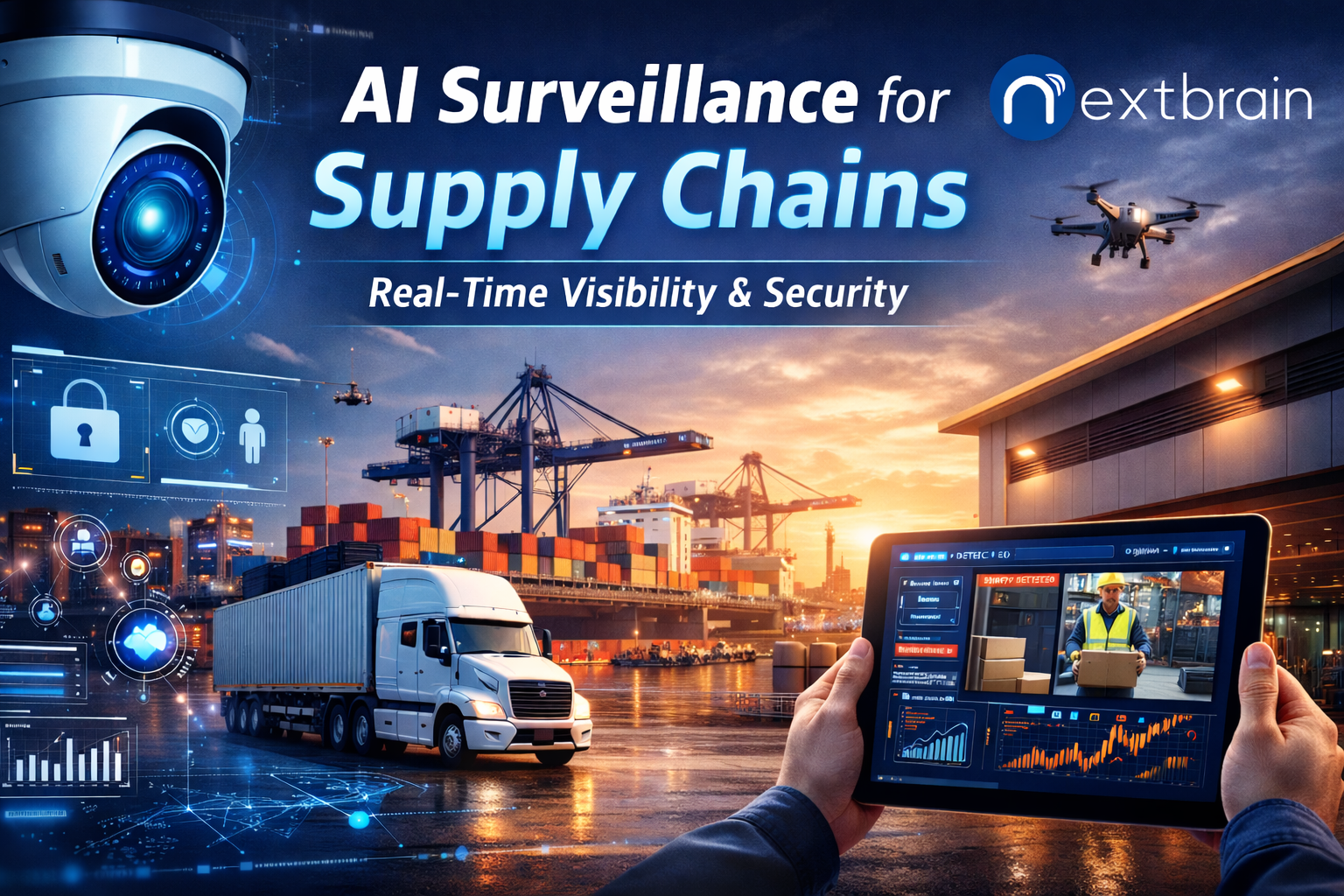
Global supply chains are no longer static networks of transport routes. They are dynamic ecosystems that operate continuously across warehouses, fleets, ports, and last-mile delivery routes. In such fast-moving environments, traditional surveillance systems and manual monitoring methods struggle to keep up. As supply chains expand in scale and complexity, organizations are increasingly turning to AI-powered surveillance and video analytics to secure operations, enhance visibility, and drive smarter decisions.
In this blog, we explore how AI surveillance for supply chains is emerging as a critical backbone of modern logistics—delivering real-time intelligence, stronger security, and operational resilience.
Complexities in Modern Supply Chains
Modern supply chains face a wide range of challenges that directly impact efficiency, safety, and profitability. One of the most significant issues is the lack of real-time visibility across distributed operations. Fleets, warehouses, yards, and transit routes often operate in silos, creating blind spots that lead to delays and inefficiencies.
Other key challenges include:
- Rising incidents of cargo theft and pilferage
- Unauthorized access to facilities and restricted zones
- Human error due to manual monitoring
- Increasing safety and regulatory compliance requirements
- Pressure to scale operations without increasing costs
When logistics networks rely on fragmented systems, errors become unavoidable. By leveraging AI video analytics for supply chains, organizations can convert raw video data into actionable intelligence, enabling centralized monitoring, faster anomaly detection, and proactive decision-making across the entire supply chain ecosystem.
What Is AI-Driven Surveillance in Supply Chains?
AI-driven surveillance combines computer vision, machine learning, IoT sensors, and edge analytics to monitor supply chain operations in real time. Unlike traditional CCTV systems that merely record footage, AI-powered surveillance actively analyzes video streams to detect, classify, and respond to events as they occur.
These intelligent systems can be deployed across:
- Warehouses and distribution centers
- Loading docks and yard operations
- Transportation fleets and containers
- Last-mile delivery routes
By continuously learning patterns and behaviors, AI-driven surveillance systems identify risks early and trigger alerts before issues escalate.
Strengthening Supply Chain Security
Security is one of the strongest drivers for adopting AI-powered logistics monitoring. Supply chains involve high-value goods moving across multiple touchpoints, making them vulnerable to theft, tampering, and unauthorized access.
AI surveillance helps organizations:
- Detect intrusion, theft, and cargo tampering in real time
- Monitor seal integrity and container handling
- Track high-risk transit routes and geofenced areas
- Reduce losses, insurance claims, and operational disruptions
Early threat detection allows businesses to protect assets while maintaining the integrity of their supply chain operations.
Smart Warehouses and Distribution Centers
Warehouses are the backbone of modern supply chains, storing valuable inventory while managing constant movement of people, vehicles, and goods. Manual supervision in such environments often results in overlooked incidents and inefficiencies.
With AI surveillance for supply chains, warehouse teams can:
- Monitor entry and exit points to prevent unauthorized access
- Detect tailgating at restricted doors
- Track inventory movement to identify pilferage
- Identify unsafe worker behavior and vehicle movement
Real-time insights enable warehouse managers to act proactively, preventing costly incidents and downtime.
End-to-End Real-Time Visibility
Real-time visibility is essential for efficient supply chain operations. AI-driven surveillance transforms video feeds into actionable insights, allowing teams to instantly recognize delays, bottlenecks, and suspicious activities.
By integrating visual intelligence across facilities and transit routes, organizations gain a unified view of operations. This holistic visibility improves coordination, reduces downtime, and enhances overall operational transparency.
In-Transit and Fleet Monitoring
Once goods are in transit, visibility becomes even more critical. AI-enabled cameras installed in vehicles allow organizations to monitor:
- Cargo movement and condition
- Driver behavior and safety compliance
- Route deviations and unauthorized stops
- Tampering or seal breaches
Real-time alerts enable control centers to intervene immediately, minimizing losses and ensuring on-time deliveries.
Improving Safety, Compliance, and Accountability
Across global supply chains, safety and regulatory compliance are non-negotiable. AI surveillance supports compliance by:
- Detecting unsafe practices and policy violations
- Automating incident documentation and reporting
- Ensuring adherence to safety gear and access control policies
This level of accountability is especially valuable when managing third-party logistics partners across multiple regions.
Unified Monitoring Across Supply Chain Networks
One of the biggest advantages of AI surveillance is centralized monitoring. A unified dashboard aggregates video feeds from warehouses, yards, vehicles, and partner locations.
When suspicious activity or overcrowding is detected, the system triggers instant alerts—enabling faster response, predictive planning, and continuous improvement across the supply chain. Enterprises that adopt AI-driven visibility tools consistently reduce operational losses and disruptions.
Why AI Surveillance Is Becoming a Strategic Backbone
AI surveillance is no longer just a security solution—it is a strategic enabler. It supports:
- Data-driven risk management
- Agile and resilient operations
- Improved customer satisfaction through reliability
- Scalable growth without operational complexity
As supply chains become more interconnected and time-sensitive, AI-powered surveillance provides the foundation needed to maintain control and efficiency.
The Future of AI Surveillance in Supply Chains
The future of AI surveillance lies in edge AI, predictive analytics, and deeper integration with digital twins and supply chain platforms. AI-powered logistics monitoring will increasingly predict congestion, identify risk zones, and optimize routes before disruptions occur.
By combining video intelligence with GPS data and historical patterns, AI-driven supply chains will become more resilient, transparent, and adaptive—qualities essential in today’s volatile global environment.
How Nextbrain Supports AI Surveillance for Supply Chains
Nextbrain is a leading AI development company specializing in intelligent surveillance solutions for logistics and supply chain environments. With deep expertise in computer vision, machine learning, and real-time analytics, Nextbrain helps enterprises transform passive video systems into proactive intelligence platforms.
Nextbrain’s AI solutions enable:
- End-to-end visibility across warehouses, fleets, and yards
- Real-time alerts for theft, intrusion, and safety violations
- Seamless integration with fleet management, IoT, and ERP systems
- Scalable deployment across global supply chain networks
By partnering with Nextbrain, organizations gain smarter, safer, and more resilient supply chain operations.
Conclusion
In an era where supply chains operate continuously across borders and facilities, maintaining visibility over every movement is essential. AI surveillance for supply chains transforms traditional monitoring into a dynamic intelligence system that safeguards assets, optimizes operations, and enhances resilience.
By converting video data into real-time insights, organizations can reduce risks, improve efficiency, and respond proactively to disruptions. In a competitive landscape where resilience defines success, AI-powered surveillance is no longer optional—it is indispensable.
Looking to modernize your supply chain surveillance strategy? Connect with Nextbrain today to build intelligent, scalable AI solutions for logistics security and visibility.
Frequently Asked Questions
1. What is AI-driven surveillance in supply chain management?
AI-driven surveillance uses computer vision and machine learning to monitor warehouses, fleets, and transit routes in real time.
2. How does AI video analytics improve supply chain operations?
It enables real-time visibility, detects risks early, improves compliance, and supports proactive decision-making.
3. Can AI surveillance integrate with existing logistics systems?
Yes, AI surveillance platforms can integrate with fleet management, IoT devices, access control systems, and ERP platforms.
4. Does AI surveillance help reduce theft and cargo loss?
Absolutely. AI detects suspicious behavior, tampering, and unauthorized access in real time, reducing losses significantly.
5. Is AI surveillance scalable for global supply chains?
Yes, AI-powered surveillance systems are highly scalable and can be deployed across multiple regions and facilities.
 Nextbrain Technologies