Be yourself; Everyone else is already taken.
— Oscar Wilde.
This is the first post on my new blog. I’m just getting this new blog going, so stay tuned for more. Subscribe below to get notified when I post new updates.
Be yourself; Everyone else is already taken.
— Oscar Wilde.
This is the first post on my new blog. I’m just getting this new blog going, so stay tuned for more. Subscribe below to get notified when I post new updates.
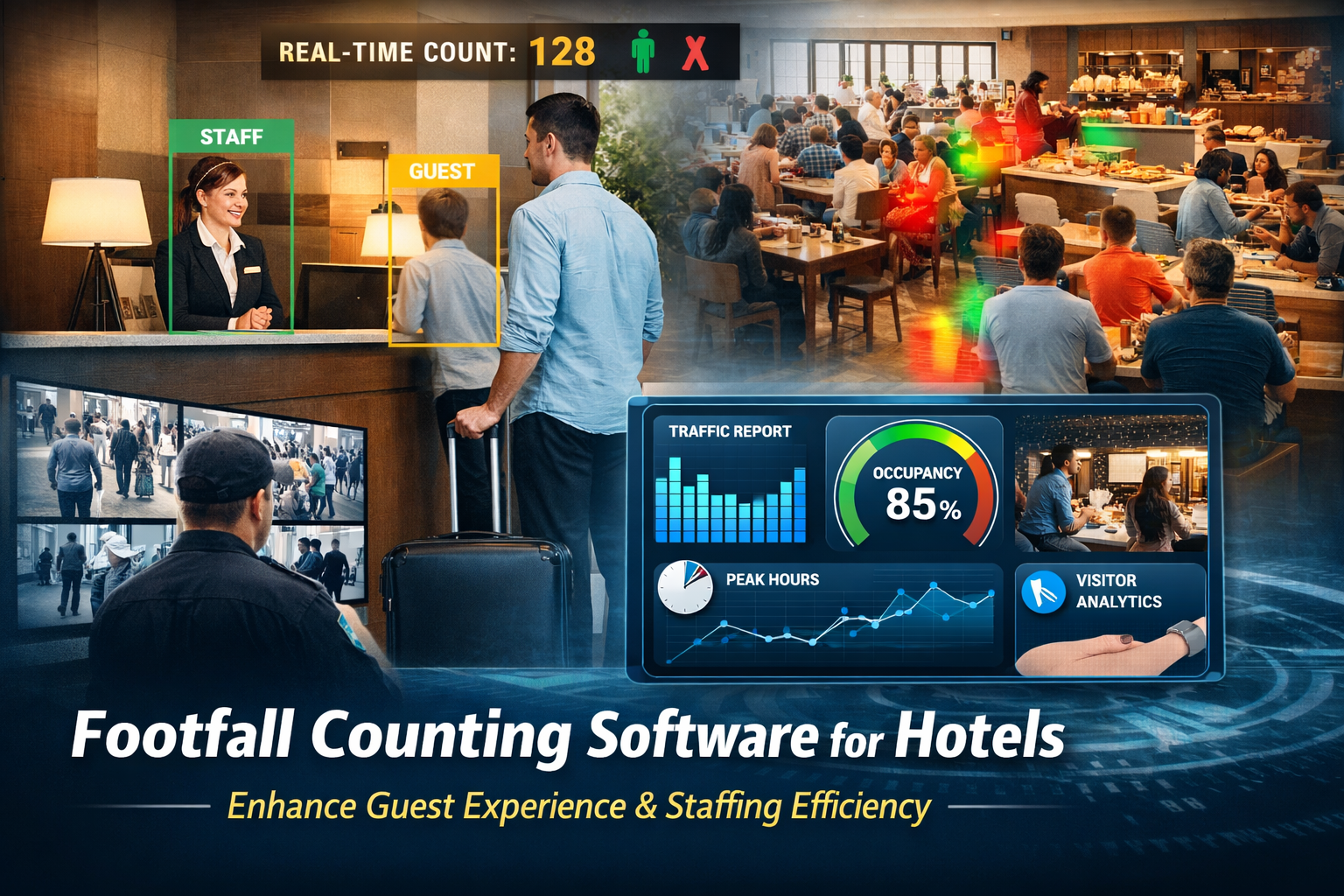
The hospitality industry depends on delivering seamless guest experiences while maintaining operational efficiency. However, hotels often face challenges such as long queues, overcrowded amenities, and improper staff allocation due to unpredictable guest movement.
This is where Footfall Counting Software plays a vital role. By tracking visitor flow in real time, hotels can understand guest behavior, optimize staffing, and improve service quality while reducing operational costs.
Hotels consist of multiple high-traffic zones:
Without accurate visitor data, hotel management relies on assumptions. This leads to:
Footfall analytics removes guesswork and enables data-driven hotel management.
Footfall Counting Software uses AI-enabled cameras and sensors to measure the number of people entering, exiting, and moving inside hotel spaces.
It provides:
This helps hotel managers make accurate operational decisions.
Reception delays negatively affect first impressions. Hotels can deploy extra staff during rush hours based on visitor spikes.
Benefits:
Breakfast hours often cause overcrowding. Footfall analytics predicts rush hours so hotels can prepare seating and food accordingly.
Results:
Gyms, pools, and spas experience uneven usage. Hotels can display live occupancy or recommend alternative times.
This ensures:
Hotels can analyze visitor patterns and tailor services.
Examples:
This improves engagement and loyalty.
Labor costs are one of the largest hotel expenses. Improper scheduling reduces productivity and increases operational cost.
Footfall Counting Software aligns staffing with real demand.
Hotels can adjust shifts dynamically:
By monitoring room vacancy patterns, cleaning teams can prioritize rooms effectively, reducing waiting time for guests.
Security staff can be deployed in crowded zones and reduced in low-traffic areas without compromising safety.
Visitor analytics helps hotels understand which areas generate revenue.
Hotels can identify:
This allows:
Nextbrain offers advanced Footfall Counting Software tailored for hotels and hospitality environments. Powered by intelligent AI Video analytics software, the system delivers accurate real-time visitor insights that improve both operations and guest services.
Key Features
With Nextbrain, hotels gain actionable insights to improve service quality, optimize staffing, and reduce operational costs while increasing guest satisfaction.
Hotels typically notice improvements in operations within weeks.
Modern hotels require intelligent decision-making to deliver exceptional experiences. Manual monitoring is no longer sufficient to manage guest flow efficiently.
Footfall Counting Software enables hotels to:
Hotels adopting data-driven operations consistently outperform competitors.
To enhance your hotel operations and guest satisfaction, contact Nextbrain today and transform your hospitality business with intelligent footfall analytics.
AI-based systems provide more than 95% accuracy even in crowded hotel environments.
Yes, modern AI cameras function efficiently in indoor and dim lighting conditions.
Most solutions integrate with existing camera infrastructure, reducing cost.
It identifies peak service demand, enabling better pricing and upselling strategies.
Yes. The system tracks anonymous movement patterns and does not store personal identity data.
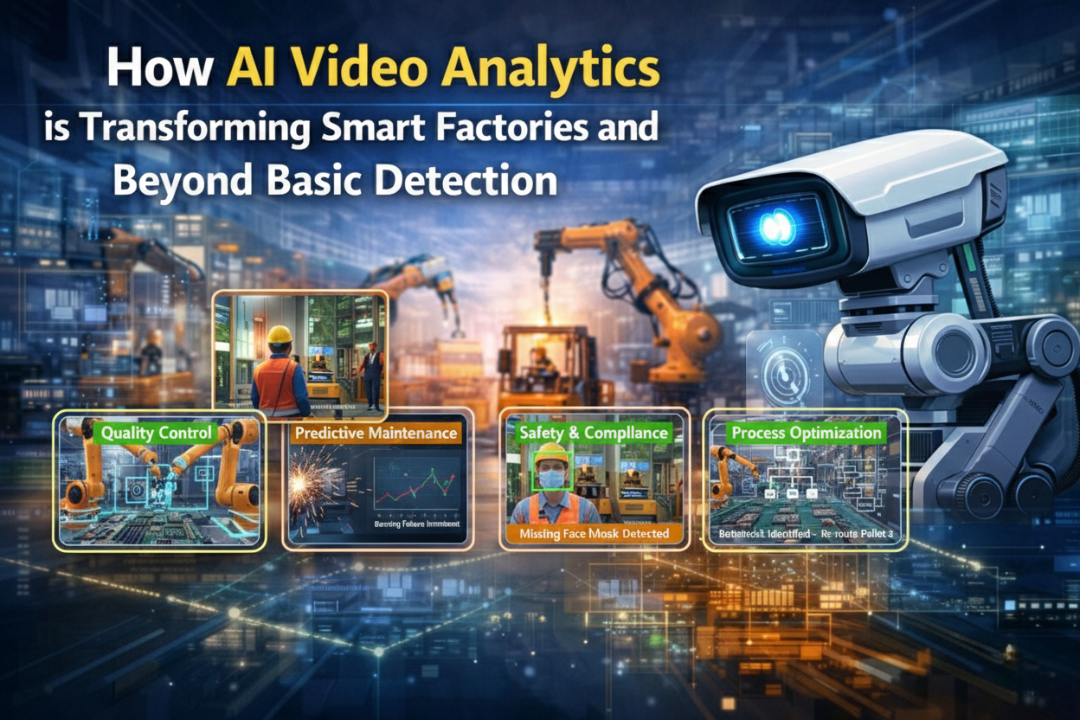
The manufacturing industry is entering a new era where automation is no longer the final goal. Modern factories now focus on intelligence, visibility, and predictive decision making. This shift defines Industry 4.0, where machines, people, and systems operate through continuous data exchange.
Yet one major gap has always existed in automation environments. Machines can produce and measure data, but they cannot understand visual activity on the factory floor. Safety violations, human errors, and process deviations often remain unnoticed until losses occur.
This is where AI Video analytics in manufacturing industry is becoming essential. By converting standard surveillance cameras into intelligent monitoring systems, manufacturers gain real time awareness of operations, behavior, and risks without manual supervision.
AI powered video analytics allows factories to detect problems instantly instead of investigating them after downtime, defects, or accidents occur.
Smart factories rely heavily on IoT sensors, robotics, and machine connectivity. However, many critical events cannot be captured by sensors alone. Human actions, unsafe movement, incorrect handling, and workflow inefficiencies require visual understanding.
Traditional CCTV systems only record footage for later review. They do not interpret events or prevent incidents.
AI video analytics fills this gap by analyzing live video streams continuously and identifying abnormalities as they happen. It effectively becomes a digital safety supervisor and operational analyst working 24 hours a day.
AI video analytics uses computer vision and deep learning algorithms to interpret video feeds from factory cameras. The system recognizes objects, actions, patterns, and anomalies in real time.
It can detect:
• Unsafe worker behavior
• Missing safety equipment
• Production defects
• Unauthorized access
• Equipment anomalies
• Fire and smoke hazards
The system sends alerts instantly so teams can respond before the issue escalates.
Industrial environments contain moving equipment, heavy machinery, and hazardous zones. Manual supervision cannot cover every location continuously.
AI monitoring automatically detects:
• Workers without helmets or gloves
• Entry into restricted zones
• Unsafe proximity to machines
• Slips, falls, or collapse incidents
This prevents accidents rather than documenting them later.
Human inspectors struggle to identify micro defects during high speed production. Fatigue and repetitive tasks reduce accuracy over time.
AI visual inspection systems continuously examine products and identify:
• Surface defects
• Assembly errors
• Missing components
• Label mismatches
This improves product consistency and reduces recall risk.
Manufacturers often face hidden inefficiencies such as idle time and workflow imbalance. AI detects operational bottlenecks by analyzing movement patterns and activity duration.
Managers receive actionable insights to improve layout design, task allocation, and throughput.
Unexpected machine downtime leads to major losses. AI systems monitor behavioral patterns of equipment such as irregular motion, abnormal heat indicators, or operational deviation.
Early alerts allow maintenance teams to act before breakdown occurs.
Factories can evaluate how tasks are performed without intrusive monitoring. AI analyzes workflow patterns and identifies improvement opportunities that increase efficiency while maintaining worker comfort.
Industrial facilities store valuable assets and sensitive materials. AI monitoring detects unauthorized movement, unusual activity, or after hours presence and triggers instant alerts.
AI works without fatigue and covers multiple areas simultaneously.
Managers receive real time alerts instead of delayed incident reports.
Reduced accidents, downtime, and waste improve profitability.
Automated monitoring ensures adherence to safety standards.
Factories can expand operations without increasing supervision costs.
Nextbrain is an ai development company delivering specialized computer vision solutions for industrial environments.
Their AI video analytics platforms enable:
• Real time safety monitoring
• PPE compliance detection
• Automated quality inspection
• Worker activity analysis
• Production line monitoring
• Machine interaction alerts
• Fire and smoke detection
The solutions integrate with existing camera infrastructure, allowing manufacturers to adopt smart monitoring without major hardware changes.
By aligning AI models with factory workflows, Nextbrain supports the transition toward data driven manufacturing operations.
The next stage of smart factories will combine monitoring with autonomous response.
Future AI systems will:
• Pause machines when workers enter hazardous zones
• Adjust production speed automatically
• Predict fatigue related risks
• Coordinate robotic operations with human activity
• Continuously optimize workflow patterns
Factories will move from automated operations to self aware environments capable of preventing operational failures.
AI video analytics is becoming the perception layer of Industry 4.0. It provides real time awareness of safety, quality, and productivity across manufacturing facilities.
Organizations implementing this technology gain improved operational control, safer workplaces, and higher production reliability.
Adopting intelligent monitoring is no longer optional for manufacturers aiming to remain competitive in modern industry.
Contact Nextbrain today to start your smart factory transformation with AI powered video analytics solutions.
1. Can AI video analytics work with existing cameras?
Yes. Most solutions integrate with current surveillance infrastructure.
2. Does the system replace human supervisors?
No. It enhances supervision by providing continuous monitoring and alerts.
3. Is it suitable for small manufacturing units?
Yes. Deployment can scale based on facility size and requirements.
4. How quickly does it deliver results?
Many manufacturers observe measurable improvements within a few months.
5. Which industries benefit the most?
Automotive, electronics, pharmaceuticals, food processing, logistics, and heavy manufacturing see strong impact.
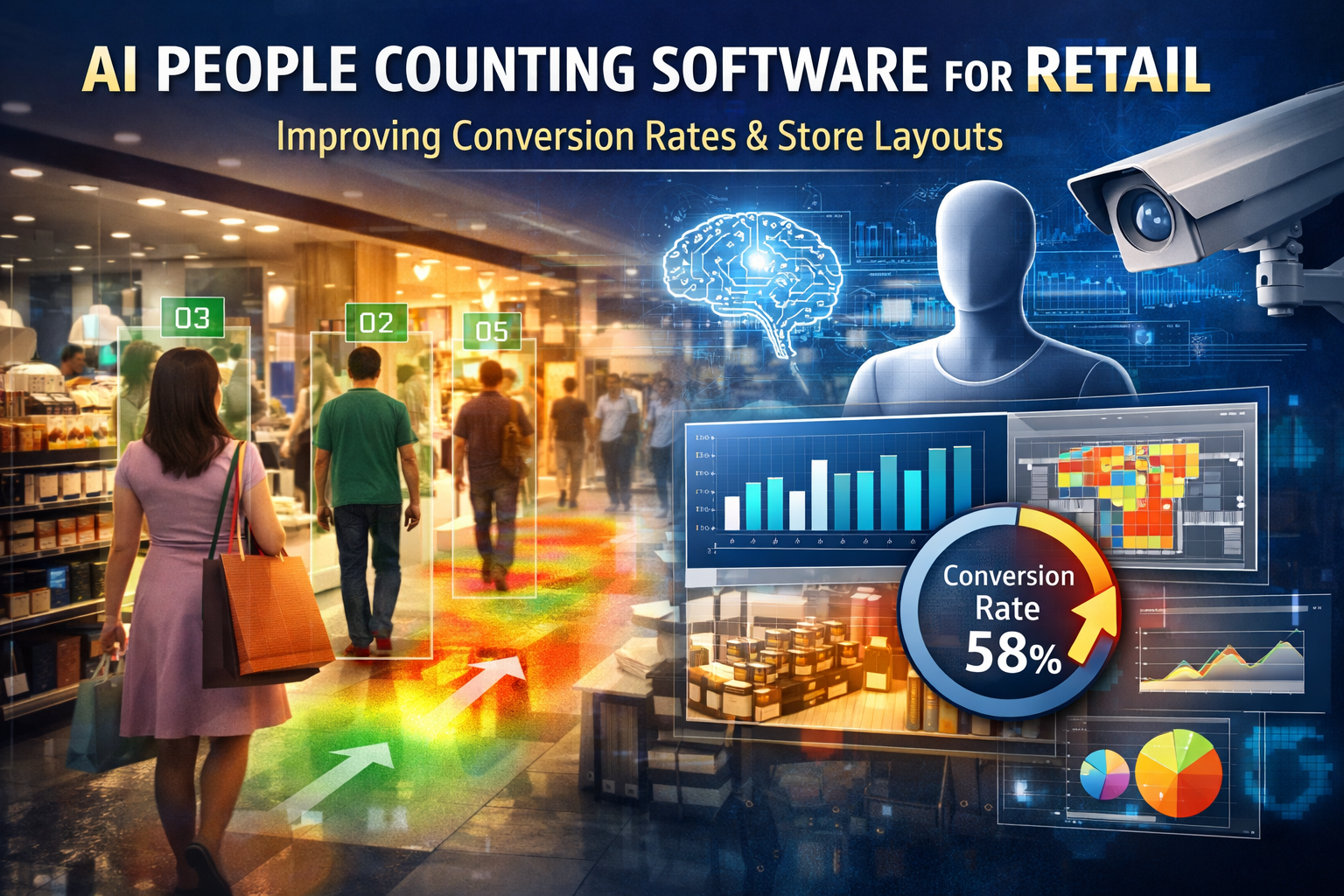
In today’s competitive retail landscape, understanding customer behavior inside physical stores is just as critical as tracking online analytics. While eCommerce brands rely heavily on traffic and conversion data, brick-and-mortar retailers have traditionally struggled to gain similar insights. This is where AI People Counting Software is transforming retail operations by delivering accurate footfall data, behavioral insights, and actionable intelligence.
By leveraging advanced computer vision and AI-driven analytics, retailers can now measure how many people enter their stores, where they go, how long they stay, and how these behaviors impact sales. More importantly, AI people counting software helps retailers improve conversion rates and optimize store layouts, directly influencing revenue growth.
AI People Counting Software uses intelligent video analytics powered by artificial intelligence and computer vision to automatically detect, track, and count people within a defined space. Unlike traditional infrared or manual counting systems, AI-based solutions deliver high accuracy, real-time insights, and detailed behavioral analytics.
For retail environments, this software integrates seamlessly with existing CCTV cameras, transforming standard video feeds into valuable business data. Retailers gain visibility into footfall trends, peak hours, dwell time, and customer movement patterns—without invading privacy.
Footfall alone does not guarantee sales. A store may attract a large number of visitors, but if those visitors do not convert into paying customers, the business loses potential revenue. Conversion rate—the percentage of visitors who make a purchase—is one of the most important retail performance metrics.
AI People Counting Software helps retailers bridge the gap between foot traffic and actual sales by identifying where conversions drop and why. When footfall data is combined with POS data, retailers can clearly see how in-store behavior influences buying decisions.
AI People Counting Software enables retailers to compare the number of visitors entering a store with the number of completed transactions. This insight helps identify conversion gaps and evaluate the effectiveness of promotions, staff performance, and product placement.
Long queues and understaffed counters often lead to abandoned purchases. By analyzing peak footfall hours, retailers can deploy staff more efficiently, reducing wait times and improving customer satisfaction—leading directly to higher conversions.
AI analytics reveal how customers move inside the store, where they hesitate, and which zones they avoid. Retailers can redesign layouts, adjust signage, and improve navigation to create a smoother shopping journey that encourages purchases.
Retailers can measure how many people engage with promotional displays and whether those interactions lead to sales. This allows marketing teams to refine campaigns and invest only in high-performing in-store strategies.
Store layout plays a critical role in influencing buying behavior. Poor layouts can cause congestion, confusion, and missed sales opportunities. AI People Counting Software provides retailers with heatmaps and movement tracking data that reveal how customers interact with the physical space.
Key Layout Optimization Benefits:
With these insights, retailers can continuously refine store layouts based on real customer behavior—not assumptions.
One of the biggest advantages of AI People Counting Software is real-time analytics. Retail managers can instantly monitor footfall, crowd density, and occupancy levels across multiple locations. This enables proactive decision-making, such as launching flash promotions during low traffic periods or redirecting staff during unexpected crowd surges.
Additionally, historical data allows retailers to compare performance across days, weeks, and seasons, supporting long-term planning and expansion strategies.
Whether managing a single outlet or a nationwide retail chain, AI People Counting Software scales effortlessly. Centralized dashboards allow corporate teams to benchmark store performance, standardize best practices, and identify underperforming locations.
This level of visibility empowers retailers to replicate successful layouts and strategies across multiple stores, ensuring consistent customer experiences and improved conversion rates.
Nextbrain delivers advanced AI Video Analytics software tailored for modern retail environments, helping businesses unlock powerful insights from in-store video data. With strong expertise in AI People Counting Software, Nextbrain enables retailers to accurately track footfall, analyze customer movement patterns, and optimize store layouts to improve conversion rates.
Nextbrain’s AI Video Analytics software seamlessly integrates with existing CCTV camera infrastructure, transforming raw video feeds into real-time, actionable intelligence. Retailers can monitor visitor trends, peak hours, dwell time, and zone-level engagement through intuitive dashboards designed for data-driven decision-making. From single retail outlets to large multi-store chains, Nextbrain’s scalable solutions empower retailers to enhance customer experience, improve operational efficiency, and drive measurable revenue growth.
AI People Counting Software is no longer a luxury—it is a necessity for modern retail success. By turning physical foot traffic into actionable insights, retailers can optimize store layouts, improve customer experiences, and significantly increase conversion rates.
With accurate data, real-time analytics, and AI-driven intelligence, retailers gain the clarity needed to compete in an increasingly data-driven market.
Contact Nextbrain today to implement AI People Counting Software and AI Video Analytics software for smarter retail performance, higher conversions, and data-backed growth.
1. What is AI People Counting Software used for in retail?
AI People Counting Software helps retailers track footfall, analyze customer behavior, optimize store layouts, and improve conversion rates using AI-powered video analytics.
2. How accurate is AI People Counting Software?
AI-based people counting systems offer high accuracy by using computer vision and machine learning, outperforming traditional sensors and manual counting methods.
3. Can AI People Counting Software integrate with existing CCTV cameras?
Yes, most AI people counting solutions integrate seamlessly with existing CCTV infrastructure, reducing deployment costs.
4. Does AI People Counting Software violate customer privacy?
No. These systems focus on anonymous counting and movement patterns without storing or identifying personal information.
5. How does AI People Counting Software help increase retail sales?
By optimizing store layouts, improving staff allocation, reducing congestion, and enhancing customer experience, AI people counting software directly contributes to higher conversion rates and sales growth.
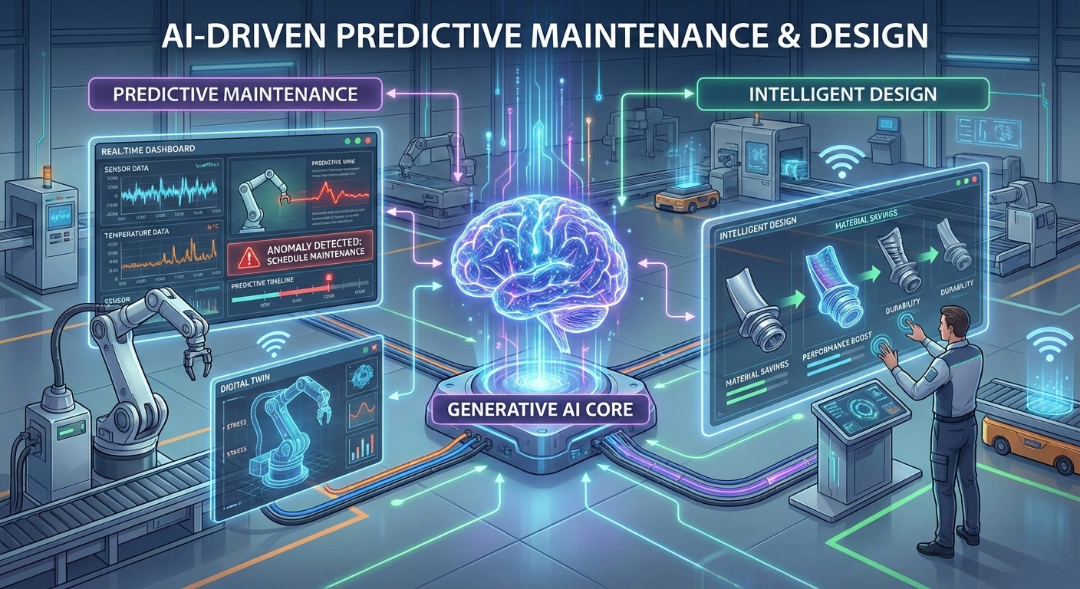
Industries across manufacturing, automotive, energy, and infrastructure are under constant pressure to reduce downtime, optimize performance, and innovate faster. Traditional maintenance and design approaches often reactive and data-siloed are no longer sufficient. This is where a Generative AI development company plays a transformative role by enabling predictive maintenance and intelligent design through advanced AI models.
By leveraging generative AI, businesses can anticipate failures before they occur and design smarter, more efficient systems with unprecedented accuracy.
Predictive maintenance focuses on forecasting equipment failures before they happen by analyzing historical and real-time data. Unlike reactive or preventive maintenance, predictive maintenance minimizes unplanned downtime, extends asset life, and reduces operational costs.
A Generative AI development company enhances predictive maintenance by going beyond traditional analytics. Instead of simply identifying patterns, generative AI models can simulate failure scenarios, generate insights from incomplete data, and adapt continuously as new data flows in.
Industrial systems generate massive volumes of sensor data temperature, vibration, pressure, and operational logs. Generative AI models can ingest and understand complex, multi-dimensional datasets to detect subtle anomalies that rule-based systems often miss.
A Generative AI development company builds models that learn normal operating behavior and identify early indicators of failure long before thresholds are crossed.
One of the most powerful aspects of generative AI is its ability to simulate “what-if” scenarios. AI models can generate synthetic failure data to predict how equipment behaves under stress, wear, or abnormal conditions.
This allows organizations to:
Traditional predictive systems often degrade over time as equipment conditions change. Generative AI models continuously retrain themselves using fresh data, making predictions more accurate as systems evolve.
A skilled Generative AI development company ensures these models remain adaptive, scalable, and aligned with real-world operating conditions.
Beyond maintenance, generative AI is redefining how products and systems are designed.
Generative AI can automatically generate thousands of design alternatives based on constraints such as material strength, cost, weight, and performance. Engineers can then evaluate the best-performing designs rather than starting from scratch.
This approach significantly reduces design cycles and improves innovation speed.
A Generative AI development company can create AI-powered digital twins—virtual replicas of physical assets. These twins simulate real-world conditions and predict how designs will perform before manufacturing begins.
Benefits include:
Generative AI doesn’t just design for performance—it designs for longevity. By analyzing maintenance data, AI models can suggest design improvements that make components easier to repair, replace, or upgrade.
This creates a powerful feedback loop between maintenance insights and future design enhancements.
In all these sectors, partnering with a Generative AI development company ensures that AI solutions are customized, secure, and production-ready.
Predictive maintenance and AI-driven design rely on seamless data integration across IoT devices, ERP systems, and cloud platforms. A Generative AI development company plays a critical role in:
Without expert implementation, even the most advanced AI models fail to deliver value.
Nextbrain is a trusted Generative AI development company specializing in predictive maintenance and intelligent design solutions for modern enterprises. With deep expertise in AI model development, data engineering, and industrial use cases, Nextbrain helps businesses move from reactive operations to proactive intelligence.
Nextbrain’s AI solutions are designed to:
By combining technical excellence with industry understanding, Nextbrain ensures measurable business impact from generative AI initiatives.
Predictive maintenance and intelligent design are no longer optional they are strategic necessities. A capable Generative AI development company empowers organizations to anticipate failures, optimize performance, and innovate with confidence.
If you’re ready to unlock the full potential of generative AI for maintenance and design optimization, contact Nextbrain today and take the next step toward intelligent, future-ready operations.
1. How does generative AI improve predictive maintenance?
Generative AI analyzes complex data patterns, simulates failure scenarios, and continuously learns from new data to predict issues before they cause downtime.
2. Is generative AI better than traditional predictive analytics?
Yes. Generative AI goes beyond pattern recognition by generating insights, simulations, and design recommendations that traditional models cannot.
3. Can generative AI help reduce maintenance costs?
Absolutely. By preventing unexpected failures and optimizing maintenance schedules, generative AI significantly lowers operational and repair costs.
4. Which industries benefit most from generative AI–driven maintenance?
Manufacturing, automotive, energy, aerospace, and infrastructure industries see the highest impact.
5. Why choose Nextbrain for generative AI development?
Nextbrain delivers tailored, scalable, and industry-focused generative AI solutions that drive real operational and design improvements.
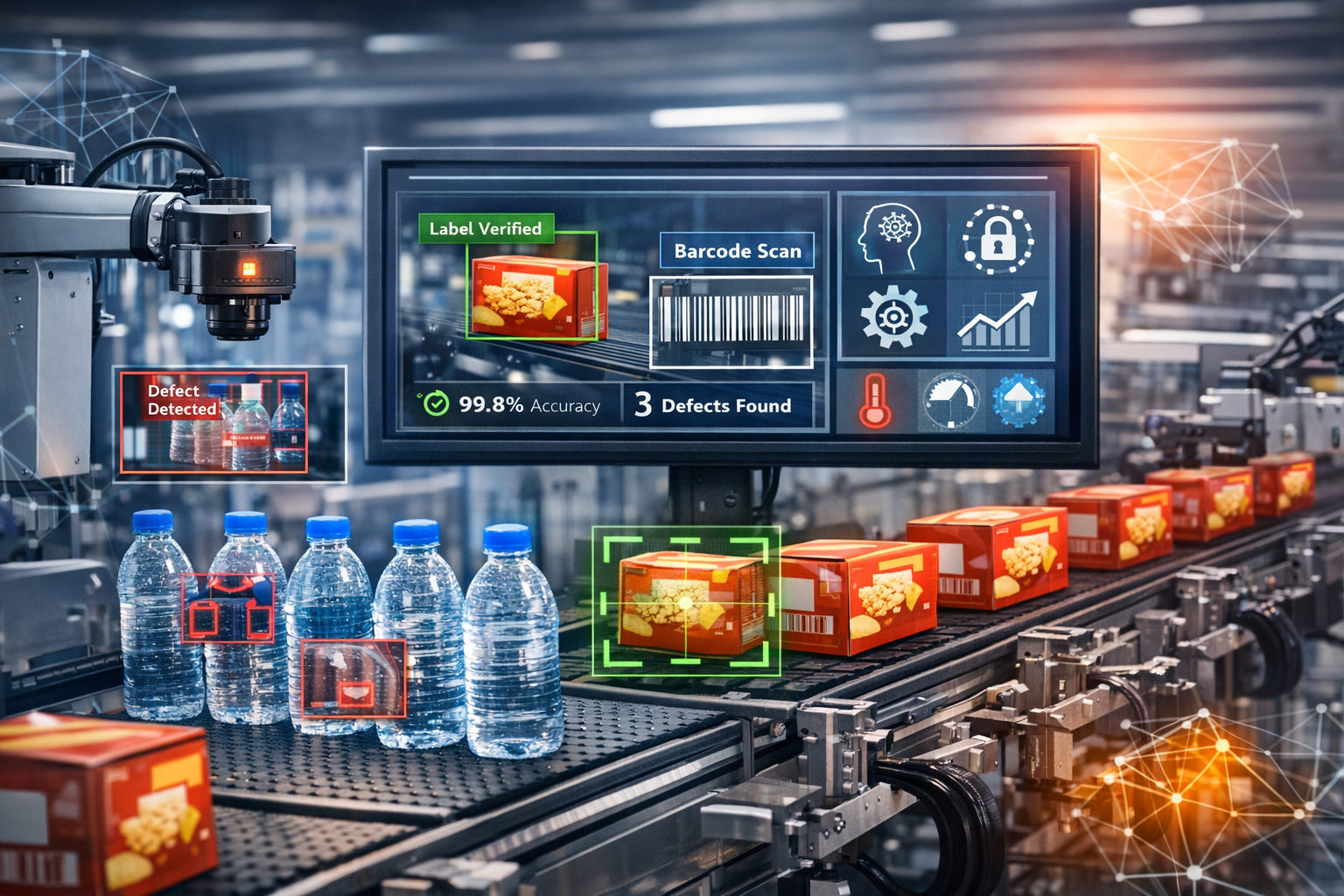
In the fast-moving consumer goods (FMCG) industry, packaging quality is not just about appearance it directly impacts brand trust, regulatory compliance, and customer safety. Even minor packaging defects such as incorrect labels, damaged seals, or missing barcodes can lead to costly recalls, compliance issues, and reputational damage.
To address these challenges, FMCG manufacturers are increasingly turning to Computer vision AI for FMCG packaging, a technology that enables automated, real-time inspection of packaging lines. By combining high-resolution cameras with artificial intelligence and deep learning models, computer vision systems can detect defects, verify labels, and ensure consistent packaging quality at production-line speed.
Computer vision uses AI-powered cameras and algorithms to analyze images and video streams captured during the packaging process. These systems are trained to recognize defects, inconsistencies, and deviations from predefined quality standards.
Unlike manual inspection, computer vision systems operate continuously without fatigue, ensuring consistent quality control across every packaged unit.
FMCG manufacturers face multiple packaging-related challenges due to high-speed production and diverse product lines, including:
Computer vision systems address these challenges efficiently by automating inspection and reducing dependency on manual checks.
AI-powered vision systems detect packaging defects such as dents, tears, color mismatches, and incorrect branding in real time, ensuring only compliant products move forward.
Computer vision verifies label placement, text accuracy, expiry dates, batch codes, and barcode readability, significantly reducing labeling errors and recalls.
Vision systems monitor seal quality and identify signs of tampering, ensuring consumer safety and regulatory compliance.
Computer vision solutions inspect thousands of products per minute without slowing down production, making them ideal for FMCG environments.
Early defect detection minimizes waste, rework, and product recalls, leading to significant cost savings.
Computer vision plays a key role in Industry 4.0 initiatives. When integrated with IoT devices, MES, and ERP systems, it enables predictive quality control, root-cause analysis, and continuous process optimization in FMCG packaging operations.
Nextbrain – Your Trusted AI Development Company
Nextbrain is a leading AI development company specializing in building advanced computer vision solutions for FMCG packaging and manufacturing environments. Our tailored vision systems seamlessly integrate with existing production lines to deliver real-time quality control and intelligent inspection.
With Nextbrain’s computer vision solutions, FMCG brands can:
Our expertise in AI, machine learning, and industrial automation enables FMCG manufacturers to achieve scalable, future-ready packaging operations.
Computer vision is redefining FMCG packaging quality control by replacing manual inspection with intelligent, AI-powered automation. From defect detection to compliance assurance, computer vision delivers speed, accuracy, and consistency that modern FMCG operations demand.
Looking to implement intelligent computer vision solutions for FMCG packaging?
Contact Nextbrain today to build scalable, AI-driven packaging inspection systems that ensure quality, compliance, and operational excellence.
1. What is Computer vision AI for FMCG packaging?
It is the use of AI-powered vision systems to automatically inspect FMCG packaging for defects, labeling errors, seal issues, and compliance violations in real time.
2. How does computer vision improve FMCG packaging quality control?
Computer vision delivers faster, more accurate, and consistent inspections compared to manual checks, reducing errors and operational risks.
3. Can computer vision detect labeling and barcode errors?
Yes, computer vision systems verify label placement, text accuracy, expiry dates, batch numbers, and barcode readability.
4. Is computer vision suitable for high-speed FMCG packaging lines?
Absolutely. These systems are designed to inspect products at full production speed without disrupting operations.
5. Why choose Nextbrain for FMCG computer vision solutions?
As an experienced AI development company, Nextbrain offers customized, scalable computer vision solutions tailored to FMCG packaging requirements.
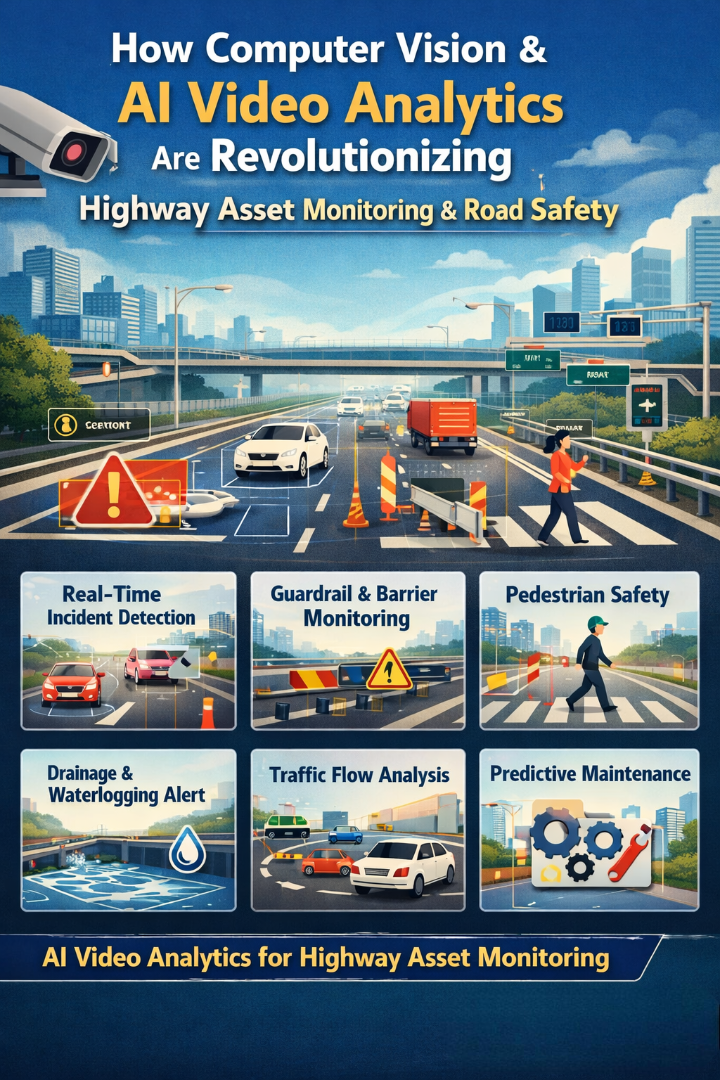
In modern society, transportation plays a crucial role in ensuring seamless road connectivity and sustained economic growth. As urban populations grow and vehicle density increases, the need for safer, smarter, and more resilient road infrastructure has become more critical than ever. Road safety is no longer limited to traffic enforcement—it is a foundational element of smart city development and long-term urban planning. Technologies such as AI Video Analytics for Highway Asset Monitoring are increasingly being adopted to provide real-time visibility, proactive maintenance, and data-driven decision-making across transportation networks.
With rapid advancements in artificial intelligence, computer vision has emerged as a transformative technology across industries including finance, healthcare, manufacturing, automotive, and emergency services. In the transportation sector, computer vision, combined with AI Video Analytics for Highway Asset Monitoring, is redefining how highways and urban roads are monitored, maintained, and optimized. City planners and infrastructure authorities are shifting from manual inspections to automated, continuous monitoring systems that improve road safety, reduce operational costs, and extend infrastructure life cycles.
Traditional highway monitoring methods are often reactive, labor-intensive, and costly due to aging infrastructure, limited inspection resources, and growing traffic volumes. Computer vision addresses these challenges by converting conventional roadways into intelligent, self-monitoring assets capable of real-time assessment and predictive planning.
Computer vision has become one of the most effective technologies for addressing road safety challenges, traffic congestion, and infrastructure inefficiencies. By integrating AI-powered cameras with advanced analytics, transportation authorities gain actionable insights that were previously unattainable.
Road safety remains a top priority in highway asset management. While traditional Advanced Driver Assistance Systems (ADAS) and intelligent transportation systems focus on vehicle-based sensing, computer vision enhances situational awareness through large-scale visual analytics.
Vision AI systems analyze live video feeds to automatically detect hazards, classify assets, and evaluate their condition in real time. This significantly reduces the risk of accidents, improves roadside safety, and strengthens traffic enforcement by identifying unsafe driving behaviors and infrastructure risks.
AI-enabled cameras equipped with video analytics provide a cost-effective alternative to manual inspections. These systems operate continuously, capturing and analyzing visual data without interrupting traffic flow.
Automated video sensing enables authorities to monitor asset health, traffic density, and incident occurrences in real time, helping them make faster and more informed decisions.
Guardrails and crash barriers play a vital role in minimizing accident severity. However, constant exposure to vehicle impact, corrosion, weather conditions, and structural fatigue often results in unnoticed damage.
Computer vision-based monitoring systems continuously inspect these assets, detecting dents, misalignment, corrosion, or missing components. Early identification ensures timely maintenance, enhancing safety while reducing long-term repair costs.
One of the most powerful advantages of computer vision is real-time incident detection. Vision AI can instantly identify stalled vehicles, collisions, unauthorized access, debris, or hazardous conditions on highways.
Unlike traditional surveillance systems that depend on human monitoring, AI-powered systems analyze massive volumes of video data in real time and trigger alerts for traffic authorities and emergency responders. This leads to faster response times and improved incident management.
Pedestrian safety is a critical concern in urban road networks. Computer vision helps reduce pedestrian-related accidents by monitoring crosswalks, intersections, and sidewalks.
AI-powered cameras detect pedestrian movement and interact with smart traffic signals to dynamically adjust signal timings. During peak hours, the system can extend crossing durations, alert drivers, and ensure safer pedestrian mobility, supporting inclusive and people-centric urban planning.
Effective drainage systems are essential for highway safety. Waterlogging and blocked drains can reduce visibility, damage pavements, and increase accident risks.
Computer vision AI models detect water accumulation, blocked drainage paths, and surface deterioration in real time. Continuous monitoring enables authorities to address drainage issues proactively, preventing long-term infrastructure damage.
Computer vision significantly enhances highway infrastructure efficiency by enabling automated inspections, early defect detection, and predictive maintenance planning.
Real-time traffic and asset data empower authorities to reduce congestion, optimize response times, and minimize disruptions—resulting in a more resilient and efficient transportation ecosystem.
By analyzing historical and real-time visual data, computer vision systems can identify patterns of wear and degradation. This allows maintenance teams to shift from reactive repairs to predictive maintenance strategies.
Predictive maintenance reduces costs, extends asset lifespan, and prevents unexpected failures that could lead to accidents or traffic disruptions.
Traditional traffic sensors and induction loops often lack accuracy and require frequent maintenance. Computer vision provides a more reliable and scalable alternative.
Vision AI systems analyze video streams to measure traffic volume, speed, congestion patterns, and peak usage hours—helping authorities optimize traffic flow and improve commuter experiences.
Nextbrain’s highway asset monitoring solutions leverage advanced computer vision and deep learning algorithms to analyze video feeds in real time. Powered by intelligent ai video analytics software, the platform automatically detects defects, anomalies, and safety hazards without manual intervention, enabling faster action and preventing costly infrastructure failures.
Unlike traditional inspection methods, Nextbrain’s solutions continuously process visual data from AI-enabled cameras, drones, and existing surveillance infrastructure. This allows early identification of wear, damage, and missing assets, supporting predictive and preventive maintenance rather than emergency repairs.
Designed for scalability, Nextbrain’s platform integrates seamlessly with existing cameras and asset management systems, making it ideal for large highway networks, city roads, and national infrastructure projects.
Computer vision is transforming transportation by redefining how road infrastructure is monitored, maintained, and optimized. Through continuous, accurate, and automated inspection, it eliminates the limitations of manual surveys and reactive maintenance approaches.
When combined with AI video analytics, computer vision enables safer roads, reduced accidents, optimized traffic flow, and truly smart urban infrastructure.
Ready to modernize your highway safety strategy? Contact Nextbrain today to discover how computer vision can elevate your road infrastructure.
1. What is computer vision in highway asset management?
Computer vision uses AI algorithms to analyze images and videos from cameras, vehicles, and drones to automatically detect, monitor, and assess highway assets.
2. Which highway assets can be monitored using computer vision?
It can monitor road signs, pavements, guardrails, crash barriers, traffic lights, lane markings, lighting poles, and drainage systems.
3. How does computer vision improve road safety?
It identifies damaged or missing assets early, allowing authorities to fix safety risks before accidents occur.
4. Does computer vision support predictive maintenance?
Yes. By identifying early signs of degradation, it enables predictive maintenance, reducing costs and preventing unexpected failures.
5. Is computer vision scalable for large highway networks?
Absolutely. Vision AI systems are highly scalable and suitable for city roads as well as national highway networks.
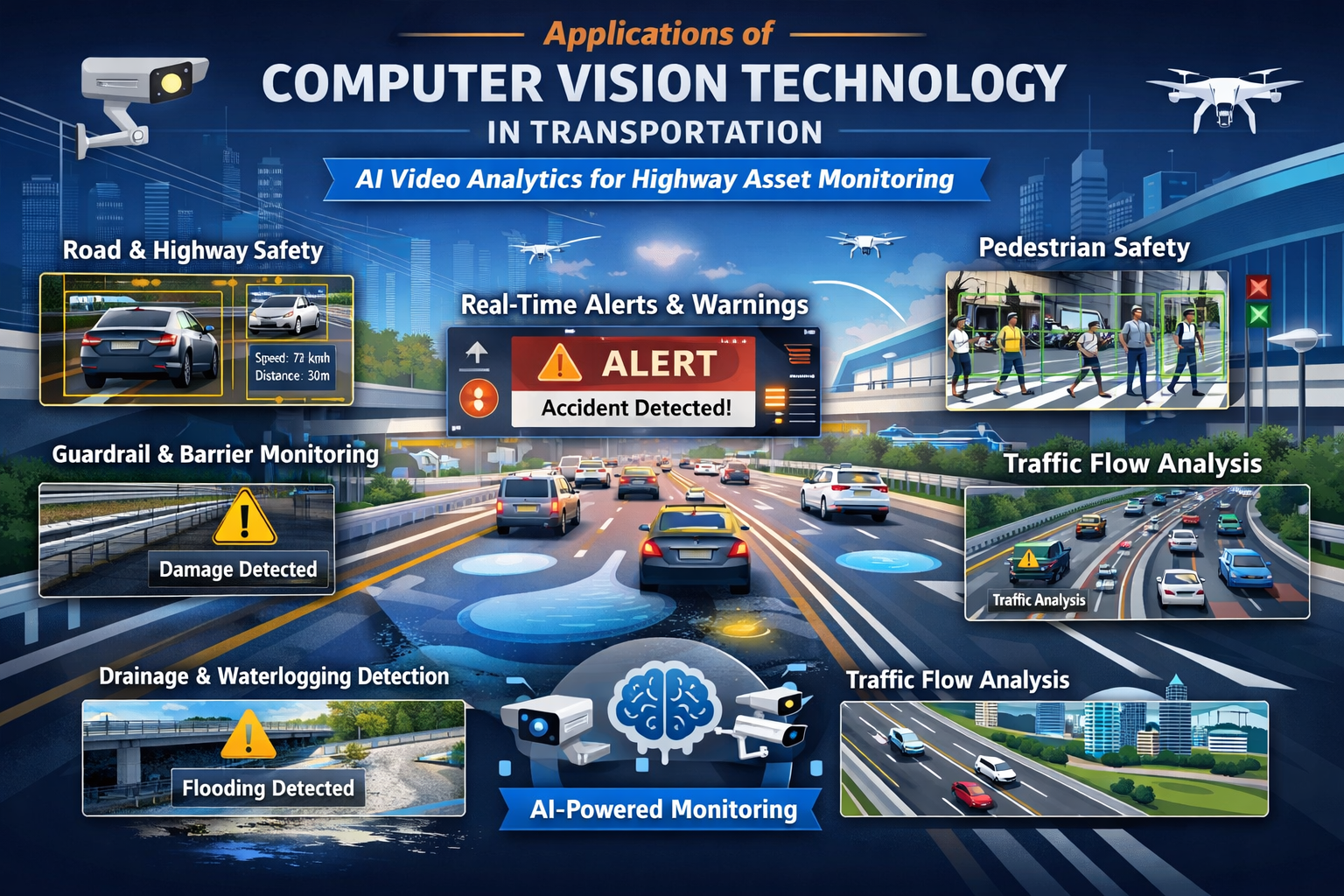
In modern society, transportation plays a critical role in ensuring seamless connectivity and economic growth. As cities expand and traffic volumes rise, road safety has become a cornerstone of successful urbanization. Smart transportation systems are no longer optional—they are essential to building resilient, efficient, and safe cities.
Among emerging technologies, computer vision has rapidly established itself as a transformative force across industries such as finance, healthcare, automotive, emergency response, and infrastructure management. In transportation, computer vision is redefining how cities monitor, maintain, and optimize road networks. Solutions such as AI Video Analytics for Highway Asset Monitoring enable authorities to gain real-time visibility into road conditions, asset health, and traffic behavior, ensuring proactive safety management.
With aging infrastructure, limited inspection resources, and increasing congestion, traditional highway monitoring methods are often reactive, expensive, and inefficient. Computer vision bridges this gap by enabling real-time monitoring, predictive maintenance, and data-driven decision-making—transforming conventional roads into intelligent transportation ecosystems.
Computer vision is emerging as one of the most impactful technologies for improving road safety and reducing congestion. By analyzing video feeds from cameras using AI and machine learning, it delivers actionable insights that enhance traffic management, asset monitoring, and incident response—without heavy infrastructure costs.
Road safety is a core objective of highway asset management. While traditional Advanced Driver Assistance Systems (ADAS) and Intelligent Transportation Systems (ITS) rely on proximity sensors and limited environmental data, computer vision provides a broader and more detailed understanding of road conditions.
Vision AI analyzes live video streams to automatically detect hazards such as debris, damaged barriers, poor lane markings, and unsafe driving behaviors. These insights help authorities prevent collisions, improve enforcement, and enhance roadside safety.
AI-powered video analytics enables highway authorities to extract valuable insights from existing camera infrastructure. Unlike manual inspections, AI-driven monitoring operates continuously, reducing labor costs and installation complexities.
With no manual intervention required, Vision AI systems simultaneously record footage and generate analytics—making monitoring faster, more accurate, and scalable across large road networks.
Crash barriers and guardrails are essential for reducing accident severity. However, constant exposure to vehicle impacts, corrosion, and harsh weather conditions can weaken these safety assets over time.
Computer vision-based monitoring systems continuously inspect guardrails and barriers, detecting damage, misalignment, corrosion, or missing components. This enables early intervention, ensuring assets remain effective and reducing the risk of severe accidents.
One of the most valuable advantages of computer vision is its ability to deliver real-time alerts. Vision AI can detect incidents such as accidents, stalled vehicles, illegal pedestrian crossings, or suspicious activities and instantly notify authorities.
Traditional monitoring systems often involve delayed reactions, but computer vision enables immediate detection and response, reducing emergency response times and improving the effectiveness of first responders.
Pedestrian safety is a major concern in urban transportation systems. Computer vision significantly improves pedestrian protection by monitoring crosswalks, intersections, and sidewalks.
AI-powered cameras detect pedestrian movement and integrate with smart traffic lights to dynamically adjust signal timings. During peak hours, crossing durations can be extended automatically, reducing accidents and improving overall pedestrian safety.
Effective drainage is crucial for maintaining road quality and safety. Waterlogging, blocked drains, and flooding degrade pavements, reduce visibility, and increase accident risks.
Computer vision models can identify water accumulation, drainage blockages, and surface deterioration in real time. Highway authorities gain both real-time and historical insights, allowing proactive maintenance and minimizing road damage.
Computer vision enhances highway infrastructure efficiency by automating asset inspections, identifying defects early, and enabling predictive maintenance. Real-time traffic and asset data empower authorities to make informed decisions, reduce disruptions, and optimize resource allocation.
The result is safer roads, reduced congestion, and longer asset lifespans.
By analyzing historical and live visual data, computer vision identifies early signs of wear and deterioration in road assets. This shifts maintenance strategies from reactive to predictive, reducing repair costs and preventing major failures.
Predictive maintenance powered by Vision AI combines continuous monitoring, AI models, and historical trends to deliver risk-based, cost-efficient maintenance planning.
Traditional traffic sensors such as induction loops and coils are costly and require frequent maintenance. Computer vision offers a more accurate and flexible alternative.
Vision AI processes video streams to analyze vehicle density, speed, congestion patterns, and peak traffic hours—helping authorities manage traffic flow and optimize signal timings effectively.
Nextbrain is a trusted AI development company delivering intelligent transportation solutions using advanced computer vision and deep learning technologies. Its highway asset monitoring system analyzes real-time video feeds from cameras and drones to automatically detect defects, anomalies, and safety hazards—without manual inspections.
Key advantages include:
As an experienced AI development company, Nextbrain empowers governments and infrastructure authorities to replace reactive maintenance with proactive, data-driven strategies—resulting in safer highways and optimized operational costs.
Computer vision is redefining the future of transportation and road safety. By combining real-time traffic data with AI-powered video analytics, cities can build smarter, safer, and more resilient road infrastructure.
From automated inspections and predictive maintenance to improved pedestrian safety and faster incident response, computer vision eliminates the limitations of traditional monitoring methods and enables a proactive approach to highway asset management.
Ready to elevate your urban road infrastructure? Get in touch with our experts to explore how computer vision can transform smart highway management.
Computer vision uses AI algorithms to analyze images and video feeds from cameras, vehicles, and drones to automatically detect, monitor, and assess road assets in real time.
Assets such as road signs, crash barriers, guardrails, traffic lights, lighting poles, pavements, lane markings, and road surfaces can be monitored efficiently.
By identifying damaged, missing, or poorly visible assets in real time, computer vision enables early repairs and prevents accidents caused by infrastructure failures.
Yes. Computer vision detects early signs of deterioration, allowing predictive maintenance that reduces repair costs and prevents unexpected failures.
The future lies in AI-driven infrastructure management with real-time insights, automation, and predictive analytics—creating safer, more efficient, and resilient road networks.
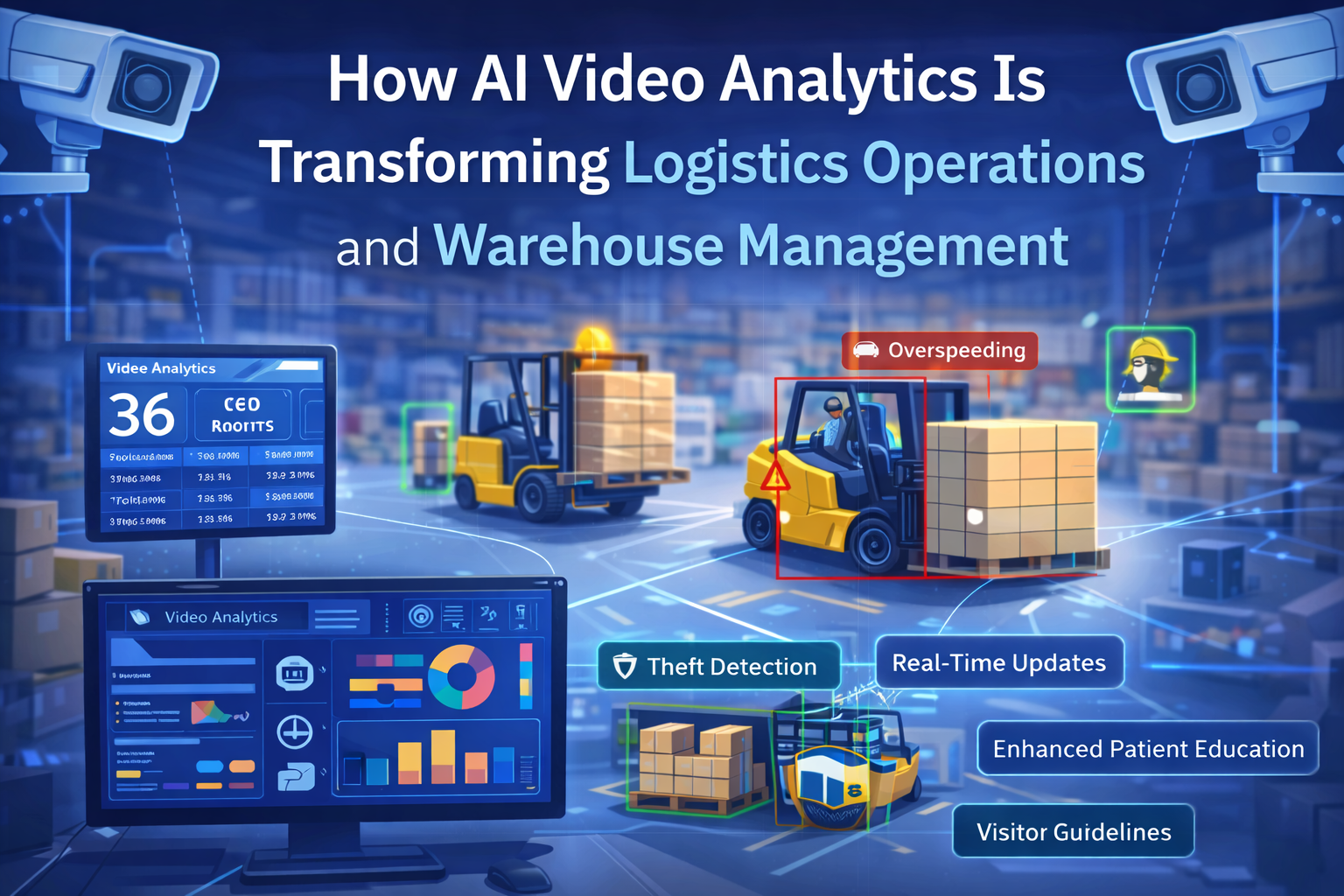
The logistics and warehousing industry is evolving faster than ever. Rising customer expectations, same-day delivery demands, labor shortages, and increasing safety risks are forcing logistics companies to rethink traditional warehouse operations. Manual supervision, legacy systems, and reactive decision-making are no longer sufficient in today’s high-volume, high-speed environments.
This is where AI video analytics is making a transformative impact. By turning live camera feeds into real-time, actionable intelligence, AI video analytics empowers logistics operators to improve safety, boost productivity, minimize losses, and optimize warehouse workflows at scale.
AI video analytics uses advanced technologies such as artificial intelligence, machine learning, and deep learning to analyze video footage captured by surveillance cameras. Unlike traditional CCTV systems that only record footage for later review, AI video analytics actively interprets visual data to identify behaviors, detect anomalies, and generate insights in real time.
In logistics and warehouse environments, this means automated monitoring of worker activities, vehicle movements, inventory flow, and safety compliance—without constant human oversight.
As warehouse operations become more data-driven, visual intelligence has emerged as a powerful enabler of operational excellence. Computer Vision in Warehouse Management allows systems to automatically recognize objects, track people and vehicles, identify operational patterns, and detect risks as they occur. By transforming raw video footage into structured data, warehouses gain complete visibility into daily operations, enabling faster decisions, improved accuracy, and smarter process optimization.
Safety is one of the most critical concerns in logistics and warehouse operations. Forklifts, heavy machinery, high shelving, and fast-moving workflows create an environment where even small errors can lead to serious accidents.
AI video analytics improves safety by:
By proactively identifying hazards, warehouses can significantly reduce workplace injuries, improve compliance, and create a safer working environment.
Warehouse inefficiencies often go unnoticed without data-driven insights. AI video analytics helps logistics managers uncover hidden bottlenecks and optimize workflows.
Key productivity benefits include:
With these insights, organizations can improve throughput and productivity without increasing labor costs.
Inventory inaccuracies can disrupt supply chains and damage customer trust. AI video analytics enhances inventory management by visually tracking goods across warehouse zones.
This enables:
When integrated with Warehouse Management Systems (WMS), AI video analytics delivers end-to-end visibility and control over inventory operations.
Forklifts are essential for warehouse operations, but they are also a major source of safety incidents and operational inefficiencies. AI video analytics monitors forklift behavior to ensure safe and efficient operation.
Capabilities include:
These insights help reduce accidents, lower maintenance costs, and extend the lifespan of material handling equipment.
Theft and shrinkage are persistent challenges in logistics facilities. AI video analytics strengthens security by continuously monitoring sensitive areas such as loading docks, storage zones, and access points.
Security benefits include:
Unlike manual monitoring, AI-powered systems operate 24/7 without fatigue, ensuring consistent protection.
Beyond real-time monitoring, AI video analytics enables predictive insights by analyzing historical video data. Logistics managers can identify trends and make informed, forward-looking decisions.
Predictive use cases include:
This shift from reactive to proactive management gives logistics companies a significant competitive advantage.
Nextbrain is a trusted AI development company delivering advanced AI video analytics solutions tailored for logistics and warehouse environments. With deep expertise in computer vision and intelligent automation, Nextbrain helps businesses modernize warehouse operations through real-time visibility and actionable insights.
Nextbrain enables logistics organizations to build smarter, safer, and more efficient warehouse ecosystems.
AI video analytics is redefining how logistics operations and warehouse management function in the modern era. From enhancing safety and boosting productivity to reducing losses and enabling predictive intelligence, the technology delivers measurable business value across the supply chain.
Logistics companies that adopt AI video analytics today position themselves for long-term efficiency, scalability, and operational excellence.
Contact Nextbrain today to discover how AI video analytics can transform your logistics operations and help you stay ahead in a competitive market.
1. What is AI video analytics in warehouse management?
AI video analytics uses artificial intelligence to analyze video feeds in real time, helping warehouses monitor safety, track inventory, optimize workflows, and improve overall operational efficiency.
2. How does AI video analytics improve warehouse safety?
It detects unsafe behaviors, PPE violations, forklift risks, and restricted zone breaches, allowing warehouses to prevent accidents before they occur.
3. Can AI video analytics integrate with warehouse systems?
Yes, AI video analytics can seamlessly integrate with WMS, ERP, IoT sensors, and access control systems for centralized management.
4. Is AI video analytics scalable for large logistics networks?
Absolutely. The technology is highly scalable and can support single warehouses or multi-location logistics operations.
5. Why choose Nextbrain for AI video analytics solutions?
Nextbrain offers tailored AI solutions, deep domain expertise, scalable architectures, and end-to-end support designed specifically for logistics and warehouse environments.
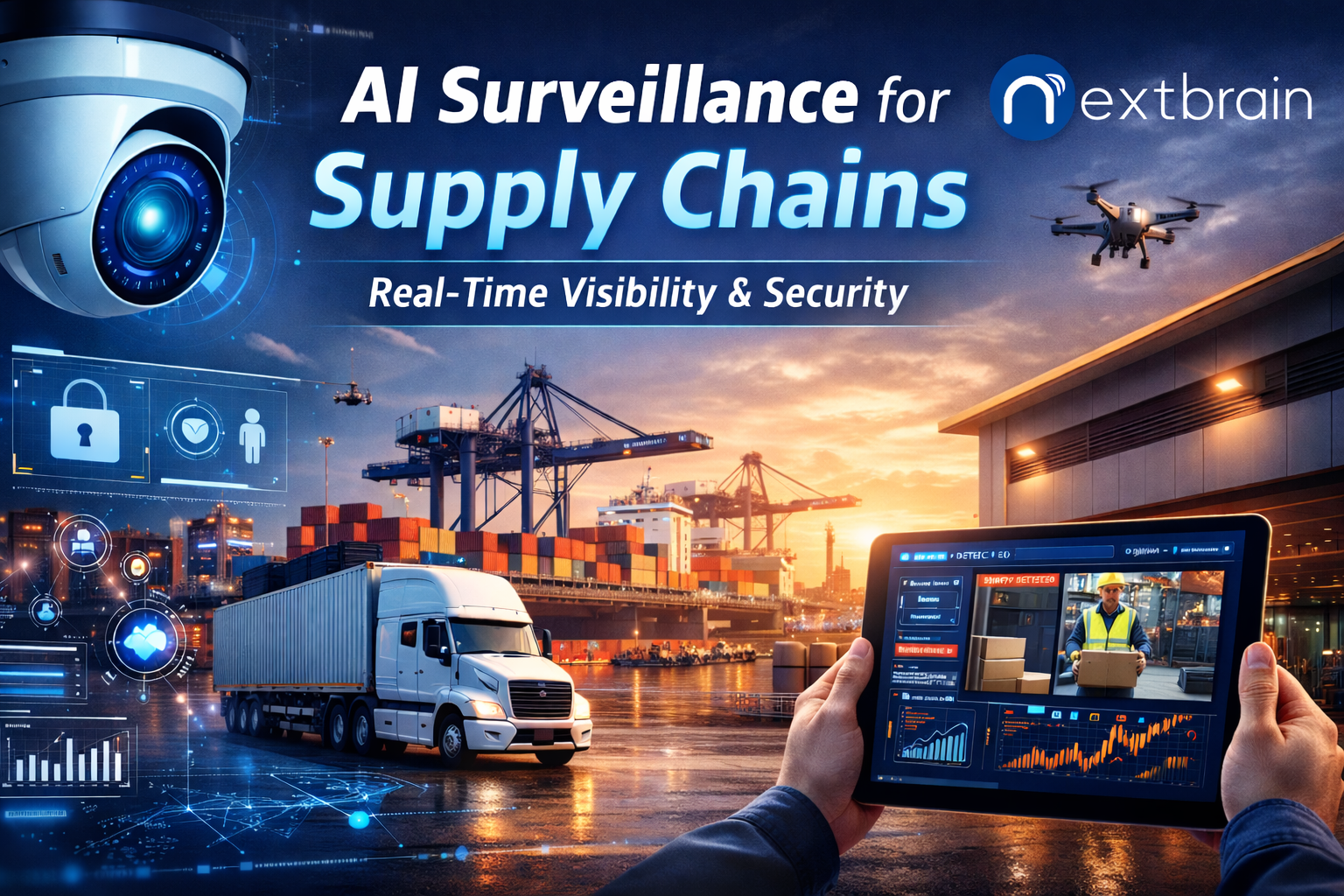
Global supply chains are no longer static networks of transport routes. They are dynamic ecosystems that operate continuously across warehouses, fleets, ports, and last-mile delivery routes. In such fast-moving environments, traditional surveillance systems and manual monitoring methods struggle to keep up. As supply chains expand in scale and complexity, organizations are increasingly turning to AI-powered surveillance and video analytics to secure operations, enhance visibility, and drive smarter decisions.
In this blog, we explore how AI surveillance for supply chains is emerging as a critical backbone of modern logistics—delivering real-time intelligence, stronger security, and operational resilience.
Modern supply chains face a wide range of challenges that directly impact efficiency, safety, and profitability. One of the most significant issues is the lack of real-time visibility across distributed operations. Fleets, warehouses, yards, and transit routes often operate in silos, creating blind spots that lead to delays and inefficiencies.
Other key challenges include:
When logistics networks rely on fragmented systems, errors become unavoidable. By leveraging AI video analytics for supply chains, organizations can convert raw video data into actionable intelligence, enabling centralized monitoring, faster anomaly detection, and proactive decision-making across the entire supply chain ecosystem.
AI-driven surveillance combines computer vision, machine learning, IoT sensors, and edge analytics to monitor supply chain operations in real time. Unlike traditional CCTV systems that merely record footage, AI-powered surveillance actively analyzes video streams to detect, classify, and respond to events as they occur.
These intelligent systems can be deployed across:
By continuously learning patterns and behaviors, AI-driven surveillance systems identify risks early and trigger alerts before issues escalate.
Security is one of the strongest drivers for adopting AI-powered logistics monitoring. Supply chains involve high-value goods moving across multiple touchpoints, making them vulnerable to theft, tampering, and unauthorized access.
AI surveillance helps organizations:
Early threat detection allows businesses to protect assets while maintaining the integrity of their supply chain operations.
Warehouses are the backbone of modern supply chains, storing valuable inventory while managing constant movement of people, vehicles, and goods. Manual supervision in such environments often results in overlooked incidents and inefficiencies.
With AI surveillance for supply chains, warehouse teams can:
Real-time insights enable warehouse managers to act proactively, preventing costly incidents and downtime.
Real-time visibility is essential for efficient supply chain operations. AI-driven surveillance transforms video feeds into actionable insights, allowing teams to instantly recognize delays, bottlenecks, and suspicious activities.
By integrating visual intelligence across facilities and transit routes, organizations gain a unified view of operations. This holistic visibility improves coordination, reduces downtime, and enhances overall operational transparency.
Once goods are in transit, visibility becomes even more critical. AI-enabled cameras installed in vehicles allow organizations to monitor:
Real-time alerts enable control centers to intervene immediately, minimizing losses and ensuring on-time deliveries.
Across global supply chains, safety and regulatory compliance are non-negotiable. AI surveillance supports compliance by:
This level of accountability is especially valuable when managing third-party logistics partners across multiple regions.
One of the biggest advantages of AI surveillance is centralized monitoring. A unified dashboard aggregates video feeds from warehouses, yards, vehicles, and partner locations.
When suspicious activity or overcrowding is detected, the system triggers instant alerts—enabling faster response, predictive planning, and continuous improvement across the supply chain. Enterprises that adopt AI-driven visibility tools consistently reduce operational losses and disruptions.
AI surveillance is no longer just a security solution—it is a strategic enabler. It supports:
As supply chains become more interconnected and time-sensitive, AI-powered surveillance provides the foundation needed to maintain control and efficiency.
The future of AI surveillance lies in edge AI, predictive analytics, and deeper integration with digital twins and supply chain platforms. AI-powered logistics monitoring will increasingly predict congestion, identify risk zones, and optimize routes before disruptions occur.
By combining video intelligence with GPS data and historical patterns, AI-driven supply chains will become more resilient, transparent, and adaptive—qualities essential in today’s volatile global environment.
Nextbrain is a leading AI development company specializing in intelligent surveillance solutions for logistics and supply chain environments. With deep expertise in computer vision, machine learning, and real-time analytics, Nextbrain helps enterprises transform passive video systems into proactive intelligence platforms.
Nextbrain’s AI solutions enable:
By partnering with Nextbrain, organizations gain smarter, safer, and more resilient supply chain operations.
In an era where supply chains operate continuously across borders and facilities, maintaining visibility over every movement is essential. AI surveillance for supply chains transforms traditional monitoring into a dynamic intelligence system that safeguards assets, optimizes operations, and enhances resilience.
By converting video data into real-time insights, organizations can reduce risks, improve efficiency, and respond proactively to disruptions. In a competitive landscape where resilience defines success, AI-powered surveillance is no longer optional—it is indispensable.
Looking to modernize your supply chain surveillance strategy? Connect with Nextbrain today to build intelligent, scalable AI solutions for logistics security and visibility.
1. What is AI-driven surveillance in supply chain management?
AI-driven surveillance uses computer vision and machine learning to monitor warehouses, fleets, and transit routes in real time.
2. How does AI video analytics improve supply chain operations?
It enables real-time visibility, detects risks early, improves compliance, and supports proactive decision-making.
3. Can AI surveillance integrate with existing logistics systems?
Yes, AI surveillance platforms can integrate with fleet management, IoT devices, access control systems, and ERP platforms.
4. Does AI surveillance help reduce theft and cargo loss?
Absolutely. AI detects suspicious behavior, tampering, and unauthorized access in real time, reducing losses significantly.
5. Is AI surveillance scalable for global supply chains?
Yes, AI-powered surveillance systems are highly scalable and can be deployed across multiple regions and facilities.
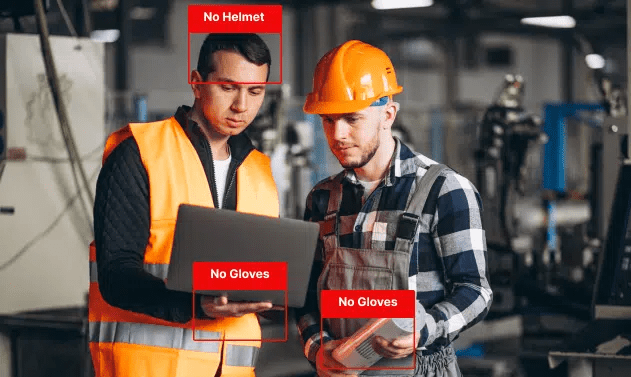
The manufacturing industry is experiencing a monumental shift driven by Industry 4.0 technologies. As factories become more connected, automated, and data-driven, artificial intelligence is playing a critical role in redefining industrial operations. Among these innovations, AI video analytics stands at the forefront, transforming how manufacturers enhance workplace safety, optimize operational efficiency, and ensure superior product quality.
By converting raw visual data into actionable insights, AI video analytics empowers manufacturers to move beyond traditional monitoring toward intelligent, predictive, and autonomous decision-making. From real-time hazard detection to advanced quality inspection, this technology is reshaping the future of modern manufacturing.
AI video analytics leverages computer vision, deep learning, and machine learning algorithms to analyze live and recorded video feeds from cameras deployed across manufacturing facilities. Unlike traditional CCTV systems that only capture footage, AI-powered systems actively interpret visual data to detect patterns, recognize behaviors, and identify anomalies in real time.
In the AI video analytics in manufacturing ecosystem, this technology delivers enhanced operational visibility by continuously monitoring workers, machines, materials, and workflows. When integrated with existing factory systems such as ERP, MES, SCADA, and industrial IoT platforms, AI video analytics creates an interconnected environment where physical operations are seamlessly linked with digital intelligence.
This integration enables manufacturers to make data-driven decisions faster while laying the groundwork for fully autonomous smart factories.
Safety is one of the most critical concerns in manufacturing environments. Heavy machinery, hazardous materials, and high-speed operations increase the risk of accidents, injuries, and costly downtime. Traditional safety monitoring methods often rely on manual supervision, which can be reactive and inconsistent.
AI video analytics introduces a proactive approach to industrial safety through:
AI systems continuously analyze video feeds to detect unsafe behaviors such as missing PPE, unsafe proximity to machinery, restricted zone violations, or improper equipment handling.
When a safety violation or dangerous condition is identified, the system instantly sends alerts to supervisors or safety teams, enabling immediate corrective action.
AI-tagged video events help safety teams analyze root causes, identify recurring risks, and implement preventive measures to reduce future incidents.
This proactive safety framework helps manufacturers build a zero-accident culture while ensuring compliance with global safety regulations.
Operational inefficiencies often remain hidden within complex manufacturing workflows. Minor delays, repetitive movements, or underutilized equipment can significantly impact productivity over time. AI video analytics provides deep operational insights that help uncover and eliminate these inefficiencies.
Key efficiency-enhancing capabilities include:
AI analyzes production workflows in real time to identify slowdowns, congestion points, or deviations from standard operating procedures.
By visually monitoring equipment for signs such as overheating, vibration anomalies, or misalignment, AI can detect early warning signals and prevent unexpected breakdowns.
AI insights track machine utilization, idle time, workforce movement, and material flow, ensuring optimal use of resources and improved throughput.
AI video analytics software works alongside robotics and automated machinery to improve coordination, accuracy, and production consistency.
The result is a leaner, more agile manufacturing environment with reduced downtime and higher productivity.
Maintaining consistent product quality is essential for customer satisfaction and regulatory compliance. Manual inspection processes are often slow, subjective, and prone to human error — especially in high-volume manufacturing environments.
AI video analytics transforms quality assurance through automated visual inspection systems that deliver speed and precision.
AI models detect surface defects, assembly errors, color inconsistencies, and structural deviations in real time.
High-resolution cameras combined with AI ensure each product meets dimensional accuracy and manufacturing standards.
AI generates detailed inspection logs, traceable quality metrics, and compliance-ready reports for audits and certifications.
By minimizing defects, rework, and waste, AI video analytics helps manufacturers maintain superior quality while reducing operational costs.
AI video analytics software is reshaping multiple aspects of manufacturing operations, including:
Together, these applications make manufacturing operations more intelligent, responsive, and resilient.
Within the Industry 4.0 framework, AI video analytics acts as the visual intelligence layer that bridges physical manufacturing processes with digital systems. When integrated with IoT sensors, robotics, cloud platforms, and analytics tools, it creates a closed-loop feedback system.
For example, when a production anomaly is detected, AI can trigger alerts, adjust machine parameters, or even slow down operations automatically — enabling autonomous decision-making and continuous optimization.
As AI technologies continue to advance, manufacturers can expect even greater levels of automation and intelligence. In the near future, AI video analytics will enable:
These innovations are transforming manufacturing into a highly adaptive ecosystem capable of responding instantly to change.
Nextbrain is a leading AI development company specializing in advanced AI video analytics software for the manufacturing industry. Their tailored solutions help manufacturers monitor production lines, enhance workplace safety, detect anomalies, and improve quality control in real time.
By seamlessly integrating AI video analytics with industrial IoT and enterprise systems, Nextbrain enables manufacturers to achieve operational excellence, regulatory compliance, and long-term scalability. Their expertise ensures that factories not only adopt AI — but extract measurable business value from it.
AI video analytics is no longer a future concept — it is a strategic necessity for modern manufacturing. By combining artificial intelligence with industrial vision systems, manufacturers gain the ability to see, analyze, and act faster and smarter than ever before.
From improving safety and efficiency to ensuring consistent product quality, AI video analytics is redefining what smart factories can achieve. With expert partners like Nextbrain, manufacturers can confidently accelerate digital transformation and build safer, smarter, and more competitive operations.
Contact Nextbrain today to discover how their AI video analytics solutions can revolutionize your manufacturing operations.
1. What is AI video analytics in manufacturing?
It is an AI-powered technology that analyzes video data from factory cameras to improve safety, efficiency, and quality control.
2. How does AI video analytics improve workplace safety?
By detecting unsafe behavior, PPE violations, and restricted zone intrusions in real time.
3. Can AI video analytics detect product defects?
Yes, it automatically identifies defects and anomalies during production.
4. Can it integrate with existing factory systems?
Yes, it integrates seamlessly with ERP, IoT, MES, and other industrial systems.
5. Why should manufacturers invest in AI video analytics now?
Because it reduces risks, lowers costs, improves productivity, and prepares factories for Industry 4.0.

 Nextbrain Technologies