Turning Store Visitors into Buyers: How Footfall Counting Software Is Driving Retail Growth

In today’s hyper-competitive retail landscape, success is no longer defined solely by product quality or pricing. Instead, the real differentiator lies in how well retailers understand customer behavior inside their physical stores. As brick-and-mortar retail continues to evolve alongside digital transformation, data has become the foundation for smarter, faster, and more profitable decision-making.

One technology playing a pivotal role in this shift is footfall counting software. By accurately tracking how many people enter a store, where they move, and how long they stay, retailers gain deep visibility into customer behavior, turning anonymous visitors into actionable insights. This intelligence helps businesses bridge the gap between foot traffic and actual sales, ultimately fueling sustainable retail growth.

What Is Footfall Counting Software?

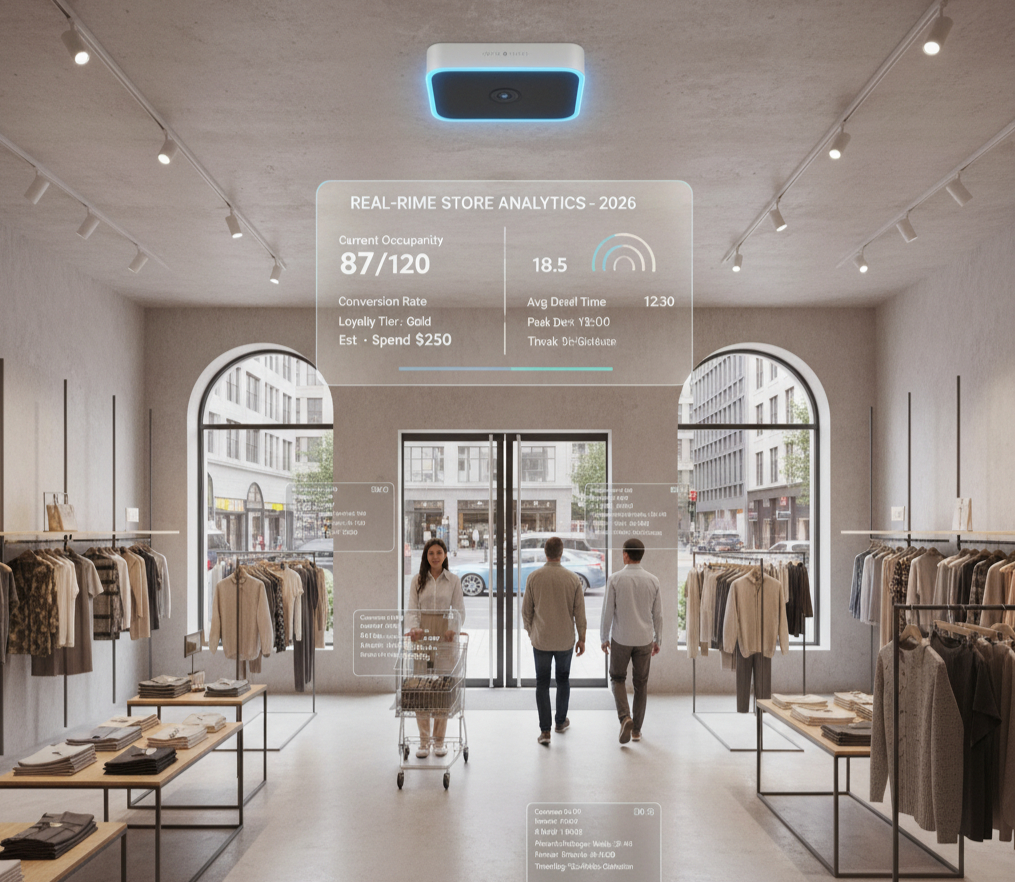
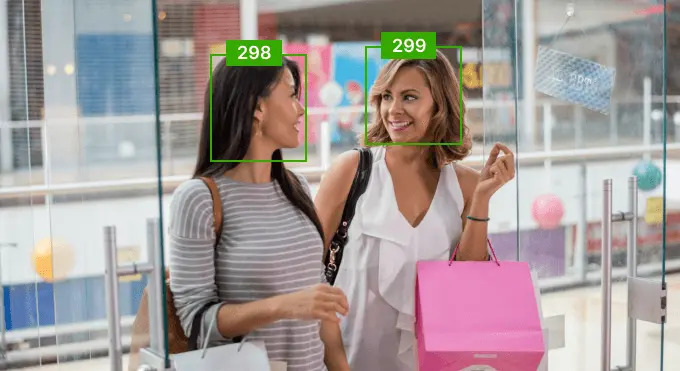
Footfall counting software is a technology-driven solution that measures and analyzes visitor traffic in physical retail environments. Powered by AI, sensors, and video analytics, it tracks customer movement patterns in real time, counting every individual who enters, exits, or moves within specific store zones.

However, modern footfall solutions go far beyond basic counting. Advanced systems provide rich behavioral insights, including:

  • Peak shopping hours and daily traffic trends
  • Customer dwell time in specific aisles or zones
  • Visitor-to-buyer conversion rates
  • Queue length and waiting time analysis
  • Repeat visitor and loyalty trends

By transforming raw visitor data into meaningful insights, footfall counting software empowers retailers to optimize operations, improve customer experience, and maximize revenue potential.

Why Accurate Footfall Data Matters in Retail

Every retail store shares a common objective: convert visitors into customers. Yet, without accurate data on how many people walk into a store versus how many complete a purchase, performance measurement becomes guesswork.

Footfall data provides retailers with a clear performance baseline, enabling them to:

Measure True Conversion Rates

Understanding the ratio of visitors to buyers helps retailers identify whether low sales are due to pricing, product placement, or customer engagement issues.

Evaluate Marketing Effectiveness

Footfall analytics reveal whether promotions, online ads, or seasonal campaigns are successfully driving in-store traffic.

Optimize Staff Allocation

Accurate visitor data ensures the right number of employees are scheduled at the right times, reducing labor costs while maintaining service quality.

Improve Store Space Utilization

Retailers can identify underperforming zones and redesign layouts to increase visibility and customer interaction.

In short, footfall data transforms intuition-based decisions into data-driven strategies that directly impact growth.

How Footfall Counting Software Transforms Retail Performance

1. Enhancing the Customer Experience

Customer experience is at the heart of modern retail success. Shoppers expect fast service, minimal waiting times, and intuitive store layouts. Footfall counting software enables retailers to anticipate customer needs by analyzing traffic patterns and predicting peak hours.

For example, if data reveals consistent congestion near checkout counters during evenings or weekends, managers can proactively deploy additional staff. Similarly, insights into customer dwell time help retailers identify which areas attract attention and which need improvement.

By reducing friction and improving store flow, retailers create a more enjoyable shopping experience—one that encourages repeat visits and brand loyalty.

2. Optimizing Store Layout and Visual Merchandising

Store layout has a direct influence on purchasing behavior. With footfall analytics, retailers gain a clear understanding of how customers navigate the store.

High-traffic zones can be leveraged for promotions, new arrivals, or premium products, while low-traffic areas can be redesigned to increase engagement. For instance, placing discounts or trending items in overlooked zones can redirect customer movement and improve overall sales distribution.

These insights also support better visual merchandising, ensuring that displays align with natural customer paths rather than assumptions.

3. Measuring Marketing Campaign Impact

Retailers invest heavily in both online and offline marketing—but measuring real-world impact has always been a challenge. Footfall counting software bridges this gap by directly linking marketing efforts to in-store visits.

By comparing foot traffic before, during, and after a campaign, retailers can quantify results with precision. A noticeable spike in visitors following a digital ad or local promotion clearly signals success.

This real-time feedback allows businesses to refine marketing strategies, focus on high-performing channels, and eliminate wasted spend.

4. Improving Workforce Productivity

Staffing inefficiencies are a major cost driver in retail. Overstaffing increases expenses, while understaffing leads to poor service and lost sales. Footfall analytics provide accurate forecasts of visitor volumes, enabling smarter workforce planning.

Retailers can schedule more employees during high-traffic periods and reduce staffing during quieter hours, ensuring optimal productivity without compromising customer experience.

The result is better service delivery, reduced wait times, and improved employee morale.

5. Increasing Conversion Rates

High foot traffic doesn’t automatically translate into high sales. One of the most valuable insights footfall counting software provides is the gap between visitors and buyers.

If a store attracts many visitors but records low conversions, it highlights issues in engagement, pricing, product availability, or checkout efficiency. By combining footfall data with POS insights, retailers can identify exactly where customers drop off in the buying journey.

Addressing these pain points over time leads to higher conversion rates and stronger return on investment.

6. Enabling Data-Driven Retail Decisions

Retail leaders can no longer rely on intuition alone. From expansion planning to product assortment decisions, data-backed strategies are far more likely to succeed.

Footfall counting software delivers reliable, real-time analytics that guide decisions such as:

  • Opening new store locations
  • Resizing or redesigning existing outlets
  • Adjusting operating hours
  • Improving in-store experiences

Data-driven retailers adapt faster, respond better to customer needs, and remain competitive in a rapidly changing market.

Nextbrain: Empowering Retailers with an AI Development Company Advantage

As retailers continue to embrace intelligent analytics and automation, Nextbrain stands out as a trusted AI development company driving digital transformation in the retail sector. Nextbrain builds advanced AI-powered solutions that go beyond basic footfall counting, delivering deep, actionable insights into customer behavior and in-store performance.

By leveraging cutting-edge computer vision and artificial intelligence, Nextbrain helps retailers:

  • Monitor real-time foot traffic and identify crowd density
  • Analyze customer movement paths to optimize store layout and product placement
  • Detect long queues and trigger instant alerts to improve service efficiency
  • Integrate AI insights seamlessly with existing POS and business intelligence systems

With its expertise as an AI development company, Nextbrain enables retailers to turn raw visitor data into strategic intelligence. The result is smarter decision-making, higher conversion rates, improved operational efficiency, and enhanced customer loyalty—empowering retailers to stay competitive in a data-driven marketplace.

The Future of Retail Footfall Analytics

The future of retail analytics is intelligent, predictive, and deeply personalized. As AI technology advances, footfall solutions will evolve to include capabilities such as demographic analysis, emotion detection, and predictive demand forecasting.

Retailers who adopt these technologies early will gain a decisive competitive advantage—adapting quickly to changing customer expectations and market trends.

Conclusion

Retail success today depends on insight, not instinct. Footfall counting software gives retailers a clear, data-backed understanding of how customers interact with physical stores—turning everyday visits into opportunities for growth.

By optimizing layouts, improving service quality, enhancing marketing performance, and boosting conversion rates, retailers can transform foot traffic into long-term profitability.

In the end, footfall counting isn’t just about numbers—it’s about understanding people.
Contact Nextbrain today to unlock the power of data-driven retail intelligence and future-ready AI solutions.

FAQs

1. What is footfall counting software?
It is a digital solution that uses AI, sensors, or video analytics to track and analyze visitor movement within physical retail spaces.

2. How does it help increase retail sales?
By providing insights into visitor behavior, peak hours, and conversion gaps, enabling better layout, staffing, and marketing decisions.

3. Is footfall counting software suitable for small retailers?
Yes. Scalable and cost-effective solutions are available for small and medium-sized businesses.

4. Can it integrate with POS systems?
Yes. Most modern platforms support integration with POS, CRM, and analytics tools.

5. Can retail chains use it across multiple locations?
Absolutely. Centralized dashboards allow chains to compare performance and optimize operations across all stores.
Revolutionizing Offshore Safety: The Growing Role of Computer Vision in Oil Rig Operations

Offshore oil rigs are known for their complexity, operational scale, and exposure to high-risk environments. These massive structures function continuously, often under extreme weather conditions, deep-water challenges, and high-pressure extraction systems. Ensuring worker safety and smooth operations has always been a major priority for the oil & gas industry, but traditional monitoring systems often fall short when it comes to quick detection of hazards.

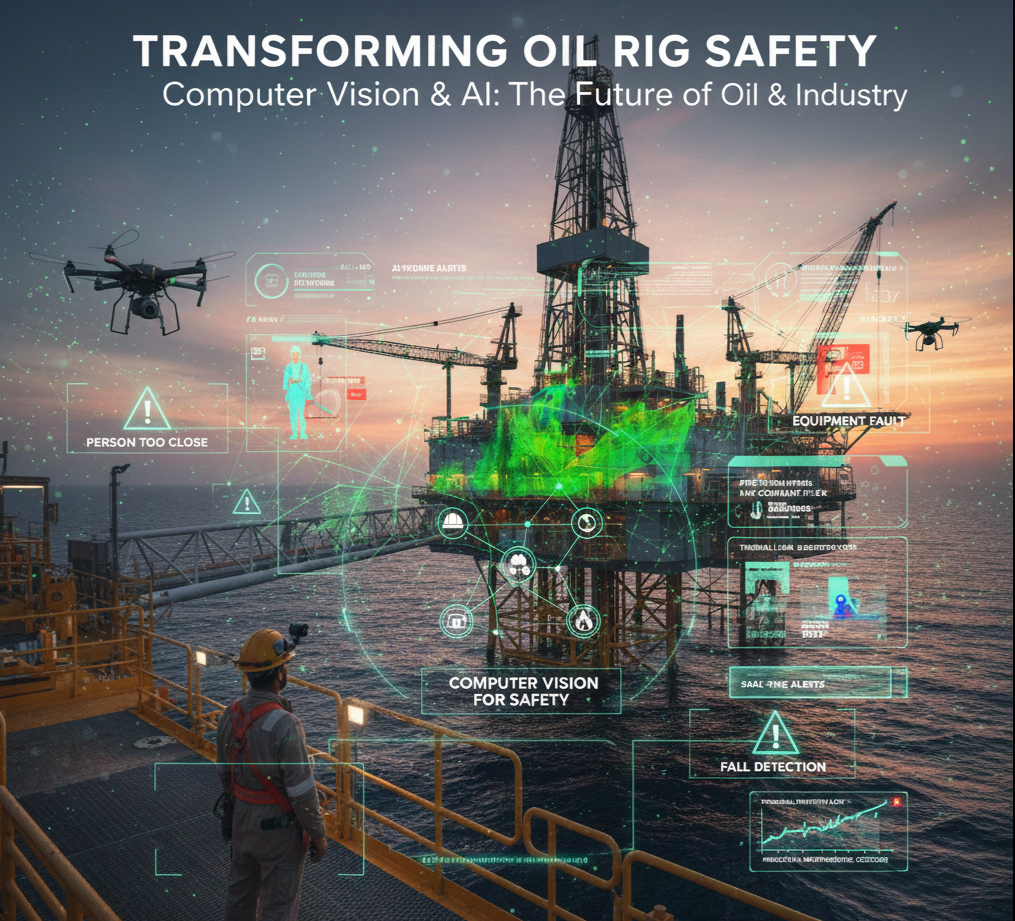
Today, technological advancements—particularly in artificial intelligence—are transforming how safety is managed. One of the most impactful technologies in this space is computer vision in oil rig safety, which leverages AI-driven video analytics to identify risks, analyze equipment health, and monitor worker activities in real time. This innovation is reshaping how companies tackle safety, predictive maintenance, and operational resilience.

In this article, we explore how computer vision is becoming indispensable for offshore rig operations, providing proactive safety intelligence, reducing human error, and enhancing workplace reliability.

Understanding the Demands of Offshore Oil Rig Operations

Oil rigs operate in remote, isolated environments where even small incidents can quickly escalate into life-threatening hazards. Workers handle heavy machinery, flammable materials, elevated platforms, drilling systems, and complex pipelines—making safety monitoring a demanding task.

Key challenges faced by offshore rigs include:

  • High-pressure drilling systems
  • Corrosion and mechanical wear caused by harsh climates
  • Risk of blowouts, oil leaks, and fire hazards
  • Limited visibility in underwater or enclosed sections
  • Human fatigue and compliance lapses
  • Difficult, time-consuming manual inspections

Because of these constraints, modern rigs require advanced, real-time monitoring solutions capable of responding instantly when abnormal conditions occur. This is where AI-powered computer vision creates remarkable value.

How Computer Vision is Transforming Oil Rig Safety

Computer vision uses cameras, sensors, and AI algorithms to analyze visual data and detect patterns, risks, or anomalies. On oil rigs, this involves 24/7 monitoring of equipment, workers, and the environment to ensure any deviations are identified immediately.

1. Real-Time Hazard Identification

With constant surveillance, AI video analytics detect potential risks such as:

  • Smoke or fire
  • Gas leaks
  • Overheating equipment
  • Intrusions in restricted zones
  • Unsafe worker movements
  • Falling objects
  • Chemical spills
  • Unattended machinery

Real-time alerts enable operators to respond instantly, preventing significant incidents and reducing operational downtime.

2. PPE and Worker Compliance Monitoring

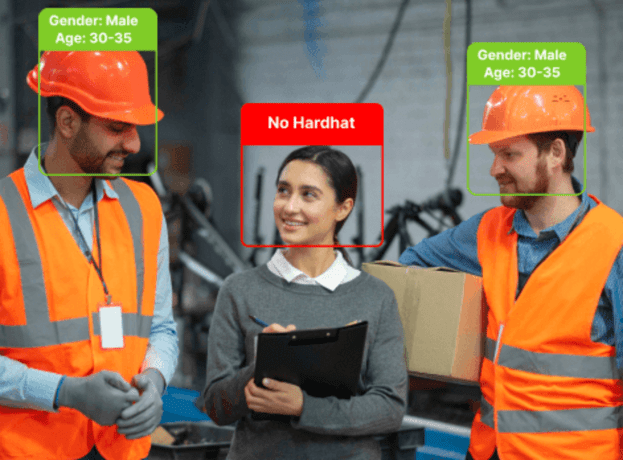
One of the most frequent causes of offshore injuries is non-compliance with safety protocols. Workers may forget or overlook certain PPE items—helmets, gloves, eye protection, vests—especially in fast-paced environments.

Computer vision automatically checks for:

  • Missing PPE
  • Incorrect usage
  • Unsafe proximity to machinery
  • Unauthorized zone access

These automated systems ensure consistent safety enforcement without depending on physical supervisors for oversight.

3. Predictive Maintenance and Early Failure Detection

Offshore equipment is constantly subjected to pressure, humidity, and mechanical stress. AI-powered video analytics recognize early signs of:

  • Component wear
  • Structural instability
  • Rust and corrosion
  • Vibration anomalies
  • Pipeline leaks
  • Loose bolts or fittings

Predictive maintenance strategies help companies plan repairs before breakdowns occur—significantly reducing downtime and extending machinery life.

4. Supporting Emergency Response Readiness

In the event of a crisis such as fire, explosion, oil spill, or gas leak, response time becomes crucial. Computer vision aids emergency readiness by:

  • Detecting abnormal smoke patterns
  • Tracking worker locations for immediate evacuation
  • Triggering automated safety protocols
  • Guiding responders with real-time video intelligence

These capabilities strengthen the rig’s resilience to high-impact emergencies.

5. Enhancing Decision-Making with Data Insights

Every second of surveillance footage is converted into actionable insights using AI. This data helps safety managers:

  • Analyze root causes of incidents
  • Identify risk patterns
  • Optimize workforce planning
  • Implement smarter safety policies
  • Improve long-term operational strategies

Data-driven decision-making leads to more proactive, rather than reactive, safety cultures.

6. Drone-Based Inspection for Hard-to-Reach Areas

Drones equipped with computer vision are becoming a major breakthrough for oil rig inspections. They can fly into areas that are too dangerous or inaccessible for humans.

These include:

  • Underwater pipelines
  • Elevated crane systems
  • Flare towers
  • Outer rig platforms
  • Tight structural gaps

With high-resolution visual data and AI analysis, drones drastically reduce risk, inspection time, and operational costs.

Automating Routine Checks and Workflows

Routine inspections and safety checks are time-consuming when performed manually. Computer vision automates tasks such as:

  • Monitoring pressure gauges
  • Checking fluid levels
  • Detecting operational irregularities
  • Verifying equipment alignment
  • Logging safety compliance data

This frees up human workers to focus on higher-level decision-making and complex tasks requiring expertise.

Nextbrain: Delivering Advanced AI Video Analytics for Oil Rig Safety

Nextbrain is a globally recognized AI development company offering specialized computer vision solutions for high-risk industrial sectors. With expertise in AI Video analytics software, Nextbrain provides end-to-end safety automation tailored for offshore oil and gas environments.

What Makes Nextbrain’s Solution Stand Out?

  • Real-time AI monitoring covering equipment, pipelines, and worker behavior
  • High-accuracy hazard detection including smoke, fire, gas leaks, and PPE violations
  • Drone-enabled computer vision for structural and underwater inspections
  • Predictive maintenance insights driven by machine learning
  • Full integration with IoT sensors and rig management tools
  • Automated audit and compliance reports
  • Advanced dashboards for centralized safety oversight

Nextbrain’s solutions help offshore companies lower operational risk, prevent accidents, and ensure uninterrupted productivity while maintaining global safety standards.

To learn more about Nextbrain’s AI-powered computer vision technologies, contact the team today for a customized consultation.

Conclusion

The integration of computer vision into offshore oil rig operations is transforming safety standards across the globe. By detecting hazards instantly, automating inspections, monitoring PPE compliance, and strengthening emergency response frameworks, AI ensures that rigs operate with higher reliability and reduced risk.

As the oil & gas sector expands into deeper and more challenging waters, smart monitoring and predictive maintenance will play a decisive role in ensuring operational continuity. Computer vision enables companies to transition from a reactive approach to a proactive and preventive safety culture—one that puts worker protection and operational excellence first.

Frequently Asked Questions (FAQs)

1. How does computer vision improve oil rig safety?

Computer vision monitors equipment, workers, and the environment 24/7. It detects hazards like smoke, spills, PPE violations, and unsafe movements, helping prevent accidents and improving overall safety.

2. What types of hazards can computer vision detect on offshore rigs?

It can detect fire, smoke, gas leaks, corrosion, oil spills, falling objects, unsafe worker behaviors, and unauthorized access to restricted zones.

3. What role does computer vision play in predictive maintenance?

Computer vision identifies early signs of equipment wear, structural damage, and abnormal vibrations, allowing maintenance teams to fix issues before they escalate.

4. Can computer vision work with drones for inspections?

Yes. Drones equipped with AI can inspect underwater structures, high platforms, and dangerous zones—reducing human involvement in hazardous tasks.

5. Why should offshore companies choose Nextbrain’s AI solutions?

Nextbrain offers advanced AI Video analytics software that provides accurate hazard detection, real-time monitoring, IoT integration, automated reporting, and predictive maintenance—making it a complete safety solution for oil rigs.

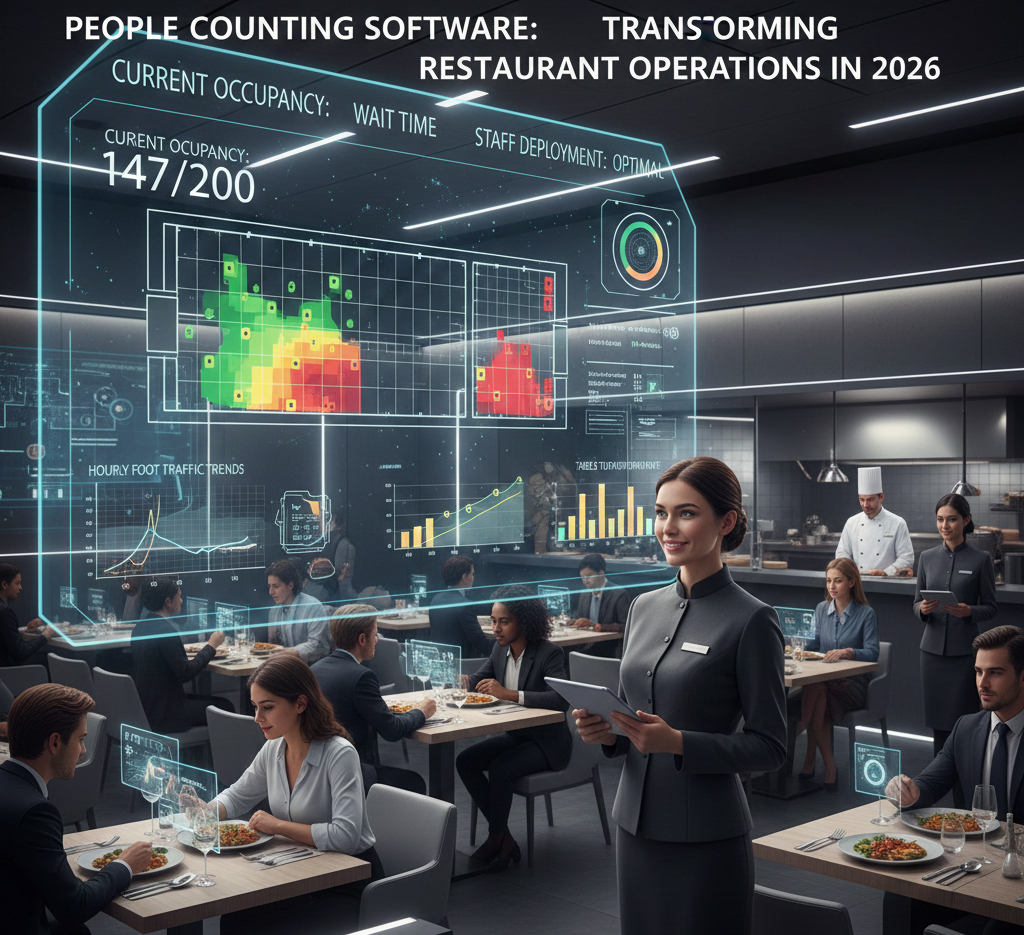
How People Counting Software is Transforming Restaurant Operations in 2026

In today’s fiercely competitive restaurant industry, understanding customer behavior and improving operational efficiency are no longer optional—they are essential for survival and growth. With digital transformation reshaping the way restaurants operate, one powerful technology is rapidly gaining attention: people counting software. This advanced solution helps restaurants analyze foot traffic, predict peak hours, and optimize staffing, ultimately boosting customer satisfaction and profitability.

What is People Counting Software?

People counting software is an AI-powered system that uses cameras, sensors, and computer vision technology to track the number of individuals entering, exiting, or occupying a space. For restaurants, it provides detailed insights into customer flow, dwell time, table occupancy, and traffic patterns throughout the day.

Unlike manual counting, which is inaccurate and time-consuming, people counting software offers:

  • Real-time accuracy
  • Automated data collection
  • Actionable analytics
  • Insightful forecasting

By transforming raw data into meaningful insights, restaurants can better understand customer behavior and improve decision-making across all operational areas.

Key Benefits of People Counting Software in Restaurants

1. Optimized Staffing and Shift Scheduling

Labor is among the highest expenses in the restaurant industry. Overstaffing results in wasted resources, while understaffing leads to slow service and dissatisfied customers. People counting software helps managers:

  • Identify peak hours with real-time footfall trends
  • Align employee schedules with customer traffic
  • Avoid unnecessary labor costs during off-peak times

For example, if data shows increased traffic from 7 PM to 9 PM on Fridays, managers can schedule additional staff to handle the rush efficiently. By matching workforce supply with customer demand, restaurants improve service quality and reduce labor wastage.

2. Enhanced Customer Experience

Delivering an exceptional dining experience requires an understanding of customer behavior. People counting data helps restaurants:

  • Reduce wait times by managing table turnover
  • Optimize seating arrangements during rush hours
  • Anticipate higher demand for certain menu items
  • Prevent overcrowding and maintain ambiance

When integrated with reservation systems or digital menus, the software can even help personalize customer experiences—such as preparing high-demand dishes ahead of time or offering special promotions during quieter hours.

3. Better Data-Driven Decision Making

Restaurants often rely on guesswork to plan their operations. People counting software eliminates assumptions by providing clear insights into:

  • Peak hours and traffic patterns
  • Weekly and monthly customer flow trends
  • Customer visit frequency

These insights help restaurants:

  • Launch targeted marketing campaigns
  • Introduce special offers on low-traffic days
  • Adjust operational strategies based on factual data

For instance, if Mondays show low customer footfall, restaurants can introduce “Monday Meal Deals” to increase visits.

4. Improved Overall Operational Efficiency

Operational bottlenecks—such as long queues, delays in service, or overcrowded entrances—can negatively impact customer satisfaction. People counting data helps managers identify these inefficiencies early.

Restaurants can use this data to:

  • Rearrange seating layouts
  • Improve kitchen workflows
  • Enhance entry and waiting area management
  • Streamline order processing during peak hours

A smooth and efficient operational flow reduces errors, speeds up service, and boosts customer satisfaction.

5. Accurate Revenue Forecasting and Inventory Planning

Understanding foot traffic patterns helps restaurants predict revenue more accurately. With people counting software, restaurants can:

  • Forecast daily, weekly, and monthly demand
  • Plan inventory based on customer volume
  • Reduce wastage by stocking what customers actually need

Accurate forecasting ensures that customer favorites don’t run out while preventing over-ordering of less popular items. The result? Better budgeting, reduced food waste, and improved profitability.

Integration Capabilities of People Counting Software

Modern people counting systems seamlessly integrate with essential restaurant technologies, creating a unified operational ecosystem.

POS System Integration

  • Track which dishes sell most during peak hours
  • Compare footfall data with sales performance

CRM Integration

  • Identify loyal customers
  • Tailor promotions based on visit patterns

Reservation System Integration

  • Reduce waiting times
  • Assign tables more efficiently
  • Improve dining room occupancy

When all these systems work together, restaurants gain a complete 360-degree view of customer behavior and operations.

Real-World Applications in Different Types of Restaurants

Fast-Food Chains

Manage dine-in and drive-thru traffic simultaneously with real-time footfall insights.

Fine Dining Restaurants

Maintain ambiance and service quality by preventing overcrowding.

Cafés & Coffee Shops

Use peak-hour analysis to prepare for morning or evening rushes.

For example, one café chain that implemented people counting technology reduced wait times during morning rush hours and saw a 20% increase in sales, largely due to improved service speed and customer satisfaction.

How to Choose the Right People Counting Software

When selecting the best solution for your restaurant, look for:

  • High accuracy levels (95%+)
  • Real-time reporting dashboards
  • Seamless system integration options
  • Easy-to-understand analytics
  • Scalability for multiple outlets

Investing in a robust solution leads to long-term success and operational excellence.

Future of People Counting in Restaurants

As AI and IoT continue advancing, people counting software will evolve into a predictive analytics tool capable of forecasting customer behavior based on:

  • Weather conditions
  • Holidays and local events
  • Historical data patterns

Restaurants will soon use this technology to automate inventory ordering, schedule staff automatically, and deliver highly personalized experiences.

Additionally, contactless and hygienic solutions are becoming the norm—making people counting software essential for modern, smart restaurant management.

Why Choose Nextbrain for Restaurant People Counting Solutions?

Partnering with the right technology provider ensures maximum ROI. Nextbrain is a leader in AI-powered people counting solutions designed specifically for the restaurant and hospitality industry.

What Makes Nextbrain the Right Choice?

  • Expertise in AI & Computer Vision: High-accuracy footfall data powered by advanced algorithms.
  • Restaurant-Focused Solutions: Built to solve real-world challenges like peak-hour management, staffing, and table turnover.
  • Easy Integrations: Compatible with POS, CRM, and reservation systems.
  • Real-Time Insights: Instant data for faster decision-making.
  • Highly Scalable: Ideal for cafés, restaurants, and large chains.

With Nextbrain, restaurants can reduce operational costs, improve customer satisfaction, and achieve sustainable business growth.

Conclusion

People counting software has become a strategic necessity for restaurants seeking to enhance efficiency, optimize staffing, and deliver superior customer experiences. It is more than just a footfall tracking tool—it is a powerful intelligence system that empowers restaurants with real-time insights and future-ready analytics.

As customer expectations continue to rise, restaurants adopting people counting software will stay ahead of the competition and operate with greater efficiency and accuracy. To integrate smart people counting solutions into your restaurant operations, contact Nextbrain today and take the first step toward smarter, data-driven restaurant management.

FAQs

Q1. How does people counting software improve restaurant efficiency?
It analyzes real-time foot traffic, helping managers optimize staffing, reduce wait times, and improve table turnover.

Q2. Can people counting software integrate with POS systems?
Yes. It connects with POS systems to match sales trends with customer traffic data.

Q3. Is the software suitable for small restaurants?
Absolutely. It is scalable and ideal for both small establishments and large chains.

Q4. How accurate is people counting software?
Most AI-powered systems offer over 95% accuracy, even in crowded environments.

Q5. What are the long-term benefits of using this software?
Improved customer experience, better forecasting, reduced operational costs, and optimized staffing.

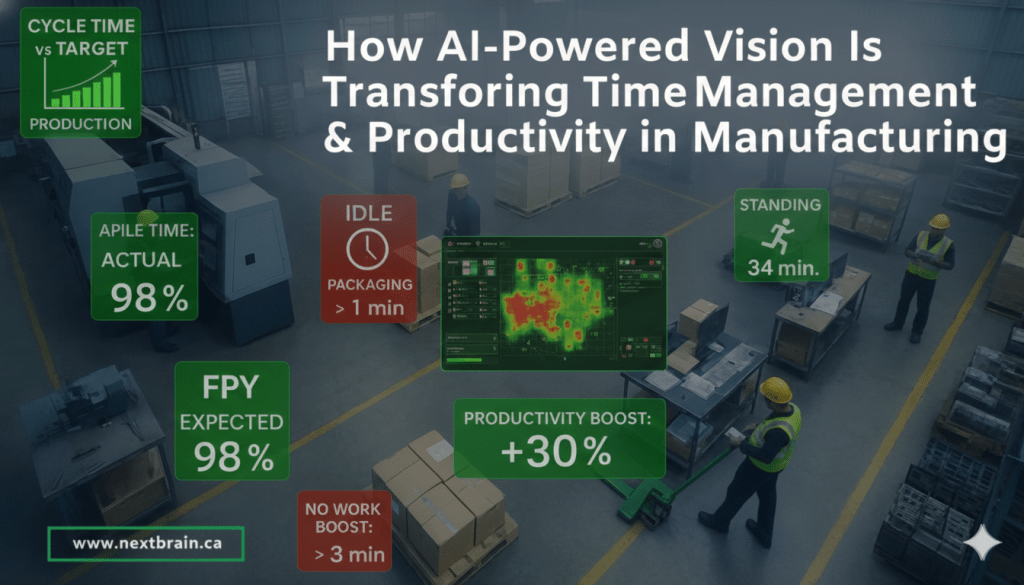
How AI-Powered Vision Is Transforming Time Management & Productivity in Modern Manufacturing

Within today’s advanced manufacturing ecosystems, artificial intelligence (AI) has revolutionized how production floors operate and optimize time. Even minor inefficiencies — such as extended idle time, machine delays, or untracked processes — can disrupt delivery schedules, reduce resource utilization, and drive up operating costs. As competition intensifies and demand for precision grows, organizations must rely on real-time visibility and intelligent automation to stay ahead.

AI-powered vision systems have emerged as a breakthrough solution, reshaping factory management by offering granular insights into workflows, operator performance, machine health, and production quality. By integrating machine learning, visual analytics, and deep learning capabilities, manufacturers can now eliminate inefficiencies, streamline operations, and achieve higher output consistency. With computer vision for manufacturing productivity, production lines can detect defects instantly, predict failures, automate quality checks, and maintain seamless operational flow across all stages.

Understanding AI Vision Technology in Manufacturing

AI-driven computer vision combines high-resolution imaging with advanced machine learning algorithms that analyze visual data captured from production environments. Unlike traditional sensors that provide limited readings, AI vision systems interpret complex visual patterns, detect abnormalities, identify defects, classify objects, monitor machine conditions, and evaluate worker activities — all without human intervention.

This intelligent visual interpretation empowers factories to run efficiently while maintaining high-quality standards. Studies show that manufacturers lose nearly 20% of productivity due to inadequate operational visibility. These recurring inefficiencies eventually lead to missed targets, reduced reliability, and higher costs. AI vision bridges this gap by offering real-time insights into every step of the production cycle, flagging delays, and enabling quick corrective action.

Key Statistics Highlighting AI’s Manufacturing Impact

The global manufacturing sector has witnessed significant improvements after adopting AI-based vision systems. Some notable results include:

Consistent Output & Quality

Manufacturers using AI vision report reduced cycle-time deviations and improved on-time delivery consistency.

Cycle Time Optimization

AI-driven process intelligence enables factories to experience up to 20% higher throughput and as much as 15% improved efficiency.

Real-Time Productivity Tracking

Organizations monitoring tasks and activities through AI-powered systems save up to 25% in labor costs due to optimized workflows and reduced idle time.

Enhanced Workplace Performance

Over 55% of companies using workplace monitoring tools have witnessed nearly 80% improvement in overall productivity.

These metrics prove that AI does more than automate tasks — it transforms operations with measurable improvements in efficiency, accuracy, and output.

Enhancing Time Management With Real-Time AI Insights

The most significant advantage of AI vision systems is their ability to strengthen time-sensitive operations. By continuously analyzing production data, the system detects inefficiencies, delays, safety violations, and bottlenecks well before they escalate.

1. Live Operational Monitoring

AI vision tracks machine speed, operator activity, workstation processes, and material movement in real time. Any deviation — whether a slowdown, extended idle time, or workflow misalignment — is instantly flagged. This leads to faster decision-making, minimized downtime, and smoother operations.

2. Instant Alerts for Quick Response

The moment an anomaly is detected, the system triggers alerts to supervisors. Whether it’s a stalled machine, improper workflow, or operator delay, early intervention prevents disruptions and improves overall performance.

3. Predictive Maintenance Using AI

AI-powered cameras identify early signs of wear, misalignment, leakage, vibration, or overheating. This predictive capability helps manufacturers schedule maintenance before breakdowns occur — significantly reducing unplanned downtime and extending equipment lifespan.

4. Smarter Data-Driven Decisions

AI dashboards offer comprehensive insights into production trends, operator efficiency, resource utilization, and bottleneck points. Leaders can make informed decisions based on real-time analytics rather than assumptions.

5. Automated Quality Assurance

Manual inspection is time-consuming and error-prone. AI vision systems automatically detect defects, deviations, or inconsistencies at high speed and with greater accuracy. This ensures product quality, reduces rework, and enhances customer satisfaction.

Boosting Productivity Through Intelligent Automation

When AI, deep learning, and visual intelligence work together, manufacturing facilities evolve into highly efficient, automated ecosystems. These systems continuously learn from data and improve their decision-making accuracy, contributing directly to productivity gains.

Predictive Maintenance

Visual monitoring allows AI to detect subtle irregularities that human eyes may miss. This prevents machine failures, enabling smoother and uninterrupted operations.

Automated Quality Inspections

AI vision ensures 100% inspection of products and components without slowing down production lines. Real-time defect detection significantly reduces wastage and improves accuracy.

Process Optimization & Workflow Intelligence

AI traceability tools capture operator movements, material handling, and machine cycles to identify inefficiencies. This helps factories optimize labor allocation, improve throughput, and refine workflow distribution.

Inventory & Asset Tracking

AI-powered cameras monitor inventory levels, track asset movement, and automate stock management. This reduces human errors and ensures that production never stops due to material shortages.

Workplace Safety Monitoring

AI-enabled systems detect safety violations — such as PPE non-compliance, unauthorized zone entry, improper machine usage, or unsafe behavior. Preventing accidents not only protects workers but also ensures uninterrupted productivity.

Enhanced Human–Machine Collaboration

By automating repetitive monitoring tasks, AI allows workers to focus on skilled activities. This strengthens human–machine synergy, improves morale, and increases output quality.

Nextbrain: Your Trusted AI Vision Partner for Smart Manufacturing

Nextbrain empowers manufacturing companies to unlock the full potential of AI through advanced computer vision, machine learning, and AI video analytics software. With a deep understanding of industrial challenges, Nextbrain builds scalable, intelligent, and customizable AI solutions that optimize operations, reduce downtime, and deliver measurable results.

Why Manufacturers Choose Nextbrain

1. Tailored AI Strategies

Nextbrain designs custom AI models specifically aligned with each factory’s operational requirements and challenges.

2. Proven Expertise

With extensive experience across AI, ML, and computer vision, Nextbrain delivers robust, high-performance solutions for real-world manufacturing problems.

3. Data-Driven Results

Their AI vision platforms consistently enhance productivity, safety, and efficiency — ensuring strong ROI.

4. End-to-End Support

From strategy and development to deployment and optimization, Nextbrain manages the entire AI transformation journey.

5. Seamless Integration

Their team collaborates closely with production units to ensure smooth implementation, minimal disruption, and sustainable long-term success.

Final Thoughts

AI-powered vision technology is rapidly becoming the backbone of modern manufacturing. By detecting inefficiencies early, automating quality inspections, predicting maintenance needs, and optimizing workflows, AI helps factories unlock unmatched levels of performance and productivity. As the global manufacturing landscape embraces digital transformation, AI vision stands at the forefront of industrial innovation.

If you’re ready to enhance operational efficiency, eliminate downtime, and build a smart manufacturing ecosystem, Contact Nextbrain today and begin your journey toward intelligent automation.

FAQs

1. What is computer vision AI in manufacturing?
Computer vision AI uses cameras and machine learning models to analyze visual data from production lines, enabling defect detection, process tracking, and real-time insights.

2. How does AI improve time management in manufacturing?
AI optimizes time by offering real-time monitoring, predictive analytics, instant alerts, and workflow automation — significantly reducing downtime and delays.

3. What are the main benefits of AI-powered vision systems?
They enhance quality control, automate inspections, predict machine failures, improve safety, and reduce operational inefficiencies.

4. How does Nextbrain help manufacturers adopt AI vision solutions?
Nextbrain provides end-to-end AI vision services including model development, deployment, integration, and ongoing optimization.

5. Does computer vision AI boost workplace productivity?
Absolutely. It reduces errors, improves process visibility, automates repetitive tasks, and enhances machine performance — leading to higher productivity.

How People Counting Systems Are Revolutionizing the Retail Industry in 2026

In today’s highly competitive retail environment, understanding customer behavior and store performance has become more crucial than ever. As consumer expectations evolve and online shopping continues to influence in-store experiences, retailers are turning to technology-driven solutions to stay ahead. Among the most transformative innovations is the People Counting System, a tool that provides actionable insights to enhance operational efficiency and customer satisfaction.

The Rise of Data-Driven Retail

Retail success in 2026 is all about making data-backed decisions. With the growing adoption of people counting software, retailers can now track customer movements, monitor footfall, and gain accurate insights into store traffic patterns. This technology helps businesses make informed decisions regarding store layout, staffing, promotions, and even energy management. By understanding when and where customers engage most within a store, brands can optimize operations for maximum efficiency and profitability.

How People Counting Systems Work

People counting systems use advanced sensors, AI algorithms, and computer vision technology to count and analyze foot traffic accurately. These systems detect individuals entering, exiting, or moving through specific areas of a store, even distinguishing between groups and repeat visitors. Unlike traditional manual counting, modern systems operate in real-time, providing accurate analytics that can be integrated with point-of-sale (POS) systems, CRM tools, and marketing dashboards.

The data collected through these systems is then used to assess conversion rates, improve layout design, optimize staff schedules, and evaluate the effectiveness of marketing campaigns. Retailers can also identify underperforming areas of the store and adjust strategies accordingly.

Enhancing Customer Experience

A major reason retailers invest in people counting systems is to deliver an enhanced customer experience. With precise footfall data, store managers can allocate staff effectively during peak hours to reduce waiting times and improve service. Additionally, the technology allows businesses to evaluate the success of in-store displays, promotions, and events by measuring the impact on customer traffic.

By understanding customer flow, retailers can create intuitive layouts that encourage exploration and drive sales. For instance, if data shows that customers tend to skip certain sections, managers can reposition displays or adjust lighting to capture attention. This personalized approach ultimately leads to a more enjoyable shopping journey and stronger brand loyalty.

Driving Operational Efficiency

Efficiency is at the core of retail success. People counting systems provide valuable insights into how resources are utilized, enabling store owners to manage costs effectively. By analyzing real-time data, managers can determine optimal staffing levels to prevent overstaffing or understaffing. Moreover, integrating this technology with HVAC and lighting systems allows businesses to reduce energy consumption during low-traffic periods, contributing to sustainability goals and operational savings.

Retail chains with multiple locations benefit even more. Centralized dashboards allow comparison of performance across different stores, helping management identify best-performing outlets and replicate successful strategies elsewhere.

Marketing and Sales Optimization

In the competitive retail space, marketing campaigns must deliver measurable results. People counting systems help assess the return on investment (ROI) of advertising and promotional activities. By tracking changes in foot traffic before and after campaigns, retailers can identify which promotions attract the most visitors and which need improvement.

Additionally, integrating footfall data with POS systems reveals conversion rates, helping brands understand how effectively they turn visitors into paying customers. Retailers can then refine their sales strategies and create more targeted marketing initiatives.

The Role of AI and Advanced Analytics

Artificial Intelligence (AI) has taken people counting to the next level. Today’s systems go beyond simple counting — they offer in-depth behavioral analytics, demographic insights, and predictive forecasting. AI can analyze historical data to predict peak shopping hours, enabling proactive planning and resource allocation.

Some systems also provide heat maps that visualize customer movement patterns, helping managers identify high-traffic areas and optimize product placement. With predictive analytics, businesses can anticipate seasonal trends, forecast demand, and enhance overall retail performance.

Security and Compliance Benefits

Besides business optimization, people counting systems also play a vital role in enhancing security and ensuring compliance. These systems help monitor occupancy levels in real time — an essential feature during emergencies or health-related restrictions. In large retail spaces, integrated video analytics ensure that customer flow complies with safety regulations, preventing overcrowding and potential risks.

By leveraging anonymous data, retailers maintain customer privacy while still benefiting from accurate analytics. This balance between data insight and privacy protection is essential for building consumer trust in 2026 and beyond.

Nextbrain: Transforming Retail with Smart People Counting Solutions

Nextbrain Technologies, a global leader in AI and IoT-driven innovations, offers advanced people counting solutions designed for modern retail environments. Their cutting-edge people counting software integrates AI video analytics and computer vision technology to deliver precise, real-time footfall insights.

Nextbrain’s solutions help retailers monitor customer flow, optimize store layouts, and enhance marketing effectiveness through intelligent dashboards. Whether it’s a single outlet or a large retail chain, Nextbrain’s data-driven system empowers decision-makers to track performance, manage staff, and predict demand with unmatched accuracy.

By leveraging AI-powered insights, Nextbrain enables retailers to create more efficient, profitable, and customer-centric operations — setting new benchmarks for success in the retail industry.

The Future of Retail Analytics

As we move deeper into the digital age, the role of people counting systems will continue to expand. In 2026 and beyond, expect to see these systems integrated with smart shelves, facial recognition, and emotion detection technologies to provide even deeper behavioral insights. Retailers will rely more heavily on real-time analytics to make data-informed decisions that directly impact profitability and customer engagement.

With sustainability, personalization, and efficiency driving the future of retail, people counting technology stands out as a core enabler of transformation. By harnessing the power of data, businesses can bridge the gap between online and offline shopping experiences, delivering seamless journeys that keep customers coming back.

Conclusion

The retail industry in 2026 is being redefined by intelligent technologies, and people counting systems are leading this change. From optimizing operations to enhancing customer satisfaction, these systems offer invaluable insights that shape strategic decisions and drive business growth.

By adopting solutions like those from Nextbrain Technologies, retailers can unlock the full potential of AI-driven analytics to achieve smarter, more efficient, and customer-focused operations. Contact Nextbrain today to learn how intelligent people counting technology can transform your retail business for the future.

Frequently Asked Questions

1. What is a people counting system in retail?
A people counting system is a technology-driven solution that tracks and analyzes the number of people entering, exiting, or moving through a retail store. It uses sensors, cameras, and AI algorithms to provide accurate footfall data for better decision-making.

2. How does people counting software help improve retail performance?
People counting software collects real-time data on customer flow and behavior, allowing retailers to optimize store layouts, staffing schedules, and marketing strategies. This leads to improved operational efficiency, higher sales conversions, and enhanced customer experiences.

3. Can people counting systems integrate with existing retail management tools?
Yes, most modern people counting systems can seamlessly integrate with existing retail management software such as POS systems, CRM tools, and analytics dashboards. This integration enables unified data visualization and better performance insights across multiple stores.

4. Are people counting systems accurate in detecting real-time footfall?
Absolutely. With the use of AI and computer vision technologies, people counting systems deliver highly accurate results — even distinguishing between individuals, groups, or repeat visitors. They work efficiently in various lighting conditions and crowd densities.

5. Why should retailers choose Nextbrain’s people counting solutions?
Nextbrain Technologies offers advanced AI-driven people counting software designed to deliver precise analytics and real-time insights. Their solutions help retailers improve efficiency, reduce costs, and make data-driven decisions that enhance overall business performance.

Revolutionizing Restaurant Operations with Voice AI: The Future of Smart Ordering Systems

The restaurant industry is undergoing a major digital transformation, driven by the rising demand for convenience, speed, and personalization. Mobile applications have already reshaped the order-taking process, but a new wave of innovation — Voice AI — is pushing the boundaries even further. Within the dynamic restaurant environment, AI-powered voice assistants are streamlining workflows, enhancing guest experiences, and redefining customer engagement.

According to the National Restaurant Association, the food services industry is projected to hit $1.5 trillion in sales by the end of 2025. To handle this explosive growth, restaurants are increasingly turning to automation tools like AI-driven people counting and voice-based ordering systems. These solutions help reduce wait times, improve efficiency, and maintain quality standards — even during peak hours.

This article explores how Voice AI systems work, their major use cases, and how they’re transforming restaurant operations for better profitability and customer satisfaction.

How Voice AI Functions in a Restaurant Setting

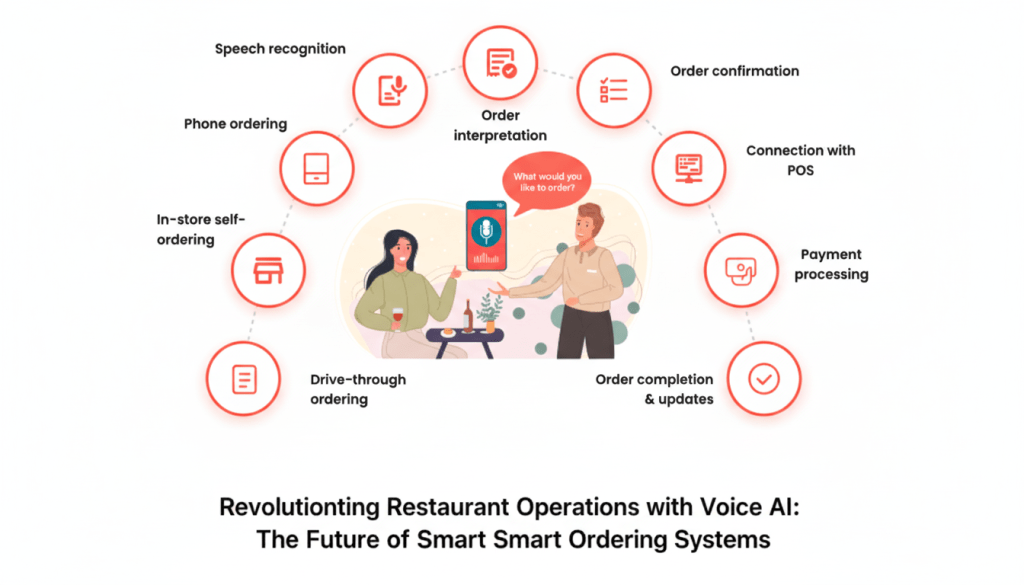
Voice AI technology is flexible and efficient in various operations, including drive-thrus, dine-in orders, and phone-based communication. Here’s how the technology works, step by step:

  1. Speech Recognition: Customers voice their order into a mic or app, and the AI process leverages Natural Language Processing (NLP) to accurately transcribe the piece of speech into text.
  2. Order Interpretation: Once AI transcribes the words, it interprets them, matches them with menu items or potential items on the menu, checks for availability of the items, and completes requests for alterations.
  3. Order Verification: Once the customer finishes their initial order, the AI will repeat the order back to the customer to assure accuracy before processing.
  4. Payment Processing: Once the order is confirmed, the order feeds directly into the restaurant’s Point of Sale (POS) system for quick processing on the back end.
  5. Secure Payment Processing: Voice AI uses digital wallets, loyalty points, or saved cards to make sure payment is safe and painless.
  6. Real-time Order Tracking: Customers will be informed of food prep or delivery status updates during their wait, providing customers with transparency and satisfaction.

With automation and AI, restaurants can dramatically improve speed, accuracy, and convenience for increasingly busy and competitive dining experience today.

AI Voice Ordering in Restaurants: A Smart and Adaptable Solution

AI Voice Ordering in Restaurants has become a necessity for modern operations, rather than just a trend. These smart systems automate repetitive tasks, balance workloads for staff and increase overall efficiency. They provide consistent experiences, allowing customers to have the same experience each time they order.

Key Use Cases and Benefits of Voice AI in Restaurants

1. Ordering available 24/7

AI voice systems are always “on” and customers can order at any time of the day or night, even when the business is closed. This way restaurants can capitalize on sales without losing customers to rival operations.

2. Increase Order Speed

Voice AI has the capability to facilitate multiple orders at the same time decreasing backlog during peak hours and allowing restaurants to serve more customers faster.

3. Drive-Thru Automation

Utilizing natural language understanding allows AI systems to accurately take drive thru orders, item verification, and speed service all within the AI framework without manual operator involvement.

4. No Order Error

AI lowers the risk of mistakes in taking orders due to human miscommunication, with real-time verification and processing.

5. Personalized Guest Experiences

By drawing from previous customer interactions, Voice AI will provide recommendations tailored to each individual guest, boosting loyalty and engagement.

6. Intelligent Call Handling

Even Restaurants get overloaded with telephone calls, staff may get stressed. AI systems can automatically answer incoming phone calls and facilitate orders, and simply manage incoming inquiries, all the while making the customer experience seamless and improving service delivery.

7. Real-Time Stock Control

Coupled AI systems will inform customers when products are out-of-stock, while also providing good alternate products — all done in a transparent, and trustworthy manner.

8. Cost and Labor Effectiveness

Leveraging automation for repetitive tasks can reduce labor costs while preserving service provisions.

9. Multilingual Ordering Assistance

Voice AI can recognize and respond in multiple languages, creating diversity and accessibility within the restaurant.

10. Actionable Data Information

Voice AI can denote dramatically helpful data, per order, and, when considered over time, can be used to help in targeted marketing, as well as restaurant design and retention.

Nextbrain’s AI Voice Ordering Software: Revolutionizing the Restaurant Experience

Nextbrain’s AI Voice Ordering Software is a next-generation solution for restaurants to automate and enhance the ordering process. Using advanced AI, Natural Language Processing (NLP), and real-time analysis, the software allows restaurants to provide faster, smarter, and more personalized ordering experiences.

In addition to Voice AI solutions, Nextbrain integrates AI video analytics software capabilities that enhance restaurant safety, crowd management, and operational efficiency. This allows restaurant owners to monitor customer flow, optimize seating arrangements, and ensure better staff allocation while maintaining smooth operations.

Here’s what makes the Nextbrain solution unique:

  • Omnichannel Integration: It operates seamlessly in the drive-through, kiosk, phone line, and mobile app for a unified ordering experience.
  • POS & CRM Integration: The AI voice ordering software can connect to an existing POS and customer relationship management (CRM) system to synchronize data.
  • Natural Language Understanding: Accents, tones, and different languages are all recognized accurately to ensure order accuracy and improve customer experience.
  • Custom Menu Management: It can manage menu items, pricing, and quantity available in real time.
  • Personalized Upselling: The software can upsell additional items or combos based on customer behavior or history to increase average order price.
  • AI Powered Insights: The ordering software provides analytics dashboards to owners to track performance metrics, customer preferences, and sales benchmarks.
  • Security: The software provides encrypted and compliant secure payment options.

After implementing Nextbrain’s AI Voice Ordering Software, restaurants can streamline their operations to reduce the manual workload and provide faster and more consistent experiences for customers. You can see almost immediate benefits by using it on a sample menu.

Final Thoughts

Voice AI is transforming operations in the restaurant industry, and providing efficiency, accuracy and personalisation. From taking orders on multiple tables to giving real-time updates and insights, voice automation is the next wave of the dining experience.

At Nextbrain, we are committed to supporting restaurants in adopting this new technology. Our AI Voice Ordering Software enables restaurants to be on the leading edge of competition, automating workflows and driving impactful, customer experiences based on data.

If you are ready to improve your restaurant through intelligent automation, contact Nextbrain today to find out how our voice AI can help transform your business operations.

Frequently Asked Questions (FAQs)
  1. What are the benefits of automation for restaurants?
    AI-enabled automation improves order processing, reduces labor costs, and improves accuracy, allowing employees to spend time engaging customers.
  2. Can small restaurants use Voice AI?
    Sure! Small restaurants can easily implement Voice AI to take calls, organize orders, and increase efficiencies without high staffing costs.
  3. What benefits can users expect from AI voice ordering?
    The main benefits are order taking speed, fewer errors, personalized recommendations, and customer satisfaction.
  4. What are the costs of developing a Voice AI platform?
    Voice AI research and development costs typically fall in the $30,000 – $50,000 range, depending on the level of complexity, scope of required integrations, and need for customization.
  5. Can Voice AI help with customer loyalty?
    Definitely! Personalized experiences and fast service create memorable situations that build customer and brand loyalty.

Revolutionizing Industrial Operations: How AI Video Analytics is Powering the Future of Smart Manufacturing

The manufacturing industry is undergoing a monumental transformation fueled by Industry 4.0 technologies — and AI video analytics stands at the forefront of this revolution. With the ability to convert raw visual data into actionable insights, this cutting-edge technology empowers manufacturers to enhance safety, operational efficiency, and product quality like never before. From real-time hazard detection to predictive maintenance, AI video analytics is redefining how smart factories operate in the modern era.

Understanding AI Video Analytics in Manufacturing

AI video analytics uses computer vision algorithms and machine learning models to process and interpret video feeds from factory cameras. Instead of merely recording footage, it identifies behaviors, detects anomalies, and triggers automated alerts — all in real-time.

In the AI video analytics in manufacturing sector, this technology plays a transformative role by improving operational visibility, enhancing safety compliance, and ensuring product quality. By integrating with existing factory systems such as ERP, IoT, and MES, AI video analytics enables an interconnected ecosystem where every process, machine, and worker contributes to a data-driven manufacturing environment.

Enhancing Workplace Safety

Safety is one of the most critical aspects of industrial environments. With heavy machinery, hazardous materials, and complex workflows, even minor negligence can lead to severe accidents.

AI video analytics addresses this challenge through:

  • Real-time hazard detection: The system can instantly recognize unsafe behaviors like not wearing protective gear, entering restricted zones, or mishandling equipment.
  • Automated safety alerts: When unsafe conditions arise, the system notifies supervisors immediately, allowing them to take corrective actions.
  • Incident analysis: By reviewing AI-tagged video incidents, safety teams can identify root causes and prevent future occurrences.

This proactive approach helps industries build a zero-accident culture while complying with global safety standards.

Boosting Operational Efficiency

Beyond safety, efficiency optimization is another major advantage of implementing AI video analytics. Manufacturing floors are often dynamic, and inefficiencies can be hidden in repetitive or unnoticed actions.

Here’s how AI helps:

  • Process bottleneck identification: AI detects production slowdowns by analyzing workflows in real-time.
  • Predictive maintenance: By monitoring equipment visually, it identifies early signs of wear and tear before breakdowns occur.
  • Resource optimization: From tracking machine usage to monitoring idle time, AI insights ensure maximum productivity.
  • Automation support: Integrated AI systems can work alongside robots and automated machinery to improve synchronization and accuracy.

The result is a smarter, leaner production process that minimizes downtime and boosts throughput.

Improving Product Quality

Quality assurance in manufacturing has always been a time-consuming and error-prone process when done manually. AI video analytics automates and enhances this through computer vision-based inspection systems that ensure consistent quality control.

Key applications include:

  • Defect detection: Identifies imperfections, color deviations, or assembly mismatches in real-time.
  • Precision monitoring: Ensures each product meets dimensional and structural standards.
  • Data-driven quality reports: Provides traceable quality metrics to meet compliance and certification requirements.

By eliminating human error, manufacturers can maintain high-quality standards while reducing waste and rework.

Applications of AI Video Analytics in Manufacturing

AI video analytics software is reshaping several facets of the manufacturing landscape, including:

  1. Machine Monitoring – Detects abnormal vibrations, overheating, or misalignments.
  2. Inventory & Logistics Management – Tracks raw material movement, loading, and unloading operations.
  3. Employee Productivity Analysis – Measures workflow efficiency and identifies training needs.
  4. Assembly Line Optimization – Analyzes performance variations and automates visual inspections.
  5. Perimeter Security & Access Control – Monitors unauthorized entries or suspicious movements around facilities.

Together, these applications make manufacturing more intelligent, responsive, and resilient.

Integration with Industry 4.0

In the context of Industry 4.0, AI video analytics acts as the visual intelligence layer that bridges physical and digital manufacturing environments. When combined with IoT sensors, robotics, and cloud computing, it creates a closed-loop feedback system that continuously improves operations.

For example, when a production anomaly is detected, the system not only alerts operators but also adjusts machine parameters automatically through connected control systems — enabling autonomous decision-making.

The Future of Smart Manufacturing with AI Video Analytics

As AI models continue to evolve, the manufacturing industry will see even greater levels of automation, safety, and predictive intelligence. In the near future, AI video analytics will enable:

  • Fully self-optimizing factories that learn from visual data patterns.
  • Collaborative robots (cobots) guided by real-time AI insights.
  • Enhanced sustainability monitoring, tracking energy use and waste.
  • Digital twins powered by live visual data for process simulation and optimization.

These advancements are transforming manufacturing into a highly adaptive, intelligent ecosystem that operates with minimal human intervention yet maximum efficiency.

Why Partner with Nextbrain?

Nextbrain Technologies, a leading AI development company, specializes in creating intelligent AI video analytics software tailored for manufacturing industries. Their advanced solutions enable factories to monitor production lines, detect anomalies, and improve safety with real-time analytics.

By integrating AI with industrial IoT systems, Nextbrain helps manufacturers achieve operational excellence, safety compliance, and quality assurance — all through data-driven automation.

Conclusion

AI video analytics is not just an upgrade — it’s a game-changing innovation reshaping the manufacturing world. By merging artificial intelligence with industrial vision systems, manufacturers gain the ability to see, analyze, and act faster than ever before. The future of manufacturing lies in this intelligent convergence of automation and insight — and with experts like Nextbrain, the journey toward smarter, safer, and more efficient factories has already begun.

Contact Nextbrain today to discover how their advanced AI video analytics software can revolutionize your manufacturing operations.

FAQs

1. What is AI video analytics in manufacturing?
It is an AI-powered technology that interprets video data from factory cameras to enhance safety, efficiency, and quality control.

2. How does it improve factory safety?
By detecting unsafe behavior, equipment misuse, and restricted zone violations in real-time, reducing the risk of accidents.

3. Can AI video analytics detect defects in products?
Yes, it can automatically identify defects and anomalies during production, improving product consistency and quality.

4. Is it easy to integrate with existing factory systems?
Yes, most AI video analytics solutions integrate with ERP, IoT, and MES systems seamlessly.

5. Why should manufacturers invest in AI video analytics now?
Because it drives efficiency, ensures safety, reduces costs, and positions the factory for the future of smart manufacturing.

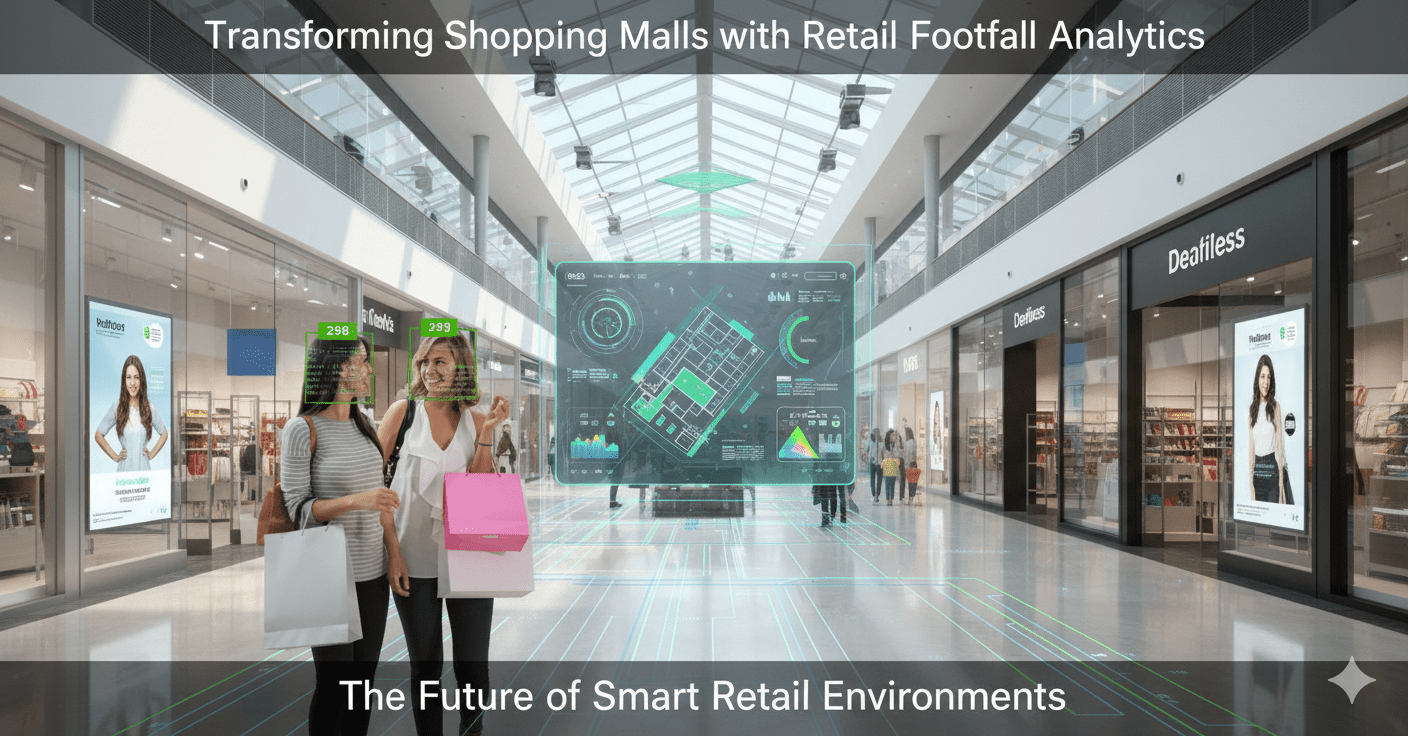
Transforming Shopping Malls with Retail Footfall Analytics: The Future of Smart Retail Environments

In today’s hyper-competitive retail world, shopping malls are evolving from traditional retail spaces into intelligent, data-driven environments. At the core of this transformation lies Retail Footfall Analytics, a revolutionary technology powered by AI, computer vision, and IoT sensors. This innovative solution enables malls to track, analyze, and understand customer movement patterns, reshaping how mall operators make strategic decisions, manage operations, and enhance the shopper experience.

This blog explores how Retail Footfall Analytics is redefining the modern shopping mall — benefiting both mall operators and customers alike.

What is Retail Footfall Analytics?

Retail Footfall Analytics involves tracking and analyzing how people move within a shopping mall — from entries and exits to movement between stores. Using advanced tools such as:

  • AI-powered footfall counting software
  • Smart cameras with computer vision
  • Wi-Fi tracking and Bluetooth beacons
  • Heatmaps and motion sensors

These technologies collect detailed insights that go beyond simple visitor counts. They uncover data about peak hours, dwell times, popular zones, and customer preferences, empowering mall operators to make informed, data-backed decisions.

How Retail Footfall Analytics is Transforming Shopping Malls

1. Smarter Store Layouts and Improved Navigation

Retail footfall analytics helps operators visualize how shoppers navigate through different areas of a mall using AI-generated heatmaps. These insights can be used to:

  • Reorganize store layouts based on traffic intensity
  • Optimize placement of kiosks, ATMs, and service counters
  • Identify and eliminate navigation bottlenecks

By understanding movement flow, malls can design layouts that make it easier for customers to explore stores, discover new brands, and enjoy a seamless, engaging experience.

2. Data-Driven Tenant Performance and Leasing Strategies

Mall management no longer has to rely on assumptions when it comes to leasing decisions. With accurate traffic data, operators can:

  • Justify premium lease rates for high-traffic zones
  • Provide tenants with performance insights to help them improve sales
  • Curate a balanced tenant mix that aligns with shopper preferences

This data-driven approach ensures that both tenants and mall operators benefit — tenants gain visibility and sales opportunities, while operators maximize revenue per square foot.

3. Precision Marketing and Campaign Measurement

Marketing without insights is a shot in the dark. Retail footfall analytics gives malls the ability to monitor real-time visitor data to:

  • Launch promotions during high-traffic periods
  • Measure the impact of in-mall advertisements or digital signage
  • Identify which campaigns effectively drive footfall

By aligning marketing strategies with footfall data, mall operators can maximize ROI and ensure campaigns reach the right audience at the right time.

4. Enhanced Operational Efficiency

Footfall data is not only useful for marketing and leasing — it also optimizes daily mall operations. For instance:

  • Cleaning schedules can be aligned with traffic peaks
  • Security staff can be deployed based on visitor density
  • HVAC systems can adjust settings automatically during busy hours

This leads to significant cost savings, better resource management, and improved customer satisfaction through consistently high service levels.

5. Understanding Customer Behavior and Patterns

Modern footfall analytics tools provide a granular view of shopper behavior, including:

  • Ratio of new vs. returning visitors
  • Average time spent in specific stores or areas
  • Entry and exit patterns across different hours or days

These insights allow mall management to understand what drives customer engagement and loyalty. As a result, malls can create personalized experiences through targeted offers, curated store recommendations, and interactive engagement strategies.

Shopper Benefits: A More Seamless Mall Experience

While mall operators gain insights and revenue advantages, shoppers also enjoy tangible benefits from footfall analytics. Intelligent mall environments powered by AI and IoT create smoother, safer, and more personalized experiences such as:

  • Reduced crowding and bottlenecks in high-traffic areas
  • Smart navigation and digital wayfinding assistance
  • Real-time notifications about offers or events
  • Shorter waiting times at food courts and checkouts
  • Improved safety with AI-driven crowd monitoring and alerts

Essentially, retail footfall analytics transforms malls into responsive ecosystems that adapt to the needs of every visitor.

The Power of AI and Footfall Counting Software

Traditional counting methods such as infrared sensors or manual clickers are quickly becoming outdated. Today’s AI-based footfall counting software delivers far greater accuracy and actionable intelligence.

Key advantages include:

  • Differentiation between adults, children, and groups
  • Exclusion of staff or service personnel from counts
  • Identification of demographics such as age and gender
  • Integration with CRM and loyalty programs for deeper insights

By leveraging these AI-powered systems, mall operators can make real-time, data-driven decisions that enhance both profitability and customer satisfaction.

Real-World Example: Smart Malls Leading the Way

Modern retail hubs across Dubai, Singapore, and India are already using footfall analytics and AI dashboards to transform mall operations. By combining camera-based analytics, facial recognition, and digital signage, these smart malls are creating immersive experiences that attract visitors and drive repeat visits.

These innovations prove that data-backed decision-making is no longer an option — it’s the foundation for the future of retail success.

Why Choose Nextbrain’s Footfall Counting Software for Shopping Malls?

Nextbrain has developed a powerful, AI-driven footfall counting software designed to meet the complex needs of modern shopping malls. Here’s what sets it apart:

  • Real-Time Accuracy: Provides live data with over 98% accuracy using advanced AI and computer vision.
  • Heatmaps with Dwell-Time Insights: Visualize footfall distribution and analyze how long shoppers spend in specific zones.
  • Seamless Integration: Connect easily with existing CCTV systems, CRMs, and marketing tools.
  • Actionable Reports: Generate daily, weekly, and monthly reports to enhance marketing, leasing, and operational decisions.
  • Custom Alerts: Get notified about occupancy limits, unusual dwell times, or underutilized areas.
  • Data Privacy Compliance: Designed to meet global data protection standards while ensuring actionable intelligence.

With Nextbrain, malls receive smart data, not just numbers — empowering them to create strategies that boost engagement, efficiency, and profitability

Final Thoughts: Data is Redefining the Future of Shopping Malls

Retail Footfall Analytics has redefined the retail business model — turning instinctive decision-making into insight-driven strategy. For shopping malls aiming to stay relevant and competitive in a digital-first era, adopting smart analytics solutions is no longer optional — it’s essential.

As customer expectations rise and competition intensifies, footfall data provides the foundation for smarter planning, better engagement, and sustainable growth.

Ready to Transform Your Mall with Smart Footfall Analytics?

Nextbrain offers cutting-edge AI-powered footfall counting software specifically built for shopping malls. Experience real-time analytics, dynamic heatmaps, and actionable insights that help you increase footfall, optimize operations, and deliver exceptional shopper experiences.

Contact Nextbrain today to schedule a demo and discover how intelligent retail analytics can elevate your mall’s performance and profitability.

Frequently Asked Questions (FAQs)

1. What is retail footfall analytics and why is it important for shopping malls?
Retail footfall analytics is the process of tracking and analyzing visitor movement inside malls using AI, computer vision, and IoT sensors. It helps mall operators understand customer behavior, optimize layouts, and make data-driven decisions that enhance both profitability and visitor experience.

2. How does AI-powered footfall counting software work?
AI-powered software uses smart cameras and machine learning models to detect and count individuals accurately. It can differentiate between adults, children, and staff, providing real-time insights on visitor flow and crowd density with over 98% accuracy.

3. What are the main benefits of using footfall analytics in malls?
The benefits include improved store layouts, smarter leasing decisions, targeted marketing campaigns, better operational efficiency, and a safer, more enjoyable shopping experience for customers.

4. How is Nextbrain’s footfall counting software different from traditional systems?
Nextbrain’s solution uses AI and computer vision to deliver precise, real-time data. Unlike infrared sensors or manual counters, it provides demographic insights, integrates with CRM systems, and offers visual heatmaps for better decision-making.

5. Is customer privacy maintained while using AI-based footfall analytics?
Yes. Nextbrain’s software adheres to global privacy regulations. It uses anonymized video analytics to gather insights without storing or sharing personal data, ensuring full compliance with data protection standards.

Smart Seas Ahead: How AI-Powered Computer Vision is Transforming Maritime Trade

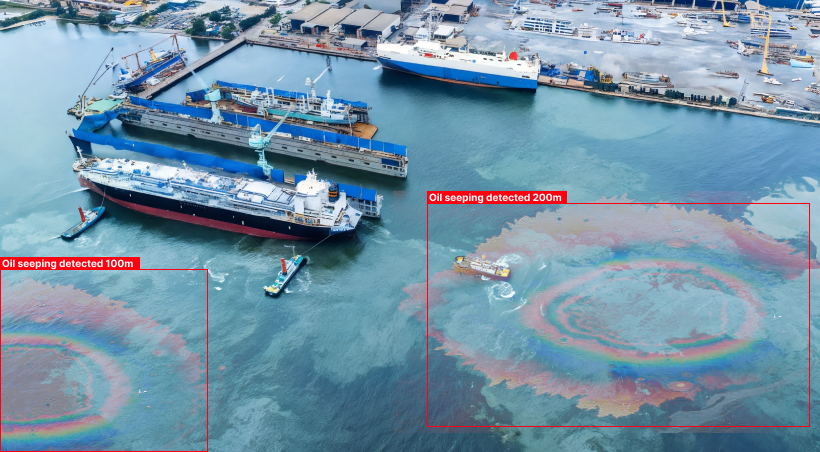
Did you know that over 90% of goods globally are traded via the sea? International trade has always played a vital role in the global economy and will do so for years to come. However, we are also faced with difficult challenges such as congestion, delays, safety issues, and environmental issues in the maritime trade sector. However, the shipping industry is now leaning toward digitization, and AI-based computer vision is a revolutionary technology—transforming how ports and maritime facilities operate.

Today’s digital age—with numerous industries quickly embracing advanced technologies—offers enormous promise for maritime businesses. Over the past 2+ years, intelligent monitoring systems and real-time analytics have justified changing traditional port operations into smart ecosystems based on data.

This article considers how computer vision in ports can drive efficiency, safety, and sustainability in maritime trade.

The Importance of Smarter Ports

Conventional monitoring approaches often have the challenge of managing the complexity of modern ports, causing inefficiency and high costs. The way to remain competitive in the marketplace is smarter solutions that streamline processes, enhance safety, and limit unproductive operational time.

By combining AI-enabled computer vision with existing digital assets like port management software, ports shorten operational time by maximizing scheduling, automating inspections and reducing penalties attached to delayed freight and mismanaged cargo. Smarter ports are not only more resilient, but they position ports to handle demands for future growth in trade.

Computer Vision Applications in Port Facilities

Computer vision applications provide intelligence as well as real-time visibility into maritime operational activities. Below are the most meaningful.

  1. Shipping, Navigation and Route Tracking

Computer vision powered by AI can assist in identifying optimal shipping routes with less congestion and more fuel efficiency. Object detection algorithms for safe navigation detect other vessels and/or identify obstacles and/or unusual patterns in real-time.

  1. Cargo Tracking and Container Inspection

AI-enabled computer vision can identify and analyze containers by reading numbers, inspection seals and detectable damage. Automating container inspections avoids human errors, improves operations and cycle time, and mitigates fraud opportunities.

  1. Management of vessel traffic

By analyzing live video footage, maritime authorities can find spots of traffic congestion, improve schedules, and enhance the efficiency of criticism. This increases the level of safe navigation while reducing the time vessels spend waiting to dock at busy ports.

  1. Operator efficiency enabled by automation

Since computer vision can be incorporated into port equipment, there are smart cranes, robotic loaders, and fully automated yard management. This leads to reduced turn time, to increased efficiency, and a lower reliance on human labor.

  1. Workforce & Equipment safety

AI video surveillance can detect unsafe practices, malfunctioning equipment, or entering unauthorized areas. Proactive surveillance can limit the risk of workplace accidents, ensure compliance with safety practices, and reduce liability risk.

  1. Increased Security & Threat Detection

Computer vision systems can create more secure ports by detecting intrusions, monitoring suspicious behavior, or detecting smuggling attempts. By implementing AI video analytics software, ports can be monitored by automated surveillance 24 hours a day in a much more reliable, preventative way.

  1. Shipboard Surveillance

Multi-camera AI video surveillance systems can monitor sensitive activities during deck operations, loading and unloading cargo activities, and crew member behaviors. In addition to these activities, it can note irregularities, like not loading correctly and engaging in activity in unauthorized areas.

  1. Automated Container Inspections

Containers endure harsh environments. Throughout the day, vision-based surveillance, integrated with deep learning, can observe the degree of damage, the integrity of the technical aspects of the container, and the reliability of inspections to be faster than manual inspections.

  1. Predictive Maintenance for Port Equipment

By combining IoT sensors and computer vision, predictive maintenance can take place as they can detect early signs of wear in machinery and equipment. Observing asset conditions in real time prevents failures, prolongs the useful life of assets, and keeps ports operational.

Benefits of Computer Vision in Ports

There are many benefits to ports that adopt computer vision for maritime trade:

  • Data-Driven Decisions – The analysis of visual data allows ports to make data-driven decisions at every phase of operation.
  • Advanced Maritime Logistics – AI systems allow for logistics to be automated by tracking goods across all port services and shipping lanes.
  • Reduced Labor Costs – Automated inspections of both facilities, and cargo, lead to a decrease in labor directed to manual labor.
  • Route Forecasting Optimization – AI algorithms utilize video analytics to provide recommendations for fuel-efficient routes that are also safe.

Making the Maritime Environment Cleaner and Safer

Shipping industry sustainability is a priority. Obviously, computer vision in ports contribute to environmental safety and compliance.

Weather Monitoring and Predictive Insights

Powered by drones and vision-based monitoring, AI systems record weather conditions related to threats like storms and high winds in real-time. This allows vessels to adjust routes when conditions are dangerous and possibly minimize risks associated with accidents.

Detecting Oil Spills and Emissions

Visual intelligence with deep learning capability can assist in the detection of oil spills and abnormal emissions. Quick detection enables fast response that will minimize impacts to the environment beyond the initial incident.
Pollution Monitoring

Computer vision systems can scan recreational and commercial navigable waters for plastic waste, oil spills, and toxic materials. Additionally, these systems can also detect illegal dumping, necessary for maritime facilities to remain compliant with the latest environmental rules and regulations.

Concluding Considerations

Utilizing AI-assisted computer vision, maritime trade is fundamentally changing in ways that enhance efficiency, reduce human error, and promote safety across port operations. Computer vision is shaping the futures of smart and sustainable ports in ways that involve real time cargo tracking, vessel observation, predictive maintenance, and environmental protection.

Nextbrain is positioned as one of the leaders developing computer vision for port safety operations, establishing opportunities along the way for organizations to implement safer, smarter and more effective maritime business solutions. In a world where AI is transforming industries, we must consider the adoption of computer vision not as an option, but as a necessity for growing and remaining competitive.

Are you ready to begin the journey of smarter ports? Reach out to Nextbrain today!

Frequently Asked Questions

1. What is the importance of computer vision in maritime trade?
It automates inspections, tracks cargo, enhances security, and improves overall port efficiency.

2. Can computer vision reduce operational costs for ports?
Yes. Automated monitoring reduces manual inspections, downtime, and accidents—optimizing logistics and saving costs.

3. How does computer vision improve efficiency in ports?
It enables real-time tracking, predictive maintenance, and automated inspections that reduce delays and resource wastage.

4. Does computer vision improve security in maritime trade?
Yes. AI video analytics software detects threats, prevents smuggling, and enhances surveillance across restricted areas.

5. Can computer vision integrate with other port technologies?
Absolutely. It can integrate with IoT sensors, drones, and analytics platforms to create an interconnected maritime ecosystem.

How AI-Powered Retail Footfall Analytics is Transforming the Modern Shopping Mall Experience

In today’s retail competitive landscape, shopping malls are shifting from traditional retail spaces to data driven and intelligent environments. One of the main drivers behind this shift is Retail Footfall Analytics a powerful technology that uses AI, computer vision, IoT sensors to track, analyze, and understand customer movement patterns. Retail Footfall Analytics has dramatically changed how malls operate, interact with customers, and strategize their business directions.In this blog, we will discuss how Retail Footfall Analytics has transformed the modern shopping mall experience for the shopper and the mall operators.

What is Retail Footfall Analytics?

Retail footfall analytics involves tracking the number of people entering, exiting, and moving around a shopping mall. This data is gathered using technologies like:

  • AI-powered footfall counting software
  • Smart cameras with computer vision
  • Wi-Fi tracking and Bluetooth beacons
  • Heatmaps and motion sensors

These observations go well beyond just counting visitors. They enable mall operators to better expose the deep insights about your peak hours, travel time in the malls, customer preferences, popular zones, and so on.

How Footfall Analytics will Soon Change the Game for Shopping Malls

1. Store Layout and Navigation Improvements

With retail footfall analytics, you will receive all the heat map data to understand where visitors tend to go the most, and allows you to:

  • Reorganize store layouts by traffic area.
  • Optimize placement kiosks, ATM, and service counters.
  • Remove bottlenecks causing shoppers to navigate in less desirable ways.

This can remarkably improve the overall customer journey within the mall by giving shoppers a more easily navigable, enjoyable experience.

2. Understand Tenant Performance and Leasing Strategy

Rather than guessing which areas have better traffic, mall operators can:

  • Justify maximizing lease pricing for higher traffic zones.
  • Provide actionable data on how landlords can better support their underperforming tenants.
  • Co-curate the right tenant mix based on what shoppers are interested in.

Not only does this allow leasing teams to optimize monthly revenue per square foot, but they are also providing shoppers a more relevant retail option as well.

3. Seize Targeted Marketing Opportunities and Measure Campaign Effectiveness

With real time tracking data of footfall, malls are able to:

  • Optimize promotions during high traffic hours.
  • Where are the most traffic being driven in relation to campaigns.
  • Determine if paid advertisements (In mall advertisements or digital signage content) performed.

With footfall analytics, malls will ensure that their marketing efforts are not only driven from data, but at the right times that drive shoppers into their stores.

4. Enhanced Operational Efficiency

Footfall data informs many critical operational decisions, from energy management to staffing. For example:

  • Cleaning can be scheduled in concert with traffic
  • Security can be deployed wherever visitor concentration warrants it
  • HVAC systems can autonomously adjust their settings during peak occupancy times

This yields the greatest cost benefit and highest service level return.

5. Customer Behavior Insights

Sophisticated footfall analytics tools provide in-depth information on:

  • Repeat versus new visitors
  • Time spent per store or designated zone
  • Entry / exiting patterns

This knowledge enables mall management to assess shopper preferences, behaviors, and shopping journeys, ultimately equipping mall operators to deliver more personalized retail experiences.

Benefits to Shoppers from Footfall Analytics

Other than mall operators, shoppers also benefit because they are able to enjoy a richer, safer, and more engaging mall experience:

  • Reduced bottlenecks in high traffic areas
  • Adaptive wayfinding and smart navigation
  • Real time notifications about offers or store events
  • Faster service at food courts and checkout
  • Improved safety with AI-driven crowd monitoring

In many ways, malls become smarter, more intuitive, and customer focused.

The Importance of AI and Footfall Counting Software

New AI-based footfall counting software leverages camera-based analytics to provide real-time footfall data accurately and at a greater scale. Unlike clickers or infrared sensors, footfall counting software can:

  • Differentiate between adults, children, and groups
  • Exclude the mall staff or service personnel
  • Provide gender and age demographics
  • Integrate into CRM and loyalty programs

Leveraging these smart systems can drive data-driven decisions that lead to greater profit and shopper engagement.

Example Case: Smart Malls Leading the Charge

With Dubai’s mega malls and smart shopping centers in Singapore and India, several leading shopping mall retailers now have footfall analytics installed, and they are combining those tools with AI dashboards, facial recognition, and digital signage — creating retail experiences people want to come back to.

Nextbrain’s Footfall Counting Software for Shopping Malls: Why Choose Us?

Nextbrain’s AI-powered footfall counting software was built with the modern shopping mall in mind. Here is why its different: 

  • Live and Accurate: Real-time data with 98%+ accuracy using Computer vision and AI models. 
  • Heatmaps with Dwell-time view: see where your visitors walk through with heatmaps that allow you to visualize footfall and understand how much time visitors spend in those areas. 
  • Easy Integration: our software integrates seamlessly with CCTV, CRM systems, and other marketing software. 
  • Actionable Reports: Daily, weekly, and monthly trend reports to improve your marketing initiatives, leasing practices, operational decisions and actions. 
  • Custom Alerts and Notifications: be alerted to occupancy limits, extreme dwell time, or under-utilization of an area. 
  • Built for privacy: helps you adhere to global data privacy standards while providing needed actionable intelligence. 

With Nextbrain, you are receiving more than just data- you are receiving smart data that helps steer better experienced and better returns.

Final Thoughts: Data is the Future of Malls

Retail footfall analytics have converted the retail model from an instinct or gut to insight. For shopping malls that want to stay on the cutting edge in a digital-first environment, putting in place a smart footfall analytics solution is not just optional, it is vital.

As customer expectations increase and competition becomes heat increasingly fierce, footfall data serves as a baseline for better planning, engagement, and growth.

Want to Implement Footfall Analytics in Your Mall?

Nextbrain offers AI-powered footfall counting software specifically designed for shopping malls. With Nextbrain, you will receive real-time analytics, heatmap views and actionable recommendations that will help you boost footfall, improve operations, and transform the mall experience.

Contact us today for a demo, and discover the future of retail intelligence.

Design a site like this with WordPress.com
Get started