Computer Vision AI Drone Inspections: Transforming Solar Panel Maintenance for the Future

Solar power generated globally from solar power systems has quickly become one of the most sustainable sources of energy available on a global scale. With the increasing demand for renewable energy, maintaining large solar farms or dedicated facilities becomes more important. Traditionally, manual inspection was the only method of monitoring solar power systems. Now, manual inspection is becoming outdated, unreliable, time-consuming, complicated, and unsafe in some instances.

The inefficiencies and injustices associated with manual inspection are compounded when considering challenges such as microcracks, discoloration, dirt, extreme temperatures, and difficult access, making manual inspection of photovoltaic (PV) modules impractical and unpredictable. Due to these challenges, the solar space is now adopting computer vision AI for solar panel inspections demonstrating a substantial shift in inspection and maintenance systems.

Inefficiencies Associated with Manual Solar Panel Inspections

To understand AI’s role, you first need to understand the reason traditional methods are inadequate in today’s fast-moving solar environment.

Time Consuming

Manual inspections involve hours of checking and manipulating physical documents. In the case of large solar farms spanning hundreds of acres, inspecting and documenting panels is a slow and tedious process that significantly impacts efficiency overall.

Safety Risks

Inspectors often work in unsafe environments. Climbing onto rooftops and inspecting wires or modules under extreme conditions exposes inspectors to electrical shock or falling hazards.

Inconsistency of Data Accuracy

Manual inspections require human skill and experience. Variability in individual skill level (the motion of an inspector’s reach to inspect panels), the level of lighting, and the degree of human subjectivity with observations usually leads to a high degree of variability in data.

Labor-Intensive

Inspecting thousands of panels with highly skilled professionals is a costly endeavor. Visual checks and documenting data for thousands of modules is a resource-intensive process.

Inclement Weather / Accessibility Limitations

Rain, heat, or high degree of moisture may hamper inspections altogether. Additionally, some panels are located in hard-to-access, remote areas where inspecting panels may not be possible.

These limitations have made it apparent that solar farms must adopt a smarter, safer, and more scalable solution.

How Computer Vision AI is Changing Solar Energy

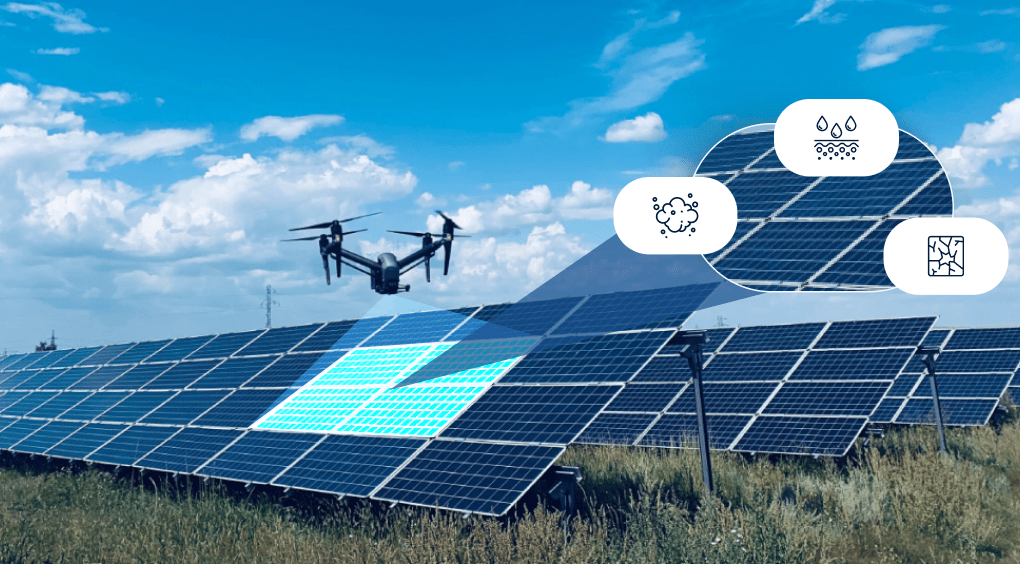
Enter Vision AI-powered drones. Unlike manual inspections, drones equipped with high-resolution cameras and AI Video analytics software capture detailed footage of solar panels, identify anomalies in real-time, and even predict potential failures.

These computer vision algorithms can analyze large datasets of solar panel imagery to find problems that are not visible to the naked eye and can classify problems into severity classes that defined levels of defects. By utilizing a deep learning structure, these AI systems can:

  • Find cracks, debris on solar panels, and hotspots.
  • Predict failures of the panel, doing trend analysis for the solar panel.
  • Generate automated reports for the operators.
  • Integrate into the maintenance system form restoring the panels in the repair and replacement.

This transition not only saves time and costs in the inspection of solar panels, but also contributes to the efficiency and longevity of solar panels.

Common Defects Found by AI-Powered Drones

Many times, solar panels develop defects due to wear and tear over time and in environmental conditions. Drones with Vision AI capabilities can automatically identify and remediate a range of common defects including:

Humidity & Moisture Damage

Finds defective panel surfaces related to weak seals and corrosion, along with electrical faults.

Dust & Pollution Build Up

Scans for thickness of dust on the surface of the solar panels that may affect the efficiency and power output of the installation.

Storm & Weather Damage

Drones can quickly identify damage related to storms, specifically overlaying cracks or debris damage after thunderstorms or adverse conditions.

Animal Damage

Drones can deter any scratches/bite externally or internally that birds or animals left on the panels.

Defective Bypass Diodes & Wiring

Identifies the faults of wiring and defective diodes and breakdowns that would provide defects or inefficiencies in power or electrical failure.

The Vision AI drones can provide real-time insights into drones and by documenting a findings, will effectively reduce time out of service to maximize energy efficiency.

How AI Drone Inspections Work

The process of a drone inspection powered by computer vision allows for precision, efficiency and accuracy in inspections:

Image & Video Acquisition

Drones with high-level cameras will scan a solar farm and take images and videos of the panels’ surfaces.

Data Retrieval

The visual data from the images and videos will be analyzed via computer vision, detecting dirt, dirt falling under panels, cracks, or hotspots.

Defect Detection

Using edge detection, statistics, and image processing techniques AI models can identify defects as small as the smallest doable defects.

Classification & Investigation

By deploying deep learning follow-on models the inspection will classify each defect by severity, or identifying normal condition from able to have problems.

Predictive Maintenance

The constant monitoring of a solar farm allows for a system to predict or enable a failure of equipment, and outline maintenance work doing predictive work to extend panels services years.

Automated Reporting

Reports, that often do the inspection too, have a level of detail that highlights the issues for prompt attention to those areas.

Integrated Maintenance System

The inspection will integrate with solar farm management system and automate scheduling repair or replacement appointments.

Real-Time Insights For Better Decision-Making

The true value of Vision AI drones is the actionable insights they provide, not just detecting defects.  Using drone technology, operators can:

  • Make urgent repairs a priority.
  • Arrange for predictive maintenance.
  • Optimize overall energy production.

This data-driven approach to digital transformation is deploying new layers of complexity, allowing for better decision-making that enhances efficiency and profitability throughout the solar industry.

Why Vision AI Drones Are Changing the Game

There is no comparison between AI-enabled drone inspections and manual inspections as there are several clear improvements –

  • Speed & Efficiency – Inspect hundreds of acres in minutes.
  • Higher Accuracy – Detect anomalies that are invisible to human inspectors.
  • Cost Savings – Reduce labor costs and avoid unnecessary replacements.
  • Safety – Remove human inspectors from dangerous situations.
  • Scalability – Small rooftop systems or massive solar gardens.

Drones have completely changed the way solar panel inspections are done, bringing together agility and intelligence.

The Future of Solar Panel Inspections

The infusion of computer vision AI into solar panel inspections signals the dawn of a new epoch for renewable energy infrastructure. The application of predictive analytics, IoT connectivity, and automation will only enhance this evolution.

Solar farms using AI inspections will not only improve energy efficiency but will also generate sustainable, viable, and reliable energy into the future.

Final Thoughts

Using computer vision-powered drones to inspect solar equipment represents a monumental shift towards smarter, safer, and more sustainable energy management. By combining the accuracy of AI with the mobility of drones, solar producers may achieve unparalleled accuracy, predictive maintenance, and savings over time.

From identifying disconnected panels to locating potential thermal hot spots, AI drones are setting a new standard for energy infrastructure. Reach out to Nextbrain today to start the future of solar panel inspections with Vision AI.
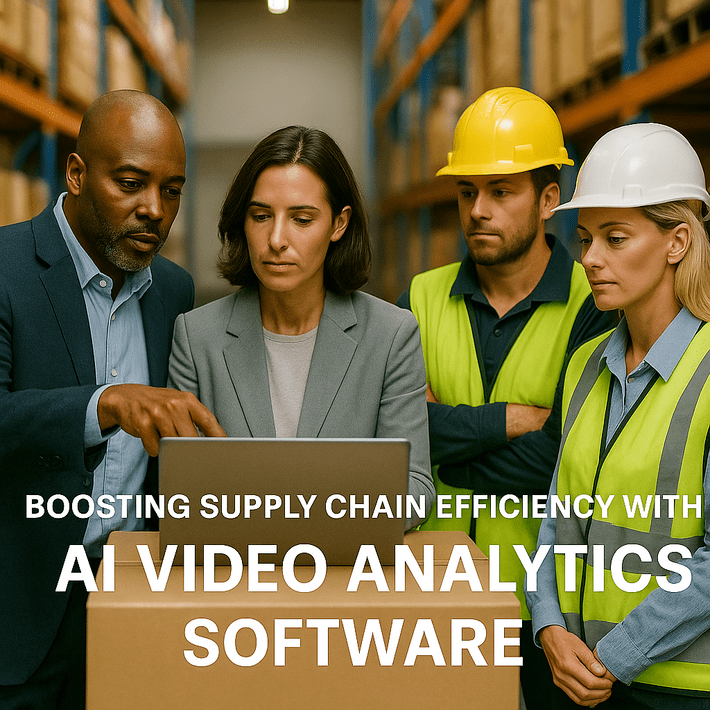

How AI Video Analytics Software is Transforming Supply Chain Efficiency and Real-Time Operational Visibility

In today’s fast-paced global economy, supply chain efficiency is no longer a luxury; it’s a necessity. Businesses must manage logistics operations, inventory flow, warehouse safety, and delivery accuracy under increasing pressure. To stay competitive, companies are rapidly turning to innovative technologies. One such game-changer is AI video analytics software.

AI video analytics software uses artificial intelligence, machine learning, and computer vision to analyze video data in real time. It transforms passive surveillance footage into actionable intelligence that enhances operational visibility, reduces errors, and ensures safety. This article explores how AI video analytics software is redefining efficiency in the supply chain.

What is AI Video Analytics Software?

AI video analytics software leverages intelligent algorithms to detect, track, and analyze visual data from cameras. Unlike traditional video surveillance that requires human monitoring, AI automates the process, recognizing patterns, detecting anomalies, and triggering alerts.

In a supply chain context, it is used across:

  • Warehouses
  • Distribution centers
  • Loading docks
  • Manufacturing plants
  • Transit and logistics hubs

By interpreting video feeds in real time, businesses can make data-driven decisions to enhance productivity and reduce losses.

Key Benefits of AI Video Analytics in the Supply Chain

1. Real-Time Inventory Monitoring

Traditional inventory tracking involves manual checks or barcode scanning, which can be error-prone and slow. AI video analytics software can automatically track:

  • Incoming and outgoing inventory
  • Shelf and pallet space utilization
  • Item misplacement or shortages

This enables real-time stock updates, reducing overstocking or stockouts and streamlining inventory flow.

2. Warehouse Safety and Compliance

Warehouses are high-risk environments with forklifts, conveyors, and heavy machinery. AI video analytics ensures safety by:

  • Detecting PPE (personal protective equipment) compliance
  • Monitoring forklift zones and walkways
  • Sending alerts for unsafe behaviors or unauthorized entries

With automated incident detection, the software helps prevent accidents and ensures regulatory compliance.

3. Enhanced Operational Visibility

AI video analytics software provides continuous, 24/7 visibility across all supply chain nodes. This enables:

  • Monitoring multiple sites remotely
  • Tracking employee productivity
  • Detecting idle machinery or delays

Supply chain managers can get real-time performance data and intervene proactively to reduce inefficiencies.

4. Reduced Theft and Cargo Loss

Loss prevention is a major concern in logistics. AI analytics software can:

  • Detect unusual activity around cargo areas
  • Identify tampering with goods
  • Automatically track loading/unloading activities

By minimizing theft and shrinkage, businesses protect their bottom line and build a more resilient supply chain.

5. Optimized Vehicle Loading and Unloading

Inefficient loading can cause delays and reduce fleet productivity. AI video analytics can:

  • Monitor dwell times at loading docks
  • Track how long it takes to load/unload vehicles
  • Identify bottlenecks in material handling

This data can be used to optimize loading schedules and reduce vehicle turnaround time.

6. Smart Traffic and Fleet Monitoring

AI-enabled cameras can track vehicle movement across facilities or during transit. This helps:

  • Monitor driver behavior (speeding, unauthorized stops)
  • Detect route deviations
  • Analyze congestion points in supply chain routes

With fleet visibility, logistics managers can optimize route planning, improve delivery accuracy, and reduce fuel costs.

Use Cases of AI Video Analytics Software in Supply Chain

Inbound and Outbound Logistics

AI video analytics tracks shipments from arrival to dispatch. It ensures that goods are received, stored, and dispatched in the correct sequence, reducing sorting errors and delivery delays.

Production Line Monitoring

In manufacturing-linked supply chains, AI can monitor production lines for delays, bottlenecks, or quality deviations. It helps maintain product flow and avoid disruptions.

Yard and Dock Management

AI-powered surveillance helps monitor truck arrivals, loading dock availability, and trailer movements. This improves scheduling and reduces waiting times for delivery vehicles.

Emergency and Fire Risk Detection

AI can detect smoke, fire, or abnormal temperature rises in real time. This is critical for storing hazardous materials or high-value goods.

How AI Video Analytics Drives ROI in Supply Chain

Investing in AI video analytics software leads to measurable returns, including:

  • Reduced operational costs through automated monitoring
  • Improved asset utilization via real-time tracking
  • Minimized losses from theft or safety violations
  • Higher customer satisfaction due to on-time deliveries
  • Better workforce management with productivity insights

By replacing reactive management with proactive intelligence, companies gain tighter control over their supply chain operations.

Challenges and Considerations

While the benefits are clear, businesses must address certain factors when adopting AI video analytics:

  • Integration with legacy systems: Ensure compatibility with existing video surveillance and warehouse management software.
  • Data privacy and compliance: Adhere to data protection regulations (e.g., GDPR, HIPAA) when using facial recognition or employee tracking.
  • Initial investment: While the long-term ROI is high, implementation costs can be significant. Opting for modular or cloud-based AI video analytics solutions can reduce CAPEX.
  • Staff training: Equip teams to interpret data insights and respond to alerts efficiently.

Working with an experienced AI solution provider can help you navigate these challenges effectively.

Why Choose Nextbrain for AI Video Analytics Solutions?

At Nextbrain, we specialize in developing intelligent AI video analytics software tailored for logistics and supply chain operations. Our solutions are designed to:

  • Monitor warehouse activities in real time
  • Detect anomalies, thefts, and safety violations
  • Provide visual dashboards and actionable insights
  • Integrate seamlessly with existing ERP, WMS, and IoT platforms

With proven expertise in AI development and deep understanding of logistics processes, Nextbrain helps businesses unlock new levels of efficiency and safety.

Final Thoughts

The demand for intelligent automation in logistics is only going to rise. With increasing supply chain complexities, AI video analytics software offers a powerful edge, combining real-time visibility, operational insights, and automated decision-making.

From optimizing inventory flow to ensuring worker safety, the applications are vast and transformative. As supply chains evolve to be more responsive and data-driven, now is the perfect time to invest in AI-powered video analytics.

Ready to revolutionize your supply chain operations with AI video analytics software? Let Nextbrain guide you with the right tools, strategy, and innovation.

Contact us today to schedule a demo or learn more

AI Video Analytics for Hospital Safety: A Smart Approach to Safer Healthcare Environments

In the modern healthcare landscape, hospital safety is a critical concern, impacting not just patient care but also staff efficiency, regulatory compliance, and institutional reputation. With rising patient footfalls, increased operational complexity, and the constant need for vigilance, traditional surveillance systems fall short. AI video analytics for hospital safety is emerging as a revolutionary solution that transforms passive surveillance into active intelligence.

This blog explores how AI-powered video analytics helps create a safer and smarter hospital ecosystem.

What is AI Video Analytics?

AI video analytics refers to the use of artificial intelligence and machine learning algorithms to analyze video footage in real-time or post-event. It goes beyond traditional surveillance by:

  • Detecting specific activities, movements, or behavioral patterns
  • Generating real-time alerts
  • Offering actionable insights to improve hospital safety and operational efficiency

In hospitals, AI video analytics integrates with existing CCTV systems, enabling automated monitoring and advanced threat detection across critical zones like emergency rooms, ICUs, entry/exit points, and corridors.

Why Hospital Safety Needs AI Video Analytics

Hospitals face unique safety challenges that require proactive monitoring:

  • Unauthorized access to restricted areas
  • Patient elopement or wandering (especially in psychiatry or elderly care units)
  • Workplace violence or conflicts
  • Slip and fall incidents in hallways or bathrooms
  • Crowd congestion in waiting areas
  • Emergency event response coordination

Traditional human monitoring systems are limited by attention spans, staffing constraints, and delayed responses. AI video analytics ensures continuous, unbiased surveillance 24/7.

Key Use Cases of AI Video Analytics in Hospital Safety

  1. Real-Time Threat Detection

AI detects suspicious activities such as aggressive behavior, unauthorized entry, or theft in real-time and triggers alerts to security personnel. This enables faster intervention and helps prevent escalation.

2. Fall Detection for Patients

Hospitals often cater to elderly or critical patients who are at high risk of falling. AI-enabled video analytics systems can identify unusual postures or sudden collapses, instantly notifying the nursing team for quick response.

3. Patient Monitoring and Elopement Prevention

In mental health wards or pediatric departments, patient wandering or unauthorized exits can pose serious safety risks. AI video analytics tracks patient movement and triggers alerts when someone crosses restricted boundaries.

4. Workplace Safety for Healthcare Staff

Monitoring operating rooms, ICUs, and high-risk departments for potential hazards—such as liquid spills or physical altercations—enhances worker safety. AI can also help in incident reconstruction for investigation purposes.

5. Infection Control Compliance

Especially post-pandemic, hospitals must enforce hygiene and mask protocols. AI systems can detect:

  • Mask compliance
  • Social distancing violations
  • Sanitization activity frequency

6. Crowd and Queue Management

AI video analytics helps manage crowd density in waiting areas, emergency departments, or vaccine counters. It provides real-time data for optimizing footfall, improving patient experience and maintaining order.

Benefits of AI Video Analytics for Hospital Safety

  • Proactive Risk Mitigation – Enables early detection of safety risks and prevents escalation.
  • 24/7 Smart Surveillance – Continuous monitoring without fatigue, unlike human operators.
  • Improved Emergency Response – Instant alerts help staff act swiftly in critical moments.
  • Incident Documentation – AI records help with post-event investigations and insurance purposes.
  • Regulatory Compliance – Supports adherence to safety standards and health regulations.Buy vitamins and supplements
  • Operational Efficiency – Frees up human staff from monitoring tasks so they can focus on patient care.

 AI Video Analytics in Action: Real-World Examples

Several smart hospitals globally are already leveraging AI video analytics:

  • Mount Sinai Hospital (USA) uses AI for real-time fall detection in geriatric units.
  • Apollo Hospitals (India) uses video intelligence for hygiene compliance and crowd control.
  • Cleveland Clinic has deployed AI surveillance for staff safety and access control across its campuses.

These implementations have resulted in enhanced patient safety metrics, reduced response times, and a significant drop in incidents.

Data Privacy and Ethical Concerns

While AI video analytics boosts safety, it’s vital to uphold patient privacy and comply with regulations like HIPAA and GDPR. Solutions must include:

  • End-to-end encryption
  • Data anonymization
  • Role-based access controls
  • Transparent consent mechanisms

Selecting a trusted AI solutions provider ensures both technical excellence and ethical compliance.

Future of AI Video Analytics in Hospitals

With advancements in deep learning and edge computing, AI video analytics is becoming more scalable and accessible. Future applications may include:

  • Emotion recognition to assess patient discomfort
  • AI-assisted triage in emergency departments
  • Integration with robotics for autonomous monitoring

The future of hospital safety lies in intelligent automation, and AI video analytics will be at the heart of this evolution.

Conclusion

AI video analytics for hospital safety is not just a technological upgrade, it’s a paradigm shift in how hospitals ensure protection, efficiency, and compliance. From fall detection to emergency alerts and crowd control, AI Video analytics software brings a new level of intelligence to healthcare safety protocols.

Hospitals embracing this technology are better prepared to safeguard lives, streamline operations, and offer peace of mind to patients and staff alike. As healthcare institutions move toward digital transformation, investing in AI Video analytics software is a smart and necessary step toward building safer hospitals of the future.

AI-Powered Forklift Collision Avoidance: How Computer Vision is Revolutionizing Workplace Safety

Forklifts are critical vehicles for moving heavy goods, optimizing available storage space, and helping to maintain smooth operations in facility environments when moving freight such as warehouses, logistics centers, factories, and retail storage areas. 

Unfortunately, as beneficial as forklifts are, they happen to make up one of the largest contributing factors to workplace accidents. A certain number of accidents occur from property damage and serious injury each year in facilities with forklifts. As there is a large focus on productivity and ever-evolving complexity surrounding safety in industrial environments, facilities are working to implement technology solutions to manage hazards without reliance on human beings. 

One of the most relevant advancements in this area is an AI-enabled Forklift Collision Avoidance System with Computer Vision for Forklift Safety. The advent of visual intelligence with real-time analytics has put us in a new realm of safety in industrial facilities, empowering facilities to identify and respond to hazards with incredible precision.

The Unconquerable Problem of Pedestrian Safety in the Presence of Forklifts

While forklifts can sometimes seem small, they can weigh over 10,000 lbs, which means they can leave pedestrians with terrible injuries like fractures, strains or damaged muscles. Of course, we have used administrative controls like restriction on operating forklifts in certain areas for pedestrians with earmaps, and signage, and have made some improvements, but accidents still happen.

Some high-risk scenarios include the following:

  • Narrow aisles that bring the pedestrian and the forklift close to each, without much further distance to maneuver.
  • Blind corners where the operator cannot see the pedestrian in the approach.
  • Limited visibility when the forklift is in reverse.
  • Distracted employees who do not seem to be aware of the fork trucks operating in their area of movement.

These hazards have always existed – but, there is a new layer of safety that can help – and that is computer vision with AI that is able to monitor surroundings and areas for risks before they get out of hand.

The Importance of Computer Vision for Preventing Forklift Collisions Preventation

When pedestrians and forklifts share the same environment, safety should always come first. Traditional technologies that combat collisions often only rely on distance sensors, and in most practical situations, have a poor understanding of the complexity of the real world.

Computer vision changes everything. The system uses video cameras to visually comprehend the forklift’s surroundings through AI algorithms. The cameras can identify and categorize:

  • Humans
  • Other vehicles or forklifts
  • Racks and pallets
  • Obstacles or debris

Trained AI models specific to industrial environments can notify when unsafe actions or unsafe conditions are detected. This allows sites the opportunity to prevent incidents through action instead of reaction.

Enhancing Collision Avoidance with AI Vision

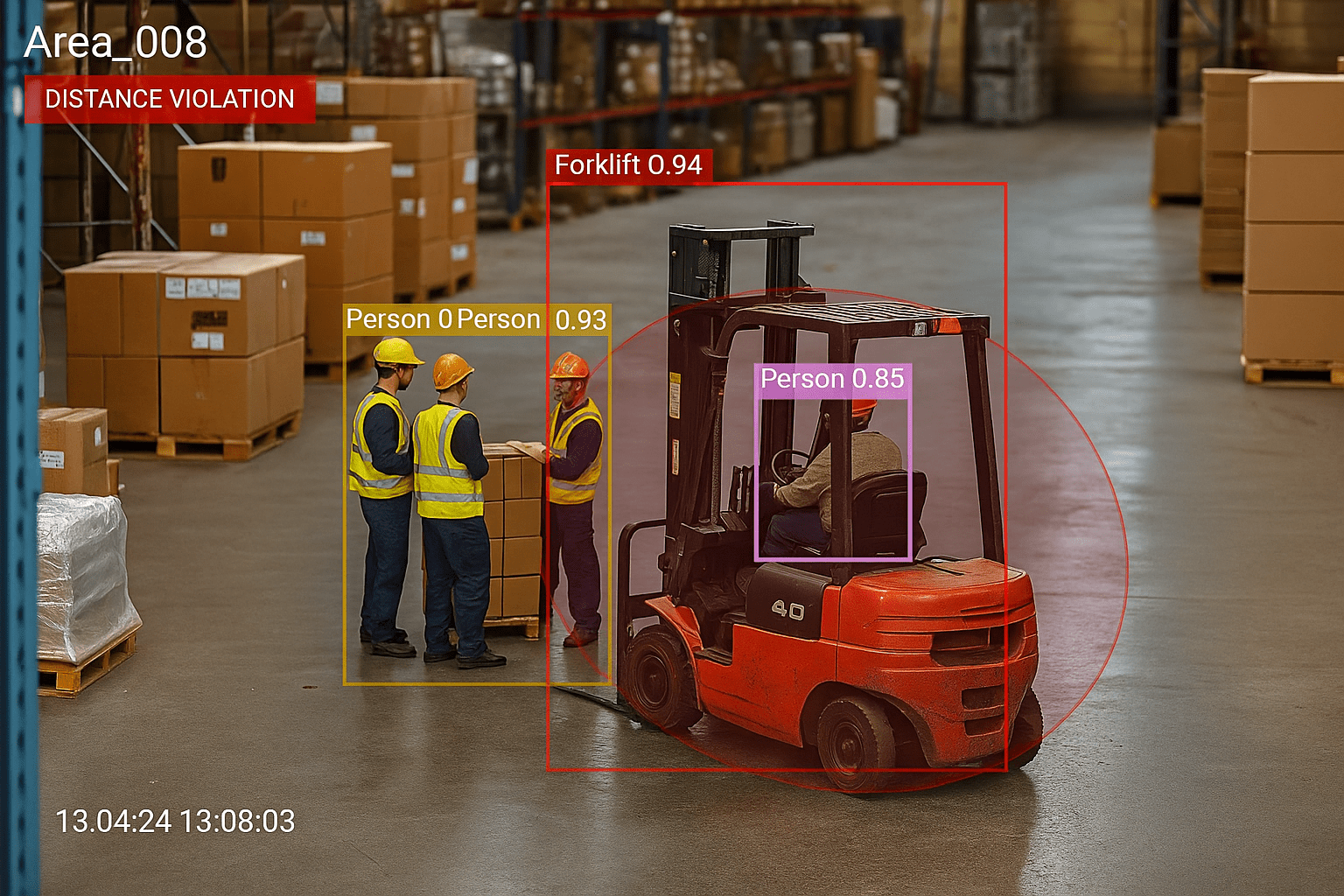
Nextbrain’s AI-powered Forklift Accident Prevention System is a state-of-the-art product designed to assist EHS (Environment, Health, and Safety) departments in enhancing workplace safety standards. Utilizing real-time data processing, computer vision, and automated alerts minimizes accident hazards.

  1. Real-time alerts when a restricted zone is violated
    Suppose a pedestrian or other vehicle enter the restricted forklift zone. In that case, the system can send real-time alerts to supervisors and forklift operators which gives the ability to implement immediate action and minimizes accidents.
  2. Recognizing Unsafe Proximity
    With AI-powered computer vision, the system examines the distance between forklifts, pedestrians, or other vehicles on a continuous basis. If unsafe proximity is identified, an alarm is initiated and notifications are sent out for follow up and corrective action to be implemented.
  3. Recognizing Recurrent Issues
    Some safety risks are actually a factor of some type of recurring unsafe event, working or task inefficiencies or unsafe behaviors inappropriately repeated while continuing to be overlooked. These unsafe events could be recognized in the data by the AI system via heatmapping capability in comparison with the larger data set analysis to allow managers to intervene at the root.
  4. Understanding Movement Patterns Using Heat Maps
    Vision AI enhanced heat maps can provide information regarding patterning of walking pedestrians and operating forklifts, identifying higher risk zones, and allowing better layout planning (physical environments) to minimize probable even of collision.
  5. Data Building for Continual Improvement
    Over time, this system will accumulate substantial amount of pedagogy of interactions between forklifts and operators when both are in operation. This knowledge will serve a particularly useful purpose, validating infrastructure current safety measures and informing continual improvements.

Reasons Industries are Implementing Vision AI-Based Collision Avoidance Systems

Traditional sensor-based forklift safety systems often fall short in identifying complicated and dynamic hazards. Vision AI is designed to overcomes these disadvantages. Vision AI combines real-time image recognition with analytics to provide value that goes beyond identifying basic obstacles.

Key Value Propositions:

  • Minimized damages to freight through reducing incidences of unintended collisions.
  • Reduced downtime through early alerting of hazards.
  • Increased level of compliance with workplace safety regulations.

Vision AI Advantages for Forklift Safety

Higher standards of workplace safety

Using Computer vision for Forklift Safety , facilities can enforce higher standards of safety guidelines and protocols, protecting their own staff and, allowing an operator to concentrate on their job with confidence.

Greater Operational Awareness

Vision AI ultimately gives forklift operators a views of their surrounding environment, rather than relying on guess work. This improves decision making and reduces potential for human errors.

Fewer Collisions and Down time

Timely alerts allow to prevent an incident from becoming an incident. Less accidents with fewer incidents translates to a smoother work flow with reduced potential costly operational impacts.

The Future of Safety in Forklifts

Forklift safety is not just a high-visibility vest, mirrors, and operator diligence any longer. By utilizing AI-powered computer vision forklift collision avoidance systems, facilities have begun adopting data-infused, proactive safety infrastructure.

Traditional methods often created blind spots for safety – literally and figuratively. Modern vision AI removes these gaps, driving the workplace to be both human aware and machine aware which leads to a more efficient and safer overall operating environment.

Final Thoughts on Workplace Safety

Workplace safety and health is more than just rules, it is developing an atmosphere where hazards are continuously monitored, anticipated and prevented. AI-driven Computer Vision for Forklift Safety is a giant step forward in that journey.

Our system can locate hazards in real-time, present visual patterns, and iterate on processes backed by data. This will give you unprecedented access and visibility into the future of industrial safety. Furthermore, with vision AI, safety systems will now be machine-aware as well as human-aware creating a new age of learning for accident prevention.

Are you ready to help improve your forklift safety and mitigate risk of accidents with computer vision? Contact us today and let us show you how this technology can change the safety of your operation while improving the overall efficiency of your business.

Frequently Asked Questions

  1. What is a forklift collision avoidance system with vision AI?
    A safety solution that uses AI-powered cameras to detect people, obstacles, and vehicles in real-time. It then analyses the visual data to warn operators and prevent collisions, thereby improving overall workplace safety.
  2. What hazards can computer vision detect?
    Forklift-human interactions, humans in blind spots, interactions with other forklifts and vehicles, unsafe human behaviors such as speeding in tight zones, structural hazards, among others.
  3. How does the AI-powered system prevent potential collisions?
    The AI-powered system uses AI Video Analytics software to issue real-time alerts which are differentiated by visual indicators, data algorithms, and even audible alarms. In some cases, it can even automatically slow down the forklift to lessen the impact of a collision.
  4. How does computer vision reduce accident risk with technology that uses AI?
    It provides real-time situational awareness while issuing anticipated warnings to prevent collisions before they happen, thus minimizing lost time, injuries, and risk to safety.
  5. What industries could use this technology?
    Industries such as the automotive, manufacturing, food & beverage, construction, or retail industries can benefit from AI-enabled computer vision for forklift safety.

Digital Signage for Employee Communication: Transforming Internal Communication in the Workplace

In today’s ever-changing and fast-paced work environment, communication to employees is paramount more than ever. Traditional communication mediums (bulletin boards, email newsletters, and posters) do not cut it anymore for effectively managing communication to keep employees informed, engaged and motivated. This is where digital signage for employee communication comes in – it offers an innovative, real-time, visually compelling way to solve internal communication problems and improve operational effectiveness.

Whether you are managing a massive manufacturing plant, retail chain, hospital, or corporate office, digital signage can enhance the ways you communicate to your employees.

What is Digital Signage For Employee Communication?

Digital signage is electronic displays that display multimedia content such as announcements, dashboards, alerts, and videos. When utilized for internal communications, it becomes a real time broadcast system to communicate important, relevant and timely information to employees who are at the workplace.

Instead of hoping your employees read an email that could sit in their inbox for days or intranet message that may have gone unread, digital signage offers an opportunity to deliver internal communication to where your employees are; break room, production floor, elevator, cafeteria, and reception, where you will definitely get eyeballs on it.

Top Benefits of Digital Signage as an Internal Communication Tool

Ability to share information quickly

Digital signage has the ability to be updated in real-time, making it a good choice for time-sensitive announcements, including:

    • Emergency or safety instructions
    • Shift changes or reminders about meetings
    • Company or organization news including leadership communication

    Meaning that all employees, desk bound or non-desk workers in the field, get the same information at the same time.

    Enhanced employee engagement

    Static bulletin boards are antiquated and have minimal engagement or anattention from employees. Electronic displays use motion graphics, video content and vibrant visuals that engage viewers and improve content retention.

      Some content you can display:

      • Employee achievements and recognitions
      • Motivational quotes or daily objectives
      • Birthdays and work anniversaries

      These initiatives help foster a positive workplace culture and improve morale.

      Better productivity and performance tracking

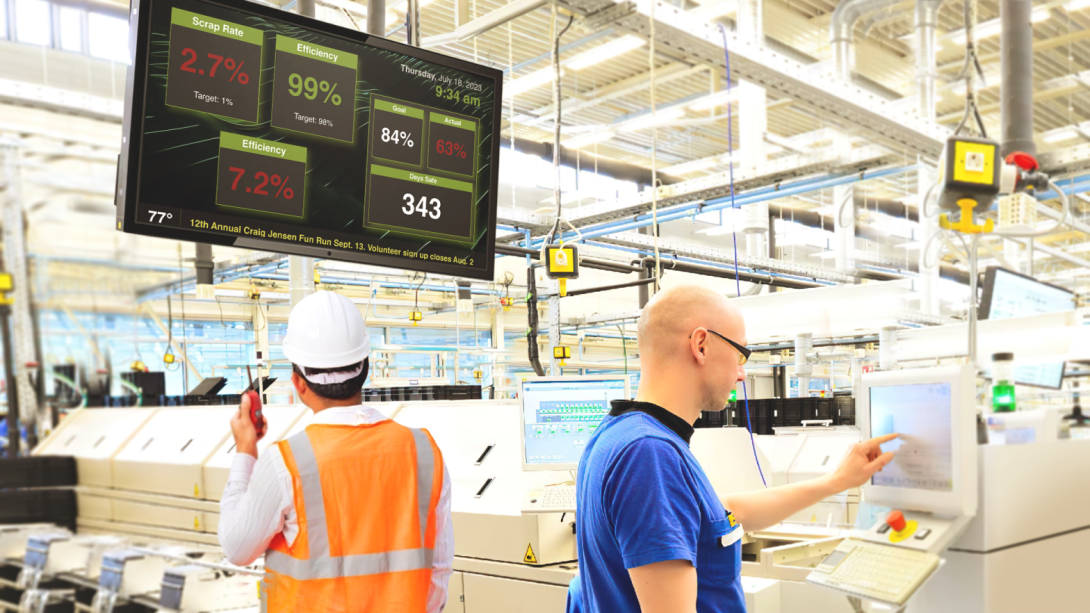
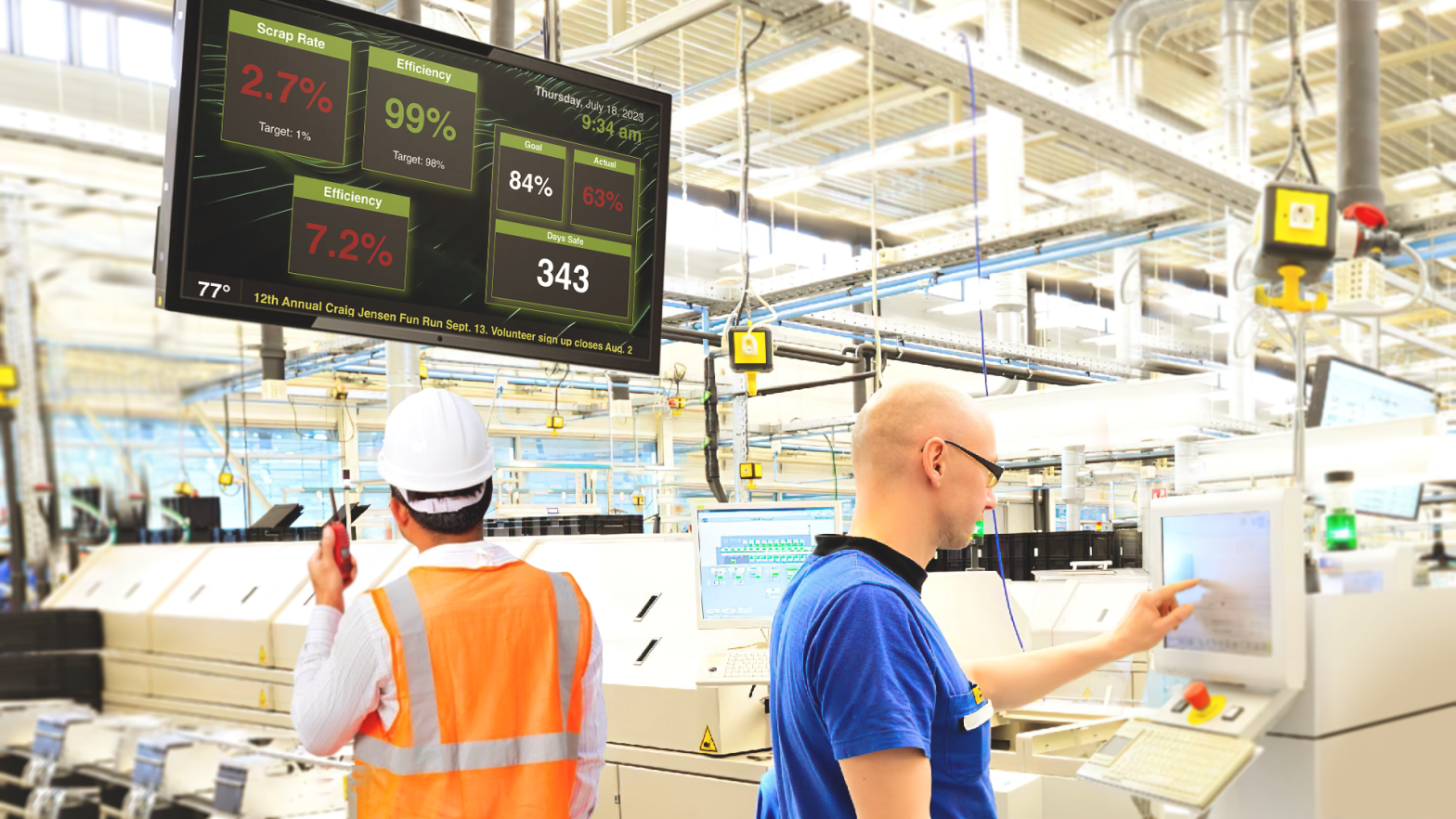
      Digital signage is a great way to gps information as live KPI’s and performance dashboards. In a manufacturing facility, the screen could provide:

        • Daily production metrics
        • Machine downtime data
        • Quality performance data

        Providing this data in the open encourages accountability, inspires teammates to achieve their targets, and ultimately creates a data-driven work culture.

        Safety and Compliance Communication

        In industries such as construction, manufacturing, and healthcare, safety is crucial. There are plenty of opportunities for digital signage to reinforce messaging on safety protocols, compliance updates etc.
        Some examples include:

          • PPE reminders
          • Emergency evacuation procedures
          • Health & hygiene tips
          • Real-time alerts during emergencies

          This kind of communication may significantly reduce risk and protects employees.

          Cross-Location Consistency

          With numerous offices, warehouses, or branches, it can be difficult to achieve a consistent communication platform. A cloud-based digital signage solution enables organizations to manage their content from one central location, ensuring that every location receives the same updates, providing consistent brand communication and messaging.

          Essential Use Cases of Digital Signage at Work

          🏭 Manufacturing Facilities
          Employees on the factory floor don’t check emails or the intranet portal. Digital signage provides the opportunity to deliver:

          • Real time production metrics
          • Downtime notifications
          • Shift rotations
          • Safety notices

          🏢 Corporate Offices
          Digital signage in an office environment is well placed in shared spaces to convey:

          • HR notices
          • Internal events
          • Company communications
          • DEI promotions

          🏥 Hospitals and other Health Care Facilities
          Medical staff work in a highly pressurized environment and may not ever check or read system notices. Digital signage lets you communicate:

          • Staff shift changes
          • Emergency notifications
          • Hygiene practices
          • Recognition of staff professional accomplishments

          🛒 Retail Stores and/or Warehouses
          Frontline workers need to receive communications short and impactful. Signage screens will provide:

          • Sales targets
          • Daily progress updates
          • Promos
          • Holiday hours

          Best Practices for Implementing Digital Signage for Employee Communications

          Know Your Audience

          Be mindful of what is meaningful based on employee department, and what their job function and role is. What is required for the HR committee may not relate to the operations team.

          Keep Content Short and Visual

          Use information bytes, infographics, and video content for clarity and to keep attention on important messaging. Don’t overwhelm with information!

          Schedule Content Strategically

          Different times of day are suited for different content, presumably at their best time-of-day. Morning might provide employees their daily goals, midday might have safety tips, and evening may highlight the accomplishments of the team.

          Create Opportunities for Employees to Participate

          Share user-generated content which can have various forms: photos, accolades, testimonials, etc. This type of contribution builds an engaged audience and engages employees by giving them the opportunity to participate.

          Evaluate Effectiveness

          Use the analytics provided by your program to evaluate content use. Look at what content is dispayed and for how long. You may even be able to combine this with employee feedback in order to quantify it.

          Digital Signage Software and Tools

          When deciding which digital signage solution to use to convey employee communication, look at the following features:

          • Centralized content management
          • Scheduling and automation
          • Cloud-based delivery
          • Interactive features
          • KPI Integration

          Some of the most recognized tools are ScreenCloud, Yodeck, Novisign and OptiSigns which offer different features based on your organizational size and goals.

          Why Digital Signage is the Future of Employee Communication

          As attention spans decrease and information overload increases, our internal communication is due for an evolution. Digital signage software for employee communication can not only support visibility of messages, it creates a culture of transparency, recognition, and real-time feedback.

          As hybrid work models, safety, and productivity tracking continue to shape the workplace, digital signage software for corporate communications is not a trend; it is a requirement for businesses that want to stay connected with their employees.

          Conclusion

          Digital signage can enhance internal communication strategies in today’s world, from driving employee engagement, to enhancing operational transparency, and improving safety. Digital signage is dynamic, scalable, and relevant for organizations across any industry. It is especially beneficial for engaging frontline employees, mobile workforces, or non-desk workers, who may not see communication through traditional means.

          Investing in the right digital signage solution can change how your organization approaches internal communication, and help build a more informed, engaged, and productive workforce.

          Are you ready to transform workplace communication?
          Empower your employees, and use Nextbrain’s digital signage solutions intended for employee communication to deploy real-time messaging that is actionable and targeted.
          Contact Nextbrain today and implement a meaningful digital signage platform.

            Transforming Crop Health: How Computer Vision is Revolutionizing Plant Disease Detection

            Crop health is the cornerstone of sustainable agriculture. With growing food demands around the world and climate variations, farmers have their work cut out to manage healthy crops. One of the most essential aspects of contemporary farming is the ability to detect plant diseases early on. Once a disease sets in, the losses in yield and quality can be disastrous; in many cases, crops may not even be salvageable.

            In this time of smart agriculture, computer vision is revolutionizing foods systems; this subset of Artificial Intelligence (AI) enables automated and accurate disease detection. Thus, computer vision is changing the way farmers scout and monitor crops.

            The Importance of Early Detection in Agriculture

            Many plant diseases are not evident early on. By the time a diseased plant exhibits visible symptoms that signal the existence of a disease, some damage may already have occurred. Traditional detection approaches – directed by human expertise (or inexperience) – require time, skill, and have the potential for discovery error.

            The Food and Agriculture Organization (FAO) of the United Nations estimates that a significant 20-40% of global crop production experiences loss from pests and diseases annually. Plant diseases accounted for more than $220 billion in losses per year. If any data half reflects reality, detection is critical to the agricultural economy and food security.

            Common Issues with Disease Detection

            • Unseen Infections: Many diseases begin internally and do not exhibit visible symptoms until after they are at the point of no return.
            • Limited Expertise: Remote farmers may be unable to access trained agronomists.
            • Limited Resources: Farmers who grow regionally or less commonly grown crops, often do not have reference materials to help them identify disease.
            • Manual Limitations: It is impossible to inspect large fields manually with consistency.

            The Role of Computer Vision in Plant Disease Detection

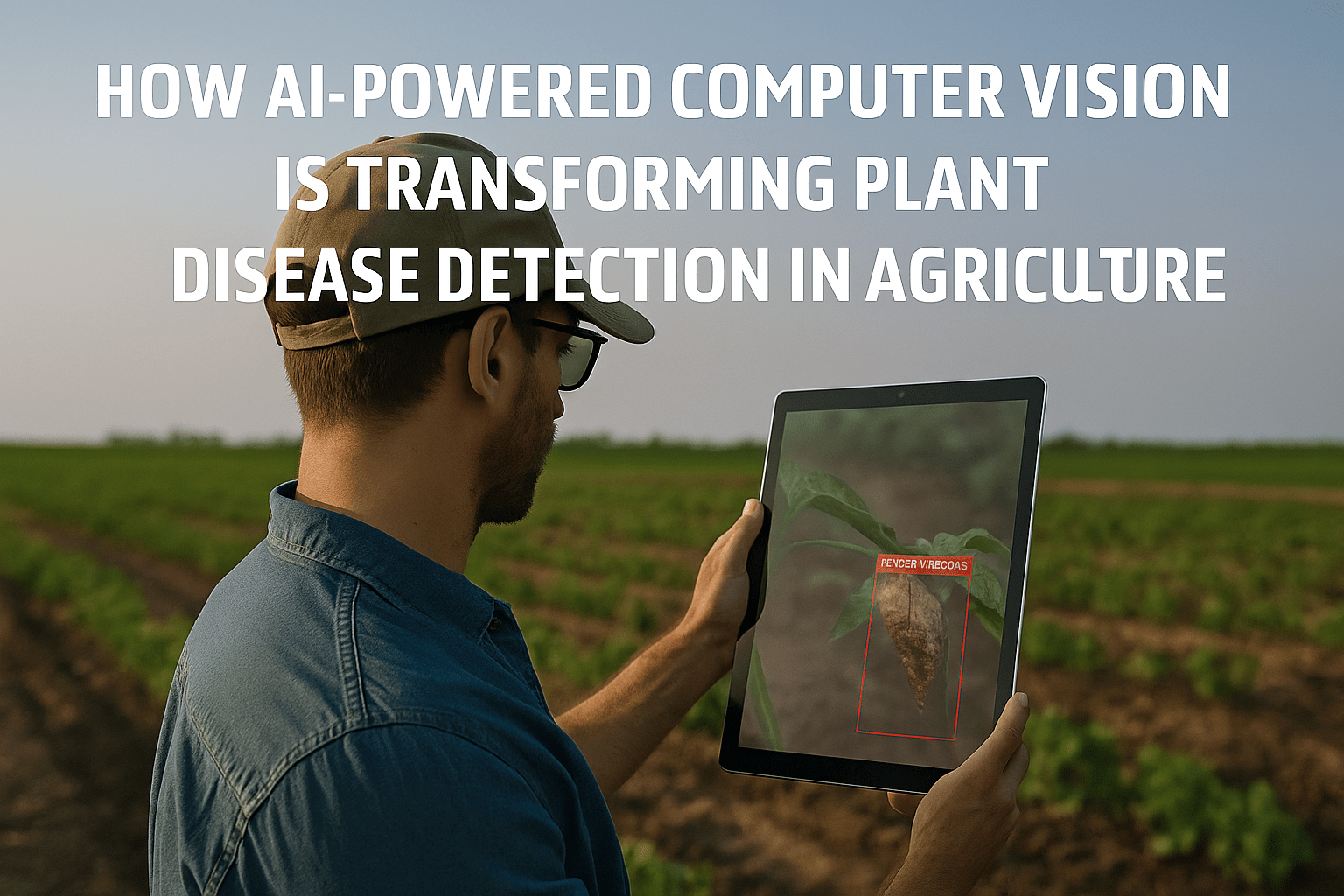
            Computer vision for plant disease detection uses image-based analysis to effectively and accurately evaluate plant health. With AI-based systems, farmers can capture high-resolution images of their crops electronically and analyze them in real time using intelligent automation.

            What Computer Vision has to offer

            • Image Capture via Smart Devices: Ability to cover extensive fields with smart devices like drones, smartphones, or fixed cameras to capture visual data.
            • Disease Symptoms: Deep learning systems can evaluate images for disease symptoms such as spots, changes to the texture of the leaves and leaf color changes. These can typically be detected by the system before a human can actually see it.
            • Fast & Accurate: Processing images ensures that results are delivered as soon as they are ready so that treatment options can be implemented timely.
            • Reduced Human Intervention: The entire disease detection process is automated which reduces labour, human error in identifying disease, and coverage of crop plants.
            • Sustainability: Identifying disease at its earliest stage can lead to a reduction in the amount of chemicals used, and increase sustainably-based practices for farming.
            • Scalability & Scientific: Artificial intelligence can process thousands of images at once (including multispectral information), with high accuracy rates and a distinction between false positives and costs of treatment.

            How the Computer Vision Process Works

            When applying computer vision in agriculture, there are several steps to follow:

            • Image Acquisition: Farmers fly drones, use smartphones, or communicate with IoT-connected cameras to obtain the first images of their crops.
            • Preprocessing: The next step takes the captured images and removes unnecessary or irrelevant information, including performing segmentation and suppression of noise to help improve the accuracy of the analysis.
            • Feature Extraction: To classify the diseases in plants, the extracted images will then be processed through a series of deep learning models, particularly a Convolutional Neural Network (CNN) to extract visual features such as lesions, spots (which includes leaf, fruit, and root spots), and changes in texture.
            • Disease Classification: The trained algorithm has transformative learnt abilities, naturally comparing the detected features with historical data and in-depth knowlegde of diseases to detect and classify plant related diseases of concern in agriculture such as: blight, rust, brown and grey mould, phytophthora diseases, black leg and more.
            • Continuous Learning & Monitoring: In a test of real-time feedback and continued learnings, these systems use alternative learning heuristics to improve based on changing climate conditions, varying crops and evolving diseases.

            Vision AI applications in agriculture

            There are an array of real-world examples where computer vision is already being applied in agricultural circumstances:

            For vineyards, drones have been shown to limit spread of downy mildew and black rot; therefore limiting expensive damage.

            For tomato farms, a vision based system was designed and operated by a CEO of a farm that used the ‘Query’ of leaf mould and bacterial spots worn as symptoms to fully produce their crop with the knowledge that danger is present and determine worthwhile treatment options.

            These use cases show versatility using AI powered tools to monitor crops independent of crop type and terrain.

            Key Considerations for Implementation

            Embracing computer vision with plant disease observation in a scalable approach.

            1. Environmental Conditions – Light, Weather, and Camera location/duration have effects on image quality. The models must be appropriately trained, depending upon whether there is cloud cover or sun, the angle and resolution of the images taken, and how far apart in time the images take place.

            2. Data Quality – Effective model training requires high quality data that are varied (i.e. representing plant growth stage, environmental factors, etc.).

            3. System Integration – The AI tools should integrate into existing agriculture management systems, sensors, and their workflow.

            Advantages of Computer Vision for Crop Monitoring

            • Precision Agriculture: Focused interventions reduce the over-reliance on pesticides and fertilizers.
            • Timeliness of treatments: Treating crops quicker isolates affected plants and stops the progression of disease easier.
            • Awards: Decreases the need for using large teams for monitoring crops and can minimize delayed losses.
            • Scalable: The level of technology work for small farmers and commercial agriculture producers.

            Conclusion

            Computer vision is reinventing the way we detect crop diseases. It provides new possibilities to monitor crops in the field, rapidly recognize differences in the crops’ conditions, isolated in small areas, and serve the purpose of being applicable to commercial agriculture’s vast footprint.

            As agricultural issues become more challenging, embracing such smart technologies for plant disease detection with AI-enabled computer vision is essential. Proactive intervention using AI computer vision-based technologies creates sustainable farming practices which will produce healthier crops and harvests .

            FAQs

            1. What is computer vision in agriculture?
            It is a technology that uses AI and video analytics to monitor crop health by analyzing images of plants. It detects visual symptoms such as discolouration, spots, and leaf damage.

            2. Which diseases can it detect?
            It can detect a range of issues including fungal infections (rust, blight), pest damage, bacterial spots, nutrient deficiencies, and more.

            3. How does computer vision detect diseases?
            Using trained AI models, it examines high-resolution images for changes in shape, texture, and colour, identifying diseases early and accurately.

            4. What are the benefits of using computer vision?
            Key benefits include early diagnosis, reduced labour costs, scalable monitoring, better sustainability, and real-time insights.

            5. What tools are necessary?
            The necessary tools are drones with imaging systems, stationary IoT cameras, and AI software platforms for image evaluation and reporting.

            6. Would this technology help to prevent outbreaks?
            Yes, farmers can identify early signs of disease, segregate their infected plants, and manage prompt treatment, thus avoiding extensive loss.

            From Footfall to Fortune: The Power of People Counting in Retail

            In a world of increasing competition in retail, the success of retailers today depends on their ability to understand their customers and their habits, both online and in-store. While eCommerce websites have been using analytics for some time, retailers with physical stores have, until recently, been without tools to analyze data about their in-store traffic patterns.

            Enter People Counting Software.

            People counting technology is transforming the way retailers with physical stores operate. It allows them to gain data-driven insights into customer behavior, traffic patterns, and store performance. Retailers are turning foot traffic into actionable intelligence—and, in many cases, profits!

            What is People Counting Software?

            People Counting Software utilizes sensors, artificial intelligence algorithms, and computer vision to detect the number of individuals entering, exiting, and moving within a physical space. People counting tools are often used in conjunction with surveillance cameras, thermal sensors, or infrared beams to provide accurate real-time data.

            These days, systems not only keep track of headcounts but also provide analytics such as:

            • Dwell times in certain locations
            • Heat map observations on the flow of customers
            • Times throughout the day where there are peaks and quieter periods
            • Directional flow (entry vs. exit)
            • Queue lengths and waiting times

            Retailers can then use this information to inform their store layout, staffing, marketing efforts, and overall customer experience.

            Why All This Footfall in Retail Matters

            For physical retail stores, footfall is a key performance indicator. But footfall numbers alone are not worth much without context. People Counting Software provides that context by revealing how many people visit, when they visit, and how they behave while visiting.

            This information helps answer questions such as:

            • Why are conversion rates low during peak periods?
            • What displays do customers engage with most?
            • Are we overstaffed during our slow periods?
            • Is the new in-store promotion driving foot traffic?

            When retailers can answer these questions with real-time, accurate data, they can operate more efficiently and effectively.

            How People Counting is Changing Retail

            1. Intelligent Store Layout and Product Placement

            Using traffic flow data and heat maps, retailers can analyze customer behavior. Retailers observe dwell times to identify high-engagement areas—ideal for product displays, promotions, or new arrivals. Conversely, low-engagement areas can be redesigned to increase visibility and traffic.

            Benefits include:

            • Increased product visibility
            • Data-driven layout decisions
            • Boost in impulse purchases

            2. Effective Staff Scheduling

            No more guessing when to schedule staff. People Counting Software highlights daily, weekly, and seasonal traffic patterns, allowing managers to deploy human resources appropriately.

            Benefits include:

            • Better customer service during peak hours
            • Reduced labor costs during slow periods
            • Improved staff morale and productivity

            3. Marketing Effectiveness Assessment

            Store owners can assess how effective their marketing campaigns are—be it grand openings, festival promotions, or weekend sales—by comparing footfall data before, during, and after the campaign.

            People counting insights help:

            • Determine the ROI of marketing campaigns
            • Optimize promotional strategies
            • Align marketing with customer trends

            4. Conversion Rate Analysis

            When combined with POS data, people counting software helps determine how many visitors convert into paying customers. A high number of visitors but a low conversion rate could point to issues like:

            • Poor product assortment
            • Ineffective pricing strategies
            • Subpar customer service

            Retailers can address these to improve the sales funnel and overall profitability.

            5. Multi-Location Benchmarking

            For retail chains with multiple locations, tracking and comparing performance across the same metrics allows for objective benchmarking. People counting enables retailers to identify:

            • High-performing stores
            • Locations needing attention
            • Regional and demographic behavior patterns

            This supports smarter decision-making at both the store and corporate levels.

            6. Inventory and Merchandising Corralling

            Understanding customer behavior helps optimize inventory. For instance, if there’s a consistent traffic spike on weekends, store managers can ensure top-selling items are fully stocked, preventing lost sales and reducing inventory waste.

            7. Enhanced Customer Experience

            People counting tools help implement better in-store customer experiences, especially in:

            • Managing queue lengths at billing counters
            • Controlling crowd size during events and holidays
            • Monitoring store occupancy (especially important post-COVID)

            A smoother shopping experience encourages repeat visits and builds customer loyalty.

            Integration with Other Retail Technologies

            People counting software becomes even more powerful when integrated with:

            • POS systems – Link traffic with actual sales
            • CRM platforms – Enhance personalization
            • Digital signage – Display targeted content in high-traffic zones
            • Retail dashboards – Monitor long-term trends and KPIs

            These integrations help build a cohesive retail intelligence ecosystem for strategic growth.

            Use Cases Across Retail Verticals

            🛍️ Shopping Malls

            Monitor foot traffic by level, explore usage by entryways, and schedule cleaning or security based on flow.

            🛒 Grocery Stores

            Track aisle traffic, measure dwell time at counters, and streamline checkout processes.

            👗 Fashion & Apparel Stores

            Analyze traffic near trial rooms, observe conversion ratios, and optimize merchandising.

            🔌 Electronics Stores

            Measure interaction with demo products and engagement in comparison zones.

            🍟 QSRs and Cafes

            Predict peak lunch/dinner rushes, reduce queue times, and improve service speed.

            The Future of People Counting in Retail

            As artificial intelligence and computer vision evolve, people counting software is set to offer even more advanced capabilities, such as:

            • Estimating age and gender demographics
            • Detecting emotional responses
            • Predictive analytics for staffing and inventory
            • Automating energy usage (lights/AC) based on real-time occupancy

            We’re moving from simply counting people to deeply understanding people, and that shift is priceless in today’s data-driven retail world.

            Conclusion

            Retailers today can no longer rely on guesswork. People Counting Software is the gateway to smarter, more profitable decisions—from store layout and marketing strategies to customer service improvements.

            As physical retail adapts to the digital era, tools like people counting software ensure that every square foot of your store works harder, smarter, and more efficiently.

            Ready to turn foot traffic into powerful insights?

            At Nextbrain, we offer AI-powered People Counting Software tailored to modern retail environments. Get in touch with us today to enhance your in-store operations and elevate your business performance.

            Digital Signage for Employee Communication: A Smarter Way to Connect Your Workforce

            Walk into any modern workplace — whether it’s a factory, office, hospital, or retail store and you’ll probably see screens quietly doing their job. Not TVs playing news or music videos. These are digital displays showing company updates, safety messages, shift details, or even a quick shoutout to an employee for a job well done.

            What you’re looking at is digital signage for employee communication, and it’s not just another tech trend. It’s quickly becoming one of the most reliable ways to keep teams informed and aligned, especially in fast-paced or distributed work environments.

            Now, that might sound like something only big companies care about. But the truth is, even smaller teams are starting to see how useful these screens can be.

            Why Old-School Communication Just Isn’t Cutting It

            Let’s be real for a second. Most internal communication in companies still relies on emails, printed notices, or word-of-mouth updates. And while those things have their place, they also come with problems:

            • People ignore mass emails.
            • Paper memos go unnoticed or get outdated fast.
            • Updates don’t reach everyone equally, especially in different shifts or locations.

            When communication breaks down, mistakes happen. People feel left out. Projects slow down. Morale dips. You can’t run a smooth operation if your team doesn’t know what’s going on.

            Digital Signage Solves This Without Adding Noise

            The beauty of digital signage is in how quiet, consistent, and useful it is. You’re not flooding inboxes or forcing people into more meetings. You’re just putting the right information in front of them, in the right place, at the right time.

            For example:

            • In a warehouse, a screen near the clock-in station can show today’s safety tip, shift updates, and performance metrics.
            • In a hospital staff lounge, a screen might display schedule changes, policy reminders, or thank-you messages from the leadership.
            • In a corporate office, it might be as simple as showing key announcements, event reminders, or even birthdays.

            These screens become part of the environment — always visible, rarely intrusive, and surprisingly effective.

            The Human Side of the Screen

            Now, here’s where this really works. It’s not just about pushing company updates. It’s about building a better workplace culture.

            A short message saying “Congrats to Anjali for completing 5 years with us!” or “Great job, sales team — target hit for the third week straight!” can go a long way in making people feel recognized. And you don’t need a big celebration or a long email thread. Just one message on the screen, and people feel seen.

            That kind of small but public recognition adds up. Over time, it makes people care a bit more about their work. And that’s not something you can automate or fake.

            Simple Tech. Big Impact.

            One of the common misconceptions about digital signage is that it’s expensive or difficult to manage. That might’ve been true years ago, but now? Not really.

            All you need is a screen, a small media device (even a USB stick or plug-in box can do), and a cloud-based content management system. You can log in from your laptop and update the content anytime.

            Need to add a message about a power shutdown? Takes 60 seconds. Want to push the same content across 10 locations? Done with a click.

            You’re not printing anything. You’re not calling meetings. And you’re not hoping people check their email. It just shows up and gets seen.

            Where It Works Best

            Digital signage works in more places than you’d think. Here are a few scenarios where it’s genuinely helpful:

            1. Break rooms and cafeterias – Great for soft communication like reminders, wellness messages, and team shoutouts.

            2. Factory floors – Perfect for safety notices, downtime alerts, or live performance dashboards.

            3. Office lobbies or reception areas – A good place for company news, updates, or visitor greetings.

            4. Retail backrooms – Used for staff scheduling, training updates, or announcements without pulling employees off the floor.

            The point is, you don’t need to make a big deal out of it. You just place it where people naturally look.

            What to Show (And What Not to)

            The most effective digital signage isn’t cluttered. It’s clean, short, and visual. Here’s what tends to work well:

            • Headlines, not paragraphs
            • Bright colors, simple designs
            • Mix of important info and light content (like fun facts or team photos)

            Don’t try to cram too much in. If the screen is overloaded with text, people stop looking.

            Also, rotate the content often. If it stays the same for too long, it fades into the background.

            Real Talk: Is It Worth It?

            Look — this isn’t some magic fix for all workplace issues. But it does one thing incredibly well: it keeps your people in the loop, without adding stress.

            And that’s huge.

            Because when employees know what’s happening — what’s expected, what’s appreciated, and what’s coming up — they work better. They feel more connected. And the whole team runs smoother.

            So if you’re dealing with miscommunication, low visibility, or just general chaos in keeping your team aligned, digital signage might be one of the simplest upgrades you can make.

            Why Nextbrain’s Digital Signage Solution Is a Game-Changer for Employee Communication

            At Nextbrain, we believe internal communication should be as dynamic and responsive as the teams it serves. That’s why our digital signage solution is designed not just to display information, but to actively improve how employees receive, understand, and respond to it.

            Our platform allows businesses to centrally manage and schedule real-time updates across locations, whether it’s a factory floor, hospital corridor, office lobby, or retail backroom. With intuitive content control, customized screen zones, and location-based targeting, managers can share tailored messages that matter — right when they matter.

            Whether it’s safety alerts, HR updates, performance dashboards, or recognition shoutouts, Nextbrain’s digital signage system makes sure nothing important goes unnoticed. Combined with smooth cloud access, multilingual support, and integration with behavior monitoring systems, the solution helps bridge communication gaps across departments and shifts.

            What sets it apart? Simplicity, speed, and scalability — without the technical headache. From single-site teams to multi-location enterprises, our solution ensures your workforce stays informed, engaged, and connected.

            If you’re aiming to build a workplace culture that thrives on clarity, visibility, and real-time responsiveness, Nextbrain’s digital signage platform is your communication partner in every sense.

            Final Thoughts

            Digital signage for employee communication isn’t about screens and tech. It’s about people. It’s about finding better ways to inform, engage, and appreciate your workforce — wherever they are, whatever they do.

            And the best part? You don’t need to be a tech giant to make it work. A few screens, a bit of planning, and a commitment to consistent messaging can go a long way.

            Sometimes, clarity and connection just need a little screen time.

            Impact of AI video analytics: Top 10 ways it can improve hospital safety & security standards

            Among the fastest growing industry verticals healthcare has been one of the relevant sectors that is rapidly evolving in terms of facilities and revenue. Every day, healthcare and medical facilities confront different challenges right from securing their premises to patient care actions. Therefore, it became necessary to secure the healthcare facilities. With AI-powered video analytics, healthcare facilities have improved their overall patient experience. AI analytics have automatically analyzed real-time video to recognize a vast array of objects.

            In this blog post, we are going to lay emphasis on the major ways AI video analytics software can advance hospital safety and security. It can embellish hospital security, track assets, monitor external buildings, and monitor patient behavior in the room. In order to enhance the efficacy of healthcare facilities for visitors and patients, world-class security and surveillance is of great importance. It streamlines business processes in an effective way.

            Let’s take a look at the different ways in which AI video analytics can improve hospital safety measures.  

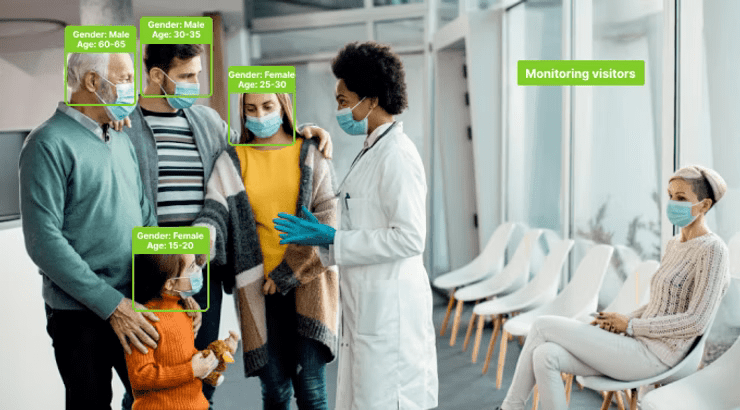
            Monitoring visitors at the healthcare facility

            AI-enabled video analytics can assist in monitoring hospital visitors by seamlessly automating access control systems utilizing facial and license plate recognition, allowing access to restricted areas. Additionally, it can be used to track and monitor employees for secondary screening. The system is capable of alerting authorities on the absence or presence of surgical gear and PPE.

            Detection of intrusion

            Today, the best mode of ensuring security is through placing security cameras, guards, and monitors. However, it is relevant to detect suspicious actions, objects & humans across multiple monitors for a given span of time. The AI-based technology eliminates any kind of real-time video feeds that can actively alert on different signs of intrusion within some time. 

            Effective assistance with medicine & food delivery

            AI-enabled video analytics is capable of monitoring different activities involved within a medical facility. It can track if the patient is eating or taking medicines on time. This kind of monitoring makes delivery more timely and accurate. 

            Patient monitoring

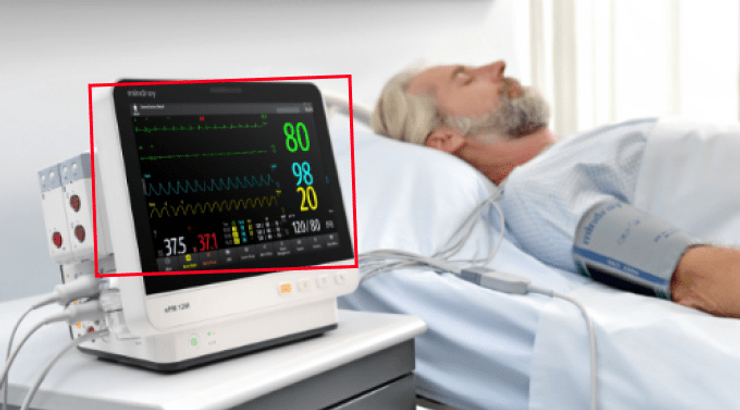
            AI video analytics is capable of monitoring patients and equipment apart from their privacy. With highly accurate monitoring of patients, healthcare authorities can monitor for patients being falling, visitation logs, screens, levels, and equipment. 

            Tracking medical equipment

            Artificial intelligence can be easily trained to identify objects and monitor general tools in conjunction with physical QR code labels. Video footage can assist with after-the-fact forensic investigation having AI returning search results in seconds.

            AI video analytics for hospital safety plays a pivotal role in ensuring continuous surveillance, automating threat detection, and minimizing human error across medical facilities. By leveraging intelligent video systems, hospitals can proactively manage both security and operational challenges.

            Optimization of patient transportation & parking 

            AI video surveillance is capable of optimizing patient transportation and tracking vehicle traffic throughout the hospital campus. It can easily log license plates, track arrival & departure times, and many more

            Improving staff safety

            There are times when hospital and healthcare departments get caught in situations where safety protocols become primordial. Several incidents of verbal spats in medical facilities are caused due to hostile environments within the hospital. AI video analytics is capable of helping in alerting hospital authorities regarding safety breaches and incidents in real-time. 

            Diminish liability

            When it comes to security and safety for hospitals, AI video technology takes security to another level. It administers additional data, visitor identification, license plate recognition, patient & visitor monitoring, and many others for forensic investigation. AI-enabled analytics have the potential to turn your video record into valuable data for demonstrating privacy and security protocols. 

            Video surveillance powered by intelligent vision solutions in hospital premises is relevant right from the reception area to parking lots, blood banks, visitor’s lobby, blood banks, pathology labs to the kitchen. Security systems assist in preventing break-ins and crimes in healthcare verticals. Creating real-time incident notification prevents unauthorized access to restricted areas and negligence of support staff that can alert security personnel.

            Managing costs

            The automated security monitoring solutions offered by AI video analytics have helped medical facilities in creating centralized access for seamless healthcare operations. It enables medical facilities to reconfigure and redeploy manpower to increase urgent requirements. It results in relevant operational cost savings and return on investment. Most hospital security systems use security cameras enabling you to advance overall safety and performance in facilities in an effective way. By utilizing AI analytics as part of surveillance solutions and security operations within a medical infrastructure will enable you to improve overall safety and performance in facilities management in an effective way. 

            Hospital premises security

            Video surveillance driven by AI-powered solutions in hospital premises is quite relevant. It streamlines the security systems by improving the efficiency of hospital staff. It prevents any kind of violent actions by preventing crimes, and break-ins within the healthcare facility.

            Conclusion

            After observing a complete analysis of the AI video analytics software, it becomes clear that video intelligence has been able to spread to a vast array of situations. AI-driven video surveillance and analytics have been a major development in the technology industry. Nextbrain is one of the leading AI software development companies having many years of expertise in creating premium quality solutions for different industry verticals. By harnessing AI analytics as part of surveillance will be able to improve safety measures within the healthcare facility. Connect with our experts to have a brief knowledge of the varied opportunities involved in AI video surveillance.

            How Computer Vision Is Transforming Zoo Management and Wildlife Conservation

            In the realm of wildlife conservation, zoos play a pivotal role in maintaining biodiversity and supporting endangered species. They serve not only as safe havens for wild animals but also as centers for research and education. However, managing zoo enclosures and ensuring animal welfare is no small feat. Traditional animal monitoring methods are labor-intensive, prone to human error, and often lack the precision required for optimal care. As wildlife facilities span large areas and house species with diverse needs, a more effective, tech-driven solution is essential.

            Enter AI-powered computer vision, a transformative technology reshaping zoo management. From tracking animal movements to analyzing behavioral patterns, computer vision offers zoo authorities and researchers a smarter way to care for animals and enhance operational efficiency.

            Why Monitoring Zoo Animals Is Crucial

            The primary goal of monitoring animals in zoo enclosures is to ensure their health, safety, and overall well-being. Understanding their daily activities, stress levels, and behavioral patterns helps caregivers make informed decisions regarding nutrition, medical care, and habitat design.

            For instance, imagine a zookeeper monitoring an injured animal. Traditionally, this would involve manual observation, which can be imprecise and time-consuming. With the implementation of computer vision in zoo management, animal behavior can now be monitored continuously in real-time. Technologies like Ultralytics YOLOv11 can detect signs of stress, injury, or unusual movements quickly, allowing timely intervention and improved care.

            Challenges of Traditional Monitoring Methods

            Manual monitoring has several inherent limitations:

            • Labour Intensive: Staff must physically observe animals for extended periods, increasing workload and human resource dependency.
            • Human Error: Fatigue or distraction can result in missed signs of distress or illness.
            • Limited Coverage: Especially in large enclosures, constant observation is not always feasible.
            • Lack of Precision: Subtle behavioral changes often go unnoticed without technological assistance.

            These drawbacks highlight the need for an automated, intelligent system to bridge the gap in animal monitoring — which is where Vision AI proves indispensable.

            The Role of Computer Vision in Zoos

            Computer vision, enhanced by machine learning, allows for precise, real-time monitoring of animal behavior. Cameras installed across enclosures collect continuous video data, which AI models analyze to detect patterns, movements, and abnormalities.

            Key Benefits of Vision AI in Zoo Management:

            • Automated Behavioral Analysis: Tracks social interactions, feeding habits, sleeping patterns, and more.
            • Real-Time Alerts: Sends alerts for unusual activity, aiding in early diagnosis and treatment.
            • Habitat Optimization: Offers insights into how animals interact with their environment, supporting better enclosure design.

            By collecting data objectively and consistently, Vision AI eliminates the guesswork from animal care. It empowers zookeepers and researchers to make data-driven decisions that enhance animal welfare.

            Monitoring Endangered Species with AI

            Endangered species require specialized care and constant monitoring to ensure their survival. Facial recognition and motion tracking technologies allow zoo staff to:

            • Identify individual animals.
            • Monitor health indicators without physical contact.
            • Detect abnormal behavior or movement.

            These systems operate around the clock, enabling swift responses to potential health issues. For endangered species, even minor delays in treatment can be life-threatening — making Vision AI a critical tool in conservation.

            Data-Driven Animal Welfare

            As a leading Vision AI solutions provider, Nextbrain emphasizes the importance of data analytics in animal monitoring. Our AI systems do more than capture video — they generate actionable insights.

            How It Works:

            • Interactive Dashboards: Provide zoo managers and researchers with easy access to animal behavior trends.
            • Heatmap Generation: Visualizes areas most frequented by animals within an enclosure, highlighting their preferences and movement patterns.
            • Remote Collaboration: Enables data sharing with off-site veterinarians for quicker diagnoses and collaborative care.

            These tools collectively ensure that animals receive the best possible care based on accurate, real-time data.

            Computer Vision for Aquatic Animals

            Monitoring aquatic animals like dolphins and seals comes with unique challenges due to their dynamic movements and underwater habitats. AI-enabled object tracking has been a game-changer in this area.

            With computer vision, zoos can:

            • Track swimming patterns and social behaviors.
            • Detect environmental responses.
            • Understand how aquatic animals utilize their enclosure space.

            This data helps zookeepers modify environmental conditions or feeding schedules to align with the animals’ needs, ensuring a healthier aquatic ecosystem.

            Facial Recognition & Non-Invasive Health Checks

            Modern computer vision systems integrate facial recognition to identify individual animals accurately. This technology is especially useful in large enclosures or herds, where differentiating between animals can be difficult.

            The benefits include:

            • Non-Intrusive Monitoring: Reduces stress associated with handling.
            • Daily Health Tracking: Identifies early signs of illness, lameness, or reduced mobility.
            • Customized Care: Enables tailored care plans based on individual animal data.

            Such advancements are redefining standards in animal welfare and zoo operations.

            Why Choose Nextbrain’s Computer Vision Solutions?

            At Nextbrain, we specialize in building intelligent computer vision solutions tailored for zoo and wildlife facility needs. Here’s how our technology stands out:

            1. Reduced Labor Dependency

            By automating repetitive monitoring tasks, our system allows zookeepers to focus on critical, hands-on care duties and animal enrichment.

            2. Enclosure Utilization Insights

            Heatmaps and behavioral tracking reveal how animals interact with their environment, informing habitat redesign and enrichment programs.

            3. Remote Access and Collaboration

            Our cloud-based systems enable real-time data sharing with veterinarians and researchers worldwide, fostering a collaborative approach to animal care.

            4. Night-Time Monitoring

            Equipped with low-light and infrared capabilities, our systems ensure 24/7 monitoring, including after-hours insights into nocturnal animals’ behavior.

            Final Thoughts

            Computer vision technology is revolutionizing how zoos care for animals. With the integration of AI Video Analytics software and smart enclosures, animal behavior can be understood more deeply than ever before. From early illness detection to habitat improvement and conservation support, the possibilities are vast.

            At Nextbrain, we believe that blending artificial intelligence with compassionate animal care will pave the way for a new era in zoo management. Our systems are designed to be scalable, efficient, and tailored to meet the unique demands of wildlife facilities worldwide.

            Ready to enhance your zoo’s capabilities with Vision AI?
            Connect with our experts today and explore how our solutions can help transform your animal monitoring and conservation efforts.

            Design a site like this with WordPress.com
            Get started