How Computer Vision AI for FMCG Packaging is Revolutionizing Seal Inspection

Every year, thousands of FMCG products are recalled due to packaging seal failures. These seal defects are not only detrimental to product quality but also pose a serious threat to consumer safety. The integrity of seals is critical across multiple industries, including packaging, pharmaceuticals, and food. Seal failures can reduce shelf life, damage brand reputation, and increase the risk of contamination.

Despite the presence of manual inspection processes prior to distribution, even a minor oversight can lead to serious issues such as tampering, spoilage, and costly product recalls. For FMCG businesses, a single contaminated batch can trigger widespread consumer alerts and heavy financial losses.

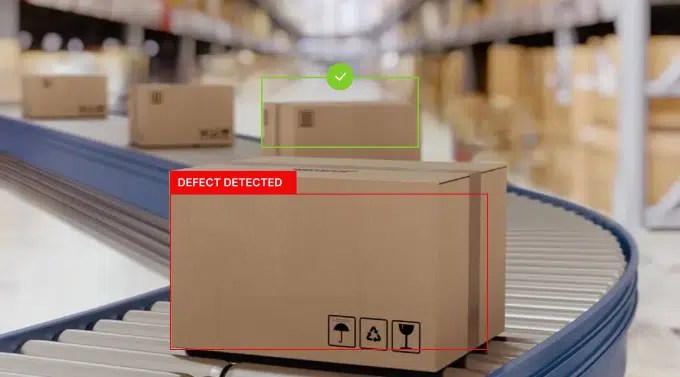
Traditional manual inspection methods are labor-intensive and prone to errors. They lack consistency, are difficult to scale, and incur high operational costs. To overcome these challenges, Computer vision AI for FMCG packaging is being embraced by manufacturers to automate the seal inspection process. This advanced technology enables accurate, real-time detection of defects, helping businesses enhance quality control and prevent packaging failures.

In this blog post, we’ll explore how Vision AI supports FMCG packaging by reducing defects and minimizing the risk of product recalls through automated seal inspection.

Why Is It Important to Inspect Seals and Closures?

Product seals are essential in protecting goods from contamination, spoilage, and external damage. In industries like food, beverage, and pharmaceuticals, any compromise in packaging integrity can lead to serious consequences, including safety risks for consumers.

Traditional inspection methods rely heavily on human judgment, which can result in missed defects due to fatigue or inconsistency. By implementing computer vision in food manufacturing, companies are moving towards more reliable and scalable inspection systems. The growing demand for seal inspection using Vision AI reflects this shift. According to recent research, this market is expected to hit USD $259 million by 2025, underlining its increasing importance in FMCG packaging.

How Seal Inspection With Vision AI Is Improving Inspection Accuracy

1. Machine Learning for Continuous Improvement

AI models used in seal inspection continuously learn from historical data. They improve over time, identifying subtle packaging defects that may be invisible to human inspectors. For businesses in the Fast-Moving Consumer Goods (FMCG) sector, this means fewer product failures and higher inspection accuracy. Machine learning enables these systems to evolve and enhance performance with each production cycle.

2. Integration of Deep Learning

Deep learning is a crucial aspect of Vision AI. Using Convolutional Neural Networks (CNNs), the system can process seal images in real time, detect anomalies, and classify defects. These models are trained on thousands of seal images, allowing them to recognize complex patterns. This drastically reduces false positives and ensures a more reliable and efficient inspection process.

3. Advanced Techniques for Seal/Closure Inspection

Modern AI Video Analytics software utilizes high-resolution imaging and pattern recognition to detect even the slightest variation in seal integrity. This ensures that defects, no matter how rare or small, are flagged instantly. Such precision offers a higher level of quality control across the entire production line.

4. Data-Driven Insights

Beyond inspection, Vision AI gathers and analyzes data to uncover recurring issues in packaging processes. It can detect trends like missing seals, uneven sealing, and misalignments. Manufacturers can use this data to refine processes, boost production efficiency, and reduce waste. This kind of data-driven approach also allows businesses to focus human labor on more value-added tasks.

A great example can be seen in the pizza packaging industry, where AI-equipped inspection systems have significantly improved detection accuracy and reduced dependency on manual inspection.

What Are the Computer Vision Benefits of Packaging Seal Inspection?

Better Product Quality

Automation through computer vision ensures that only products with flawless seals reach the end consumer. This leads to higher product reliability, reduced complaints, and enhanced consumer trust.

Cost Savings

Detecting seal defects early with computer vision can prevent costly recalls and protect the brand’s reputation. This proactive approach also reduces waste and rework expenses.

Improved Efficiency

Replacing manual inspection with Vision AI saves both time and labor. It allows for faster processing, reduces overheads, and improves production line throughput without compromising quality.

Improved Data-Driven Decision Making

Computer vision systems deliver real-time inspection data, enabling manufacturers to take corrective actions quickly. This results in better decision-making, increased productivity, and a significant reduction in defective goods reaching consumers.

How Can Computer Vision Assist Packaging Inspection of Seals/Closures?

Radical Leak Testing System

Vision AI delivers highly precise leak testing systems that can identify even the tiniest leaks in seals through advanced algorithms and image processing. These inspections are far more reliable than human checks, especially when it comes to catching hard-to-spot defects.

Machine Vision

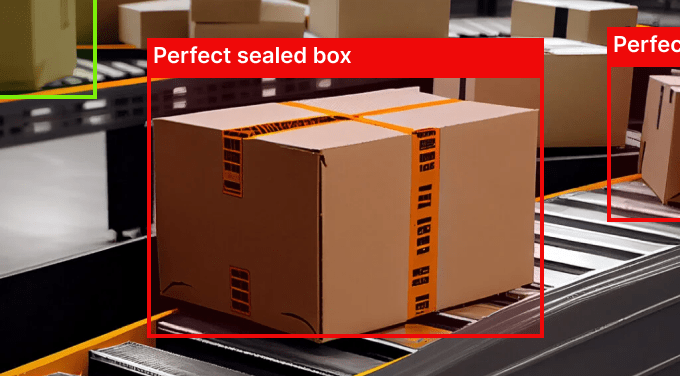
Machine vision powered by AI can analyze thousands of seal images, detect inconsistencies, and classify issues such as folds, gaps, or deformations. It guarantees consistent inspection and significantly boosts quality control.

Real-Time Analysis

Vision AI allows for real-time analysis of seals and closures. If a problem is detected, the system can flag it immediately for corrective action, minimizing downtime and keeping defective goods from reaching store shelves.

Automated Inspection

The automated inspection enabled by AI video analytics software reduces reliance on human inspectors and improves the speed and accuracy of detection. This continuous monitoring enables manufacturers to act instantly when a defect is found.

Reducing Production Line Footprint

Computer vision AI systems are space-efficient and easy to integrate into existing production lines. This helps manufacturers optimize factory floor space, improving overall resource efficiency.

Protection of Brand Integrity

By ensuring seal integrity and preventing contamination, Vision AI inspection safeguards product quality and maintains brand reputation. This fosters customer trust and builds long-term loyalty.

Final Thoughts

In today’s fast-paced manufacturing environment, businesses are increasingly turning to computer vision AI for reliable and automated seal inspection. With real-time monitoring, automated defect detection, and intelligent data analytics, manufacturers can ensure high product quality, reduce recalls, and improve operational efficiency.

By leveraging advanced machine learning and AI video analytics software, companies can confidently meet stringent safety and quality standards while empowering their workforce to focus on high-value tasks.

As a leading AI video analytics software development company, Nextbrain offers in-depth insights and custom solutions for automating seal inspection in the manufacturing industry. Interested in transforming your packaging process? Connect with our professionals to learn how AI video analysis can help your business thrive.
Computer Vision for Biscuit Shape Inspection: A Game Changer for Quality Control

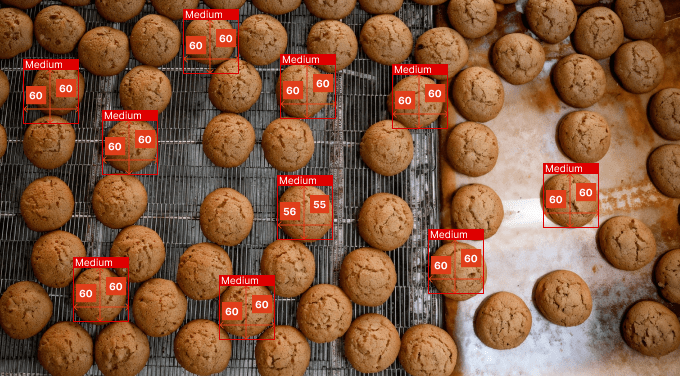
The age-old saying “Quality over Quantity” isn’t just a phrase—it’s a principle that even the biscuit manufacturing industry strictly adheres to. In today’s competitive market, where consumers and influencers are extremely conscious about what they consume, product quality has become a crucial differentiator. Consumers are more vocal and transparent with their experiences, often influencing the buying behavior of others. This makes stringent quality checks essential, especially before a product leaves the production line.

Biscuits manufactured on automated lines are expected to meet precise size and shape requirements. A small variation in dough consistency, ingredient levels, or oven temperature can result in inconsistent biscuit dimensions. These inconsistencies can affect packaging efficiency and consumer satisfaction. To address this, many leading manufacturers are turning to computer vision in manufacturing to ensure accurate quality control and better operational efficiency.

In this blog, we explore how AI video analytics software is transforming quality inspection in the biscuit manufacturing sector. We’ll take a closer look at how computer vision AI ensures precise and consistent dimension detection, leading to improved product quality and customer satisfaction. By leveraging computer vision for biscuit dimension measurement, manufacturers can automate inspections, reduce human error, and maintain uniformity—ultimately strengthening their brand reputation and enhancing consumer trust.

The Role of Consistent Dimension Detection in Biscuit Manufacturing

In the food production sector, maintaining consistency is the key to sustaining customer loyalty. For biscuit manufacturers, dimension detection is a critical part of the quality control process. With growing expectations from consumers for uniformity and precision, manufacturers are increasingly relying on computer vision in food manufacturing to automate and enhance inspection accuracy.

Here’s why consistent biscuit dimensions are essential:

1. Optimized Production Processes

Automated biscuit dimension inspection helps in identifying inconsistencies early in the production cycle. This minimizes downtime, reduces wastage, and enhances overall operational efficiency. By catching defects early, manufacturers can avoid large-scale quality issues, save costs, and ensure a more streamlined workflow.

2. Regulatory Compliance

In many countries, food labeling regulations demand strict compliance with size and weight tolerances. Non-compliance can lead to legal penalties and harm brand reputation. Computer vision in food manufacturing enables real-time regulatory checks, helping businesses meet legal standards effortlessly while maintaining quality.

3. Enhanced Customer Experience

Uniform biscuit size contributes to a visually satisfying and high-quality product presentation. Consistency in shape and size creates a better unboxing and consumption experience for the customer, fostering brand trust and repeat purchases.

4. Efficient Packaging & Protection

Irregular biscuit sizes can lead to inefficient packaging, excess use of materials, and increased chances of breakage. Computer vision in manufacturing ensures that biscuits are of consistent dimensions, which allows for optimized packaging design, secure sealing, and minimal material waste.

How Does Computer Vision-Based Biscuit Dimension Detection Work?

The adoption of AI video analytics software in biscuit manufacturing involves advanced image processing and deep learning algorithms. These technologies enable manufacturers to perform inspections with high accuracy and speed. Here’s a breakdown of how the system works:

Expert Image Acquisition

High-resolution cameras are strategically placed along the production line to capture real-time images of biscuits from various angles. This multi-angle setup ensures a comprehensive visual analysis, adaptable to various line speeds and configurations.

Image Preprocessing

The captured images go through preprocessing to enhance clarity and isolate individual biscuits. The computer vision AI algorithms deal with variations in lighting, complex shapes, and background noise to ensure precise measurements.

Precise Dimensional Feature Extraction

Using vision AI algorithms, the system extracts critical dimensional data such as length, width, and height. These systems can be trained to recognize different biscuit shapes and sizes, allowing manufacturers to inspect a wide variety of products without reprogramming the system from scratch.

Intelligent Comparison with Predefined Standards

The extracted dimensions are automatically compared against predefined quality control standards. This enables flexible inspection across multiple biscuit types, helping companies maintain consistency, adapt quickly to changes, and meet quality requirements across different product lines.

Real-Time Automated Rejection

The system is designed to reject biscuits that fall outside the acceptable dimensional range. This process is entirely automated, eliminating human error and ensuring that only compliant products proceed to packaging. The AI video analytics software triggers a rejection mechanism the moment a defective product is detected.

Surface Defect Detection

Apart from measuring dimensions, AI video analytics software can also be trained to identify visual defects such as cracks, burns, or uneven surfaces. Upon identifying a defect, the system can alert operators or automatically remove the defective biscuit from the production line, providing real-time feedback for process adjustments.


Key Benefits of Computer Vision for Biscuit Dimension Measurement

Implementing computer vision in defect detection offers several benefits that go beyond just inspection. It’s a transformative approach that ensures better decision-making, optimized operations, and superior product quality.

Real-Time Monitoring

Real-time data analysis allows manufacturers to identify and correct production issues instantly. This proactive approach prevents quality problems from escalating and reduces the chances of defective products reaching the market.

Improved Throughput

Automated inspection using computer vision in manufacturing significantly increases inspection speed, enabling manufacturers to handle high volumes without compromising on accuracy. This results in faster time to market and greater production efficiency.

Higher Accuracy and Precision

Computer vision systems offer unparalleled accuracy in measuring product dimensions, eliminating human error and variability. This ensures that every biscuit meets exact specifications, reducing product waste and increasing customer satisfaction.

Scalability and Flexibility

These systems are scalable and easily adaptable to different product types, production line configurations, and inspection requirements. Whether you’re producing round cookies or square biscuits, the AI can be trained accordingly to detect specific features and defects.

Final Thoughts

In today’s competitive market, where consumers expect perfection, the implementation of computer vision AI in biscuit manufacturing is not just a trend—it’s a necessity. By ensuring consistent dimensions, reducing waste, and maintaining regulatory compliance, manufacturers can significantly enhance product quality and operational efficiency.

At Nextbrain, we specialize in delivering cutting-edge solutions for computer vision in defect detection, enabling food manufacturers to streamline their processes and strengthen their brand reputation. Our AI video analytics software is designed to deliver real-time quality assurance, ensuring every biscuit that hits the shelf meets the highest standards.

Want to learn more about how biscuit dimension detection using AI can elevate your manufacturing process? Connect with us today and explore how our computer vision solutions can help your business thrive.

How does AI video analytics assist in filtering false alarms?

Traditional AI video analytics, such as motion detectors and video surveillance systems, have become outdated. Monitoring centers often receive signals and alarms; however, these are not all genuine emergencies. At times, certain unwanted signals may disrupt the normal functioning of monitoring systems, causing financial and operational glitches. 

In a global scenario where security is the primary concern, conventional cameras cannot detect, learn and adapt to reduce these glitches. With the implementation of video surveillance technology, false noises and alarms can be ignored. AI-enabled video analytics utilizes excellent techniques for analyzing video footage and accurately detecting people, objects and actions. 

This blog explores the impact of AI video analytics software in reducing false alarms and protecting industrial premises from real security threats. 

What are AI-based video analytics?

Artificial intelligence video analytics software gathers video data from security cameras, analyzes it, and identifies threats while filtering out noises. It can distinguish and recognise between genuine and false actions and threatening and non-threatening situations. For instance, any unauthorized entry inside a designated premises can be flagged for security breaches.

Why are false alarm filters necessary?

A false alarm filter is a software program that can be integrated into a security system. It analyzes camera signals to differentiate between actual threats and triggers caused by irrelevant movement. 

What are the false alarm filtering techniques?

Some standard filtering techniques involve:

Pet detection

Harnessing image recognition and heat signature analysis, it applies advanced filters for distinguishing between pets and humans. 

Size & motion detection

Effective filtering helps ignore objects below a certain size and movement patterns inconsistent with human activity. 

Zone activation

Certain specified areas within surveillance assigned as trigger zones effectively diminish alerts from insignificant sources. 

Challenges associated with false alarms & noises

Within an industrial or official environment, false alarms can often result in work process disruptions and have potential impacts on overall security operations. Here’s an overview of the challenges relating to false noises & alarms. 

Psychological impact on operators

Often resulting in psychological harm to operators, constant alerts from noise or false alarms can be detrimental to a work culture.

Missed genuine alerts

When systems have a large number of false alarms from noises, security personnel are unable to detect the valid ones from the false alarms. It may result in serious confusion leaving behind missed valid alerts that could have been detected and acted upon promptly.

Loss of productivity

In monitoring systems, false alarms often result in trust issues and result in delays in real emergency responses. This highlights the need for an efficient solution to reduce noise and false alarms.                                                                    

How does AI surveillance software help in reducing false alarms?

Object detection

Advanced intelligence technology is empowered with the capability to detect individuals entering secured restricted areas. It can accurately detect objects in challenging environments.                    

Masked individuals entry

With an AI-enabled security camera that is effectively programmed to detect masked individuals entering an industrial environment, premises or business. The software can be well configured for individuals not wearing PPEs and are not abiding by the safety compliances. 

Fire & smoke detection

In a workplace infrastructure, advanced AI can seamlessly detect flames and smoke during the early stages. This, in turn, can potentially prevent catastrophic incidents and seek faster intervention. AI-enabled smoke and fire detection harness video data for distinguishing between real smoke, pocket fires, steam and dust. 

How AI video analytics can be used as a weapon against noise & false alarms?

How Does AI Surveillance Software Help In Reducing False Alarms 1

A security infrastructure confronting prolonged false alarms can disrupt the efficacy of security operations. At Nextbrain, our AI video surveillance software provides an advanced solution for reducing false alarms and noises. By harnessing powerful machine learning algorithms, AI software can intelligently analyze video feeds, filtering out false alarms caused by noise and accurately identifying threats. Nextbrain’s video analytics system functions by automating face recognition and automatic vehicle number plate recognition in camera feeds, real-time monitoring and analysis, and potentially reducing the number of false positives. It improves the overall productivity of monitoring operators and diminishes stress. Leveraging AI-powered video analytics software with existing monitoring systems can result in a smooth transition.

Advanced intelligence technology has major benefits when it comes to diminishing the rate of false alarms in workplaces and industrial units. 

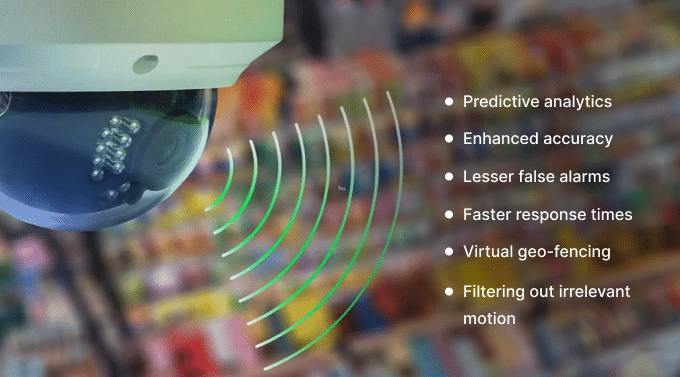
Predictive analytics 

It can assess historical data and spot events to predict probable security glitches enabling prompt security measures to prevent incidents.  

Enhanced accuracy

AI in object detection plays a major role in the real-time identification of objects, humans, and actions. It administers more accurate alerts and prevents real threatful situations.

Lesser false alarms

By recognizing irrelevant motions of animals or birds, it can detect genuine events diminishing false alarms.

Faster response times 

Real-time analysis of events helps in seeking prompt responses. It triggers real-time alerts and notifies security personnel preventing any catastrophic situations.          

Virtual geo-fencing

AI technology can seamlessly monitor specific areas while ignoring traffic outside of the zones.  

Filtering out irrelevant motion

Having the potential to filter out motion even if it’s slow or fast, it can detect the actions done in motion filtering out irrelevant actions.

Wrapping up

At Nextbrain, we have an experienced team of developers with many years of knowledge in AI video surveillance software development. The intelligent technology harnesses video data and analyzes them generating actionable insights. Having mastered the effective strategies of AI video analytics software, we strive to help businesses of varied sizes and industries. By harnessing powerful machine learning techniques, we developed AI software that can efficiently analyze video feeds, filter false alarms and promote accurate detection of legitimate threats. 

Are you looking for AI video surveillance software for your business? Get in touch with our experts.

Revolutionizing Beekeeping: How Computer Vision Enhances Hive Monitoring and Productivity

Beekeeping is an age-old practice that has long relied on human observation for honey production and pollination. According to recent research by Environment America Research & Policy Center, humans depend on bees to pollinate 73 out of 103 crops, making them essential to global food production. Traditionally, beekeepers monitored hive health and productivity through manual inspections—a time-consuming and often inefficient process. However, with advancements in artificial intelligence (AI) and Computer vision in beekeeping, beehive monitoring can now be automated, revolutionizing the industry.

Modern technology enables real-time hive health analysis, early disease detection, and pollen classification. With AI-driven monitoring, beekeepers can improve colony productivity and enhance pollination effectiveness. This article explores how integrating computer vision into beekeeping can optimize hive management, ensuring healthier colonies and increased honey production.

Challenges in Modern Beekeeping

Beekeepers face several challenges in maintaining colony health and productivity. Traditional techniques are labor-intensive, making hive management inefficient. Some key issues include:

Disease Detection

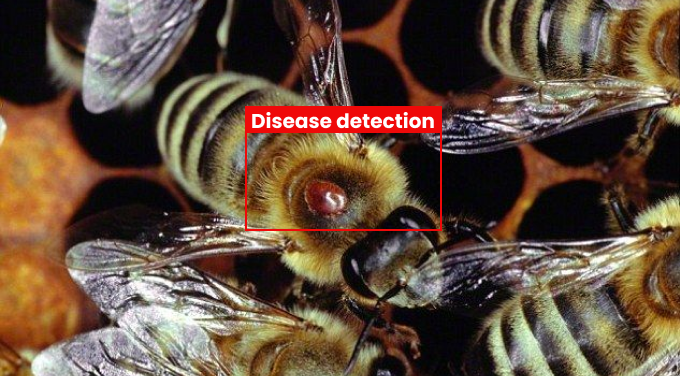
Bee colonies are highly vulnerable to pests and bacterial infections, which can spread rapidly. Early detection of diseases such as those caused by Varroa destructor mites is essential to maintaining a healthy hive and preventing colony collapse.

Foraging Behavior Surveillance

Understanding the foraging patterns of bees and the flowers they visit is crucial for optimizing pollination. However, tracking bee activity across large areas manually is impractical and inefficient.

Bee Population Monitoring

Keeping an accurate record of bees entering and exiting the hive is necessary to assess colony strength. Manual counting is nearly impossible, making automated tracking essential.

Environmental Threats

Climate change, habitat loss, and extreme temperature fluctuations significantly impact bee populations. Monitoring environmental conditions in real time is crucial for adapting hive management strategies accordingly.

By implementing AI-powered solutions, beekeepers can automate these processes, reducing workload and improving hive management efficiency.

AI-Powered Applications in Beekeeping

Computer vision and AI offer transformative solutions to beekeeping challenges. Let’s explore how AI-driven vision systems can enhance hive monitoring and pollination tracking.

Early Disease Detection

One of the most common threats to bee colonies is the Varroa destructor mite, which weakens bees and contributes to colony collapse disorder. AI-powered object detection systems can identify these mites early, allowing beekeepers to take preventive measures before infestations spread.

Flower Detection and Classification

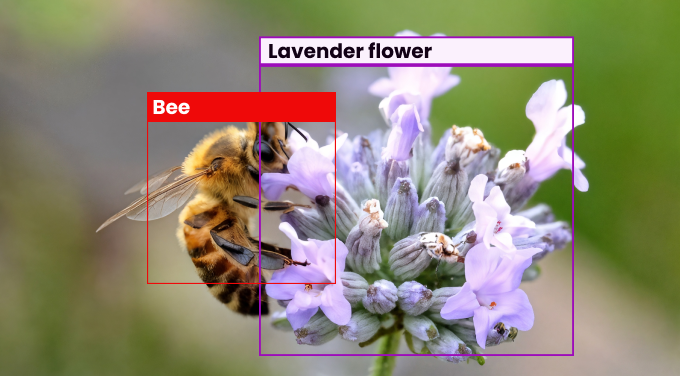
By identifying high-value nectar sources, AI-powered computer vision systems help beekeepers optimize honey yield and colony health. Drones equipped with AI cameras can analyze images of floral environments, classifying different flower species. This data enables beekeepers to strategically place hives in areas with abundant nectar sources, supporting sustainable pollination and honey production.

Activity Monitoring

Colony health can be assessed by tracking bee activity. Sudden declines in movement may indicate food shortages, environmental stress, or disease. Computer vision models analyze real-time video from hive entrance cameras, counting bees and tracking fluctuations in activity. AI can also identify bees that have successfully pollinated flowers by detecting pollen traces on their bodies.

Automated Task Execution

Computer vision can automate key beekeeping tasks, such as counting bees, analyzing hive frames, and identifying anomalies. AI-driven hive monitoring systems provide data-driven insights that help beekeepers maintain optimal hive conditions and maximize honey production.

Remote Monitoring

Beekeepers can monitor hive conditions in real time using AI-enabled surveillance cameras. These cameras, equipped with advanced computer vision models, classify and detect flower species while providing live updates on hive health, activity, and environmental changes.

Pollen Type Detection

By analyzing pollen collected by bees, AI-powered computer vision models can differentiate between plant species based on microscopic pollen structures. This data helps beekeepers understand colony nutrition and adjust hive placement for better forage availability. AI-driven pollen analysis ensures bees have access to a diverse and nutrient-rich diet, improving colony resilience.

How Computer Vision Improves Hive Monitoring

Computer vision processes visual data from cameras and sensors to analyze hive activity. This technology enables real-time tracking of bee movement, environmental classification, and early detection of abnormalities. To integrate computer vision into beekeeping, the following steps are followed:

1. Data Collection

Images and videos of hive entrances, floral environments, and bee activity are gathered using cameras and drones.

2. Data Annotation

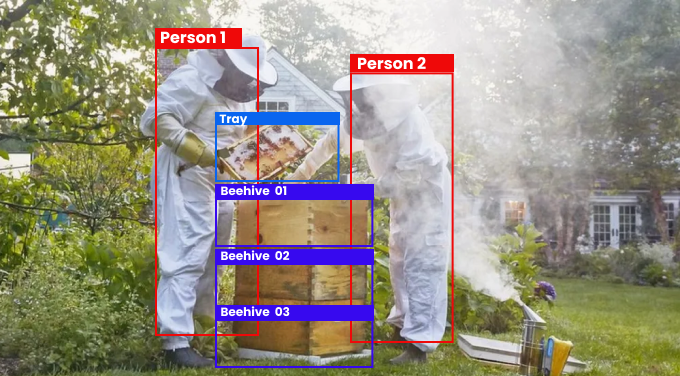
Images are labeled to identify pests, flowers, bees, and pollen types, ensuring accurate AI training.

3. Model Training

AI models are trained on datasets to recognize normal and abnormal bee activity, detect diseases, and classify preferred foraging sites.

4. Validation and Testing

The accuracy of the AI model is evaluated across different hive environments and lighting conditions to ensure reliability.

5. Deployment of Monitoring Systems

AI-powered computer vision systems are integrated into beehives, providing real-time analytics and actionable insights for beekeepers.

By following these steps, AI models can be customized to monitor specific beehive environments, allowing beekeepers to respond proactively to potential threats.

Conclusion

As beekeeping faces new challenges, AI-powered computer vision provides a transformative solution by automating disease detection, hive monitoring, and pollination tracking. From bee counting and disease identification to flower classification and pollen analysis, AI-driven solutions ensure healthier colonies and increased honey production.

As a leading computer vision development company, Nextbrain offers AI video analytics software tailored for various industries. Our software is designed to distinguish between bees carrying pollen and those returning to the hive empty-handed, providing valuable insights for beekeepers.

Want to explore AI-powered beekeeping solutions? Get in touch with our experts to learn more about AI-driven video analytics for hive monitoring.

How Computer Vision is Transforming Quality Control Across Industries

In early manufacturing processes, traditional quality control heavily relied on manual inspection, leading to inefficiencies and inconsistencies. Over time, industries have adopted mass defect detection technologies to streamline their quality control operations. Despite advancements, ensuring high-quality production remains a persistent challenge.

Computer vision has emerged as a revolutionary solution in various sectors, including automotive, healthcare, retail, and manufacturing. This technology is capable of analyzing vast databases, recognizing images, and identifying anomalies, significantly improving defect detection and operational efficiency. In this article, we will explore how computer vision is enhancing quality control and defect detection across different industries.

What is Computer Vision?

Computer vision is an advanced AI-driven technology that enables computers to process and interpret visual data from images and videos. It plays a crucial role in quality control by helping businesses extract essential insights for detecting flaws and anomalies in production. With AI-powered recommendations, computer vision aids human decision-making, ensuring higher accuracy and productivity in manufacturing and other industries.

Leveraging Computer Vision for Flaw Detection

Computer vision models are trained to recognize patterns and features that distinguish defective products from non-defective ones. By utilizing vast datasets, these models can detect faults in real-time, enhancing the speed and accuracy of quality inspections. Businesses can also develop custom models tailored to their specific requirements, optimizing defect detection across production lines.

The Importance of Visual AI Defect Detection in Manufacturing

Defective Product Detection

Computer vision in defect detection analyzes product orientation, texture, and positioning, identifying anomalies with high precision. Manufacturing companies that integrate computer vision into their quality control processes benefit from improved accuracy, reduced errors, and faster defect identification. This ensures the production of high-quality products, leading to increased customer satisfaction.

Reduces Labor and Operational Costs

Manual inspection is time-consuming, error-prone, and poses safety risks to workers. Computer vision automates the inspection process, reducing labor-intensive operations and minimizing human error. By implementing AI-driven defect detection, businesses can enhance efficiency while cutting down operational costs. Vision AI-powered image processing tools facilitate rapid and precise inspection across production lines, enabling businesses to maintain high productivity levels.

Optimizes Material Inspection

Material inspection plays a crucial role in preventing manufacturing defects. Identifying poor-quality materials before production begins helps reduce waste, conserve resources, and minimize financial losses. Computer vision systems assist manufacturers in segregating defective raw materials early in the process, ensuring only high-quality inputs are used in production. This not only enhances final product quality but also improves overall operational efficiency.

Predictive Maintenance with Computer Vision

Predictive maintenance with computer vision Defect detection automation powered by computer vision plays a vital role in predictive maintenance. AI-driven predictive analytics can forecast equipment failures and maintenance needs, allowing businesses to address issues proactively. By predicting potential malfunctions, companies can reduce downtime, enhance product quality, and optimize operational costs. Computer vision AI in manufacturing enables businesses to implement real-time monitoring and predictive maintenance strategies, ensuring seamless production workflows.

Ensuring Worker Safety and Security

Maintaining workplace safety is essential in manufacturing environments. Computer vision enables real-time monitoring of production units, ensuring compliance with safety regulations. AI-powered vision systems can detect whether employees are wearing personal protective equipment (PPE) such as masks and helmets. If a safety violation occurs, facility managers receive instant alerts, allowing them to take corrective actions and maintain a secure working environment.

Recognizing Defects in Packaging

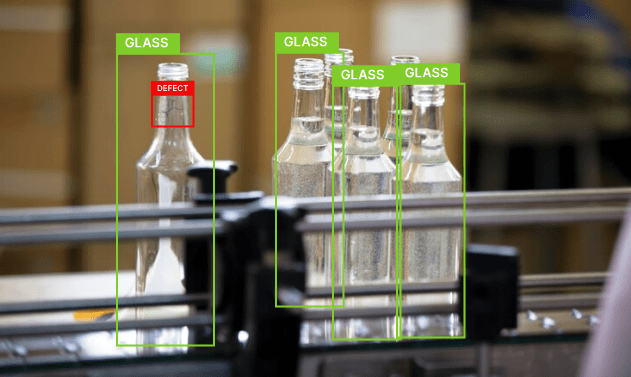
Ensuring product quality extends beyond manufacturing to packaging. Packaging defects can lead to damaged goods, customer dissatisfaction, and financial losses. Vision AI identifies packaging flaws by analyzing distinct image attributes, detecting damages, and ensuring high packaging standards. Deep learning and neural networks enable vision AI to verify product integrity before items reach consumers, reducing errors and improving production efficiency.

Barcode Generation and Analysis

Accurate barcode verification is critical for product tracking and inventory management. Computer vision systems efficiently scan and validate barcodes, detecting any inconsistencies or defects. If a faulty barcode is identified, it is flagged for removal or correction, ensuring accurate product information and seamless inventory operations.

Enhancing Inventory Management

Vision AI supports inventory management by tracking stock levels and monitoring warehouse operations. Businesses benefit from automated stock monitoring, which ensures accurate inventory tracking and timely replenishment. Computer vision provides facility managers with real-time updates, making inventory control more efficient and reliable.

Workplace Safety for Workers

Ensuring workplace safety is a top priority for businesses. Vision AI helps maintain a secure environment by monitoring safety compliance. AI-powered surveillance systems can detect whether employees are adhering to safety protocols, such as wearing PPE. Facility managers receive real-time alerts when violations occur, allowing them to address safety concerns promptly. This proactive approach reduces workplace accidents and enhances overall security.

Leveraging Object Detection for Flaw Identification

Computer vision automates flaw detection using pre-trained object detection models. AI-based platforms like Roboflow Universe provide access to open-source datasets and pre-trained models, simplifying the deployment of vision AI applications. With tools like Roboflow inference, businesses can seamlessly integrate defect detection models into their production systems. By implementing AI-driven object detection, companies can achieve higher accuracy and consistency in flaw identification.

Beyond Manufacturing: Vision AI in Electronics

Computer vision is not limited to manufacturing but extends to electronics defect detection. It accurately identifies defects such as scratches, cracks, and missing components, preventing faulty products from reaching the market. AI-powered vision systems minimize financial losses by detecting flaws early, ensuring only high-quality electronics are distributed. These automated systems provide faster, more reliable, and consistent defect detection compared to traditional methods.

Final Thoughts

Computer vision has transformed quality control by automating defect detection and eliminating faulty products before they reach consumers. Traditional manual inspection methods have been replaced by AI-driven vision systems, improving efficiency and reducing errors. Object detection models help businesses fine-tune specific quality control processes, ensuring seamless integration with automated assembly lines.

At Nextbrain, our team of AI experts specializes in defect detection solutions tailored to various industries. We offer comprehensive AI Video analytics software designed to enhance quality control and operational efficiency across different sectors.

To learn more about how computer vision AI can revolutionize your business, connect with our professionals today.

How digital signage has been a game-changer in healthcare industry

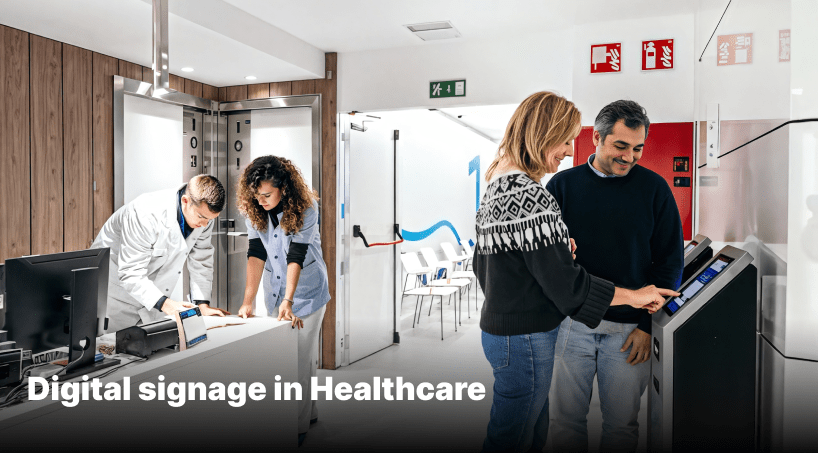
The 21st century has been marked as the digital era where technologies are revolutionizing across various industries. Digital signage is a form of dynamic display that uses robust technology to deliver visual content, messages and information. As a display network, multiple forms of content such as videos, text  and images can be displayed easily. It has a major impact in healthcare industry verticals by improving the patient experience, increasing efficiency, and enhancing communication. 

In the healthcare environment, it is important to improve communication for providing patients with timely information, care, recovery and treatment. Leveraging digital signage software, medical facilities can display real-time information like discharge instructions, waiting time, and others. This article focuses on how healthcare facilities can seamlessly improve their services with a digital signage system. Henceforth we delve into the ways in which digital signage can enhance healthcare, enhance communication, and diminish confusion. 

Importance of digital signage in the healthcare sector

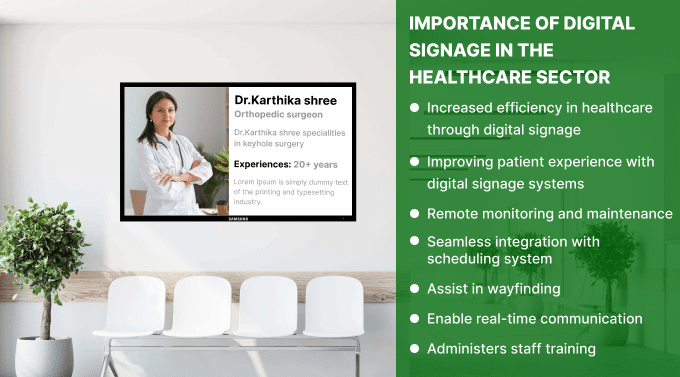
Importance Of Digital Signage In The Healthcare Sector

In the rapidly changing healthcare scenario, digital signage has emerged as a significant tool to transform healthcare facilities’ operations. The implementation of digital signage systems in healthcare provides multiple advantages that results in improved communication, increased efficiency, and patient experience. 

Increased efficiency in healthcare through digital signage

Digital signage systems can seamlessly display real-time wait times contributing to plan their activities. It assists with staff allocation, resource management, resulting in streamlined operations. From building improved communication to enhanced patient experience, the power of digital signage can be leveraged to curate a more patient-centric ecosystem.

Improving patient experience with digital signage systems

Digital signage plays a major role in embellishing the  overall patient experience. Interactive displays can provide patients with self-service options allowing them to access educational resources and personalized content. Additionally, it helps in patient engagement by showcasing relevant updates, appointment reminders, and wayfinding data. It creates a more informed and engaged patient population.

Digital signage has brought about effective digital transformation in healthcareIt improves the healthcare processes by  elevating patient experience and fostering active participation in care. 

Remote monitoring and maintenance

Healthcare facilities require remote monitoring and efficient management. This ensures effective content updates, troubleshooting and maintenance on time. Remote monitoring through digital signage allows real-time content customization. It makes sure that the data conveyed through digital signs are up-to-date from time to time with valuable content.

Seamless integration with scheduling system

While selecting a digital signage software, it is important to check whether it can be easily integrated with other existing systems. Cloud-based digital signage platforms enable real-time display from a centralized cloud server. This makes it easily accessible from anywhere in the world. It improves communication, ensures a seamless experience, and improves patient experience within a healthcare facility.

Assist in wayfinding

A medical care unit covers a huge space often with multiple buildings, departments, hallways, and rooms. This makes it challenging to navigate the different facilities. Digital signs installed at important locations can help patients wayfind the required area of a medical care. For new employees too, this can be super beneficial.

Enable real-time communication

Within a healthcare facility, it can be full of hectic schedules. Communication and coordination can be key to maintaining a healthy professional atmosphere. Digital signage has major functionalities where it can deliver useful information among staff, doctors and nurses seamlessly. Urgent information can be conveyed easily within a  hospital ecosystem. 

Administers staff training

Within a healthcare setting digital signage offers acquiring new knowledge and staying updated with current news. Leveraging digital signs to deploy educational live streams, videos, hospital policies to encourage knowledge training for staff.

Increased compliance & awareness

By implementing digital signage in the healthcare sector, relevant guidelines, safety protocols, and emergency notifications can be conveyed within the premises. Digital signage software systems capture important data through business analytics, offering insights into content effectiveness.

Conclusion

Digital transformation in healthcare verticals is revolutionizing rapidly. It has the potential to improve patient experiences and assist in streamlining various processes. Having dynamic displays, medical facilities can effectively communicate relevant data, reduce confusion and foster optimistic patient interactions. This transformation have enahnced communication in a healthcare infrastructure. As the leading software development company, Nextbrain creates effective digital signage content management systems for different industry verticals. Looking to boost your business with digital signage software? Connect with our experts to know more.

Scaling Computer Vision in Manufacturing: A Transformative Approach

Traditional manual inspection techniques often struggle to keep up with the vast amount of data generated in large-scale manufacturing. This leads to increased production downtime, safety hazards, and quality control issues, significantly impacting operational efficiency. Computer vision provides a powerful solution to address these challenges, offering a scalable approach to automation in manufacturing industries. Studies predict that vision AI could boost production by nearly 40%.

In this article, we will explore how computer vision is revolutionizing the manufacturing sector, its role in defect detection, and how businesses can establish a scalable AI-driven computer vision platform. We will also discuss the key challenges and future potential of this transformative technology.

Understanding a Scalable Computer Vision System

Computer vision, a subset of artificial intelligence (AI), enables machines to analyze images, identify objects, and interpret events in real-time. However, scalability is crucial for achieving widespread adoption across industries. A scalable computer vision system requires advanced computing infrastructure capable of processing vast amounts of visual data efficiently. AI-driven platforms allow enterprises to deploy and manage computer vision applications seamlessly, ensuring optimal performance across manufacturing operations.

Leveraging the Power of Computer Vision in Manufacturing

Computer vision technology enhances efficiency by enabling machines to process image and video data with higher speed and accuracy. Several applications of computer vision in manufacturing have significantly transformed manufacturing operations, including:

Predictive Maintenance

Equipment maintenance is critical for ensuring seamless manufacturing operations. Conventional maintenance approaches are often time-consuming and costly. AI-driven computer vision systems analyze video footage in real-time, identifying potential issues before they lead to downtime. According to McKinsey, predictive maintenance enabled by AI can reduce maintenance costs by up to 40% and minimize downtime by 50%.

Quality Control

AI-powered computer vision is instrumental in improving quality control processes. Traditional manual inspection methods are prone to human error, but vision AI can accurately detect defects in real-time. By analyzing images captured from production lines, AI systems identify faulty products, allowing manufacturers to make immediate adjustments. This automated quality control process enhances product reliability while reducing waste.

Process Optimization

Manufacturers can leverage computer vision technology to optimize production processes. AI-powered cameras analyze workflow sequences, detecting inefficiencies and potential bottlenecks. By providing real-time insights, vision AI helps manufacturers refine processes, enhance productivity, and minimize operational costs. This technology ensures continuous process improvement, leading to higher overall efficiency.

Real-time Safety Monitoring

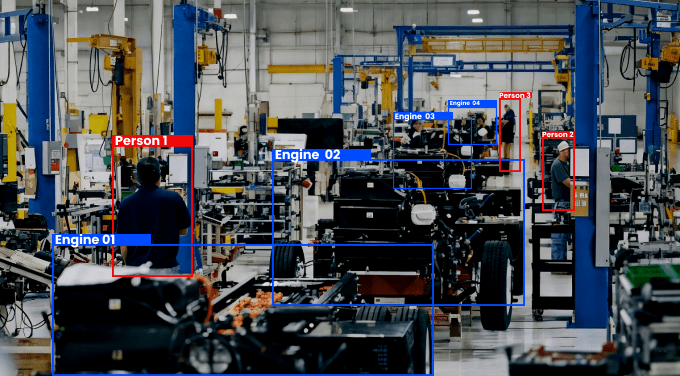
Safety compliance is a top priority in manufacturing facilities. AI-driven computer vision systems can detect unsafe worker behavior, PPE violations, and hazardous conditions in real-time. These systems proactively alert safety personnel, reducing the risk of workplace accidents. Object detection algorithms enable automated monitoring of restricted areas, ensuring that workers adhere to safety regulations.

Challenges in Scaling Computer Vision in Factories

While computer vision presents a promising solution for manufacturing, scaling AI-powered systems poses certain challenges:

Computational Resources

Advanced AI models require significant computational power for real-time data processing. Deploying these systems at the edge, rather than relying solely on cloud computing, can alleviate some of this burden. However, edge computing comes with its own set of deployment challenges, including hardware limitations and network constraints.

Model Training

Developing and training AI models for computer vision requires large datasets. Labeling and curating this data is both time-consuming and expensive. Moreover, maintaining model accuracy over time requires continuous training and updates. Effective model management strategies are essential for ensuring consistent performance across different manufacturing environments.

Integration with Existing Systems

Manufacturing plants operate with complex legacy systems, making integration a significant challenge. Computer vision solutions must be seamlessly incorporated into existing infrastructure while ensuring interoperability between various production systems. Addressing data exchange and compatibility issues is crucial for successful deployment.

Core Elements of Scalable Computer Vision Technology

To build a scalable and efficient computer vision platform, manufacturers must focus on the following core elements:

  • Monitoring & Management Tools: Real-time monitoring systems ensure smooth operation and identify potential bottlenecks in the production line.
  • Advanced Algorithms & Models: AI-powered models improve accuracy in defect detection, process optimization, and safety monitoring.
  • Modular & Microservices Architecture: A flexible architecture enables easy updates and seamless integration with existing systems.
  • Data Acquisition & Management: Effective data collection and processing enhance the performance of vision AI applications.
  • Edge Computing: Reducing dependency on cloud infrastructure by processing data closer to the source improves efficiency.
  • Cloud Infrastructure: Cloud-based solutions provide scalability, allowing manufacturers to manage AI applications across multiple locations.

The Future of Scalable Computer Vision Systems

In the coming years, computer vision platforms will continue to evolve, integrating with advanced AI models, edge computing, and real-time analytics. These advancements will enable manufacturers to enhance automation, reduce operational risks, and improve production efficiency. AI-driven analytics tools will allow businesses to refine their processes based on real-time insights, ensuring they stay ahead of industry demands.

A scalable computer vision platform represents a strategic investment for large-scale manufacturing operations. By going beyond traditional techniques, manufacturers can significantly improve product quality, operational security, and overall efficiency.

Final Thoughts

Computer vision technology powered by AI is reshaping the manufacturing sector by enabling real-time surveillance, defect detection, and automated process optimization. To fully leverage its potential, manufacturers must invest in scalable AI solutions that can adapt to evolving industry requirements.

Nextbrain offers cutting-edge AI Video Analytics software designed to automate manufacturing operations and provide real-time monitoring. Our solutions empower businesses to streamline processes, enhance quality control, and ensure workplace safety.

Are you ready to implement a scalable computer vision solution in your manufacturing facility? Connect with our experts to learn more about vision AI and how it can transform your business operations.

Unveiling Inspection of Pipelines with Drones and Computer Vision in the Oil & Gas Industry

The oil and gas industry relies heavily on an extensive pipeline network to transport resources across vast distances, ensuring a steady supply to meet global demand. Maintaining pipeline integrity is crucial for ensuring workplace safety and operational efficiency. Traditional inspection methods often involve high costs due to manual assessments and basic sensors, which can be time-consuming and less effective. However, drones equipped with advanced computer vision technology are transforming pipeline inspections by increasing efficiency by up to 80%, providing real-time monitoring, and delivering predictive insights for proactive maintenance.

In this article, we will explore the key challenges associated with pipeline inspection and how the integration of computer vision technology enhances monitoring capabilities for the oil and gas industry.

Challenges in Pipeline Inspection Across the Oil & Gas Industry

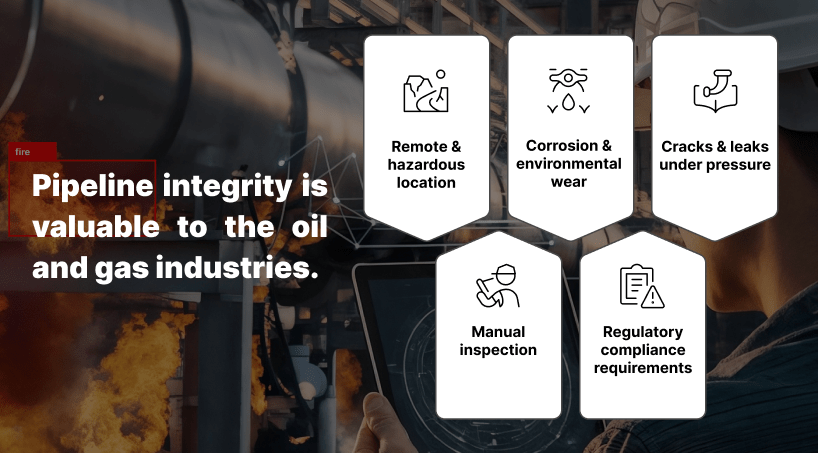
Maintaining pipeline integrity presents several challenges for the oil and gas industry, including:

Remote & Hazardous Locations

Pipelines often traverse challenging terrains such as mountains, deserts, offshore areas, and dense forests, making accessibility a significant challenge.

Corrosion & Environmental Wear

Pipelines are constantly exposed to harsh environmental conditions, increasing the risk of corrosion and wear. Factors such as extreme temperatures, moisture, and chemical exposure can degrade pipeline structures over time, leading to leaks and potential hazards.

Cracks & Leaks Under Pressure

Small cracks and leaks can rapidly expand under high-pressure conditions, posing severe risks, particularly in urban areas. Without early detection, these leaks can lead to costly shutdowns and environmental damage.

Manual Inspection Limitations

Traditional manual inspections are labor-intensive, time-consuming, and often ineffective in identifying early-stage leaks or structural weaknesses. Inspectors face difficulties accessing high-pressure zones, increasing the likelihood of undetected issues.

Regulatory Compliance Requirements

Stringent regulatory standards mandate frequent pipeline inspections, adding to the complexity and cost of operations. Ensuring compliance requires efficient monitoring solutions that can provide accurate and timely data.

Importance of Drone Inspection for Pipeline Integrity

Pipeline integrity is critical to the safety and efficiency of oil and gas operations. Computer Vision for the Oil and Gas industry has revolutionized inspection processes, making them more effective, accurate, and cost-efficient. Drones equipped with vision AI are now the preferred choice for modern pipeline integrity management, automating inspections and enhancing monitoring capabilities.

Key Benefits of Drone Pipeline Inspections

Predictive Maintenance

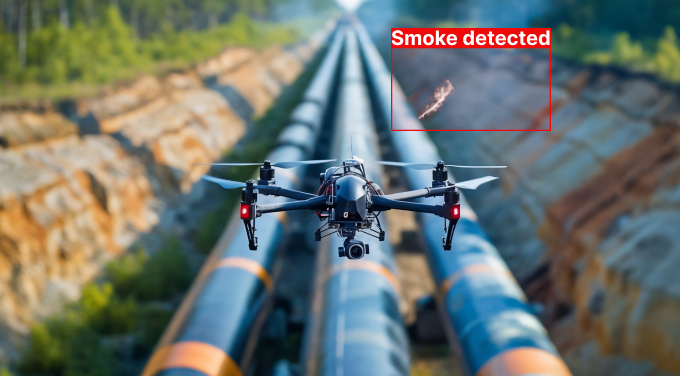
Drones powered by computer vision AI can detect defects at an early stage, enabling proactive maintenance. They identify leaks, structural weaknesses, and other potential hazards, allowing operators to take corrective measures before significant damage occurs.

Speed & Cost-Effectiveness

Traditional inspections require expensive scaffolding, rope access, and manual evaluations. In contrast, drone-based inspections are automated, reducing labor costs and minimizing operational disruptions.

Enhanced Worker Safety

Drones mitigate the risks associated with human exposure to hazardous conditions such as toxic gas emissions, high-pressure leaks, and extreme surface temperatures. This significantly improves worker safety and reduces the need for personnel to access dangerous locations.

Improved Regulatory Compliance

Regular inspections are essential for complying with industry regulations. Pipe inspection drones facilitate consistent monitoring, ensuring that pipelines meet safety and environmental standards.

Zero Downtime

Drones can inspect pipelines in real-time, even when they are in operation. Vision AI-powered drones can analyze pipeline conditions and gather critical data without requiring planned downtime, minimizing disruptions to production.

High-Quality Data Collection

Drones equipped with high-resolution sensors capture a wide range of data, including surface temperature variations, hidden leaks, and structural anomalies. Multi-spectrum imaging ensures detailed assessments of pipeline conditions.

Automated Data Processing

Machine learning algorithms and deep learning models enable drones to process visual data in real-time. Cloud-based systems facilitate instant analysis, ensuring continuous monitoring and immediate anomaly detection.

Remote Operational Control

Modern drones are capable of long-range monitoring without the need for manual intervention. This enhances operational efficiency and ensures that pipeline integrity is maintained without on-site personnel.

Scalability for Large-Scale Inspections

Drones powered by vision AI can efficiently inspect extensive pipeline networks, making them ideal for large-scale operations. Their scalability enables comprehensive monitoring of pipelines spanning diverse terrains.

Defects Identified During Drone Pipeline Inspections

Cracks & Fractures

High-resolution imaging detects hairline cracks, fractures, and weld defects, preventing minor issues from escalating into significant failures.

Corrosion Detection

Vision AI-powered drones identify corrosion on both interior and exterior surfaces, helping prevent severe wear and potential ruptures.

Leak Detection

Thermal imaging and pattern recognition technologies detect leaks by analyzing temperature changes and identifying surface irregularities.

Dents & Deformations

Drones identify structural deformities such as dents and bulges, which can compromise pipeline integrity if left unaddressed.

Coating Failures

Drones detect areas where protective coatings have deteriorated, exposing pipelines to environmental risks and corrosion.

Advantages of Using Computer Vision for Pipeline Inspection with Drones

Speed & Efficiency

Computer vision AI significantly enhances the speed and efficiency of pipeline inspections, enabling large-scale assessments with minimal downtime.

Accuracy & Consistency

Automated vision AI systems minimize human error, providing consistent and precise inspection results.

Automation & Safety

Computer vision-powered pipeline inspection systems reduce the need for human involvement in hazardous areas, enhancing safety and operational efficiency.

Real-Time Monitoring

Drones collect real-time data, enabling immediate alerts and proactive maintenance strategies to address potential risks before they escalate.

Final Thoughts

The integration of drones and computer vision technology is revolutionizing pipeline inspections in the oil and gas industry. By combining real-time monitoring, predictive analytics, and automated assessments, drone-based inspections enhance safety, reduce costs, and improve efficiency.

As a leading software development company, we specialize in AI video analytics software for various industries, including retail, healthcare, mining, and oil & gas. Our AI-powered computer vision solutions offer comprehensive pipeline monitoring, asset management, and real-time data analysis. By adopting drone technology integrated with computer vision, industries can achieve significant improvements in safety, cost reduction, and operational accuracy. The future of pipeline inspection lies in AI-driven automation, ensuring enhanced security, efficiency, and compliance for the oil and gas sector.

Revolutionizing the Energy Sector: How Computer Vision Enhances Efficiency & Safety

The evolving technological landscape has driven business leaders to adopt innovative automation strategies to stay ahead in a competitive market. The electric power industry, in particular, is advancing rapidly, striving to establish a more reliable and sustainable grid. However, infrastructural maintenance remains one of the most significant challenges for the utility sector. With rising risks, utility companies are exploring efficient solutions for risk evaluation and mitigation while focusing on achieving zero carbon emissions and sustainable energy solutions.

As the energy industry seeks to develop new energy sources, optimizing existing systems is crucial. In this regard, computer vision is transforming the way electrical energy systems are maintained and optimized. This article explores how next-generation AI vision technology enhances operational efficiency and safety in the electric power industry.

A Glance at the Energy Sector

Before delving into the applications of computer vision in the energy sector, it is essential to understand the significance of these advancements. Electricity plays a central role in the energy industry, beginning with power generation at plants that utilize various resources. The electricity produced is then transmitted over long distances through power lines, ultimately reaching consumers.

Four main stakeholders drive electricity production systems: utility companies, regulators, grid operators, and end-users. Global market forces are continuously reshaping the utilities sector, necessitating the adoption of disruptive technologies that demand robust transformations of industry business models.

The Key Role of Computer Vision in the Energy Sector

Computer vision is revolutionizing the energy sector by enabling automated visual inspections of critical infrastructure. This technology facilitates early detection of potential damage, safety hazards, and malfunctions, allowing for proactive maintenance scheduling. Consequently, operational efficiency is significantly improved while minimizing downtime and reducing maintenance costs.

Real-time Monitoring of Infrastructure

Aerial drones equipped with computer vision-powered cameras enable real-time monitoring of extensive power grids, wind turbine blades, and solar farms. These intelligent systems help identify issues such as loose connections, structural damage, and corrosion, ensuring proactive maintenance of energy infrastructure.

Drone Inspections

Drones integrated with high-resolution cameras and computer vision capabilities play a crucial role in inspecting power lines, solar farms, and transmission towers. These drones capture images and video footage of power grids, which are then analyzed by AI-driven vision models.

Advanced AI models like YOLO11 facilitate object detection and instance segmentation to pinpoint specific faults. Traditional manual inspections are not only time-consuming and costly but also pose safety risks. By contrast, AI-powered vision systems streamline the inspection process and enhance safety by minimizing human exposure to hazardous environments.

Safety Compliance & Anomaly Detection

Computer vision AI plays a crucial role in workplace safety by monitoring workers on-site. These systems ensure that employees wear appropriate safety gear and operate within designated areas. By analyzing visual data, computer vision detects unusual patterns in equipment performance, prompting further investigation and reducing the likelihood of accidents.

Smart Grid Surveillance

Managing real-time power flow surveillance is a complex challenge. However, with the integration of computer vision, smart grid monitoring becomes seamless, allowing for the detection of vulnerabilities in energy transmission systems. When paired with infrared technology, Vision AI captures thermal images, identifying potential hotspots.

Thermal cameras combined with advanced imaging techniques detect temperature anomalies in utility poles and other critical components. Upon identifying sudden temperature spikes, the system triggers an alarm and notifies maintenance teams, preventing potential failures.

Fire & Smoke Detection

Computer vision AI enhances fire and smoke detection by analyzing video data collected from security cameras. These intelligent systems identify fire outbreaks in real-time, immediately alerting security personnel to take preventive action. Early detection is vital in mitigating fire hazards and ensuring safety across energy infrastructure.

Automated Intrusion Detection

Unauthorized access to classified zones within energy facilities poses a significant security risk. Computer vision AI enables automated human detection, preventing unauthorized intrusion and deterring theft. By leveraging AI-powered surveillance, utility companies can enhance security measures and safeguard critical assets.

Major Benefits of Using Computer Vision in the Energy Sector

Minimal Maintenance Costs

By facilitating early issue detection, computer vision AI supports preventative maintenance strategies, effectively reducing expensive repair costs and minimizing downtime.

Advanced Operational Efficiency

Computer vision AI automates inspections, significantly reducing the time and labor required for visual assessments. The automation of these processes enhances overall operational efficiency within the energy sector.

Improved Safety

Real-time monitoring of infrastructure and worker safety minimizes occupational hazards. Computer vision AI mitigates risks and prevents workplace accidents through proactive surveillance and anomaly detection.

Data Analysis

Computer vision AI enables accurate and consistent data analysis, improving decision-making processes related to energy infrastructure management.

Data-Driven Decision-Making

The insights gathered from vision AI models can be combined with historical data to facilitate informed decision-making, optimizing energy operations.

Conclusion

The adoption of computer vision AI in the energy sector is gaining momentum, revolutionizing infrastructure management and operational efficiency. By leveraging machine learning models, utility companies can enhance their data collection and analysis capabilities, surpassing traditional maintenance and monitoring methods.

As an AI development company, Nextbrain offers cutting-edge AI vision solutions tailored for diverse industry verticals. Our full-suite AI vision system provides a comprehensive set of capabilities, covering the entire AI vision cycle.

Do you want to learn more about the role of computer vision AI in energy management? Get in touch with the Nextbrain team today to explore innovative AI-driven solutions for the energy sector.

Advance your queue management system with digital Signage

Have you ever witnessed an overcrowded reception area? Then you are well aware that people become agitated and lose their energy while they wait in a queue. During the rapid digitization across the globe in today’s fast-paced world, customers are always on the haul to get their services quickly. A powerful queue management system is the best solution for businesses like retail stores. With a queue management system, customers can easily receive reserve accommodations and virtual tickets.

Whether in a bank, retail store, or hospital, long queues can result in frustration, effectively transforming traditional queues into improving engaging experiences. Digital Signage for Queue Management assists businesses in communicating effectively with customers. Additionally, companies can make the most of digital signs by optimizing customer service operations, improving customer experience, and managing queues, curating a pragmatic solution replacing the conventional procedures. In this blog, we will focus on the queue management system that works with digital signage.

Key Features of Queue Management Systems & Digital Signage

1. Efficient Queue Management

Once a customer checks in, the queue management software efficiently organizes and directs the flow of people, ensuring a seamless journey from entry to service. By integrating digital signage, businesses can significantly reduce perceived wait times and improve the overall experience by displaying real-time queue information and engaging content.

2. Customer Check-In Process

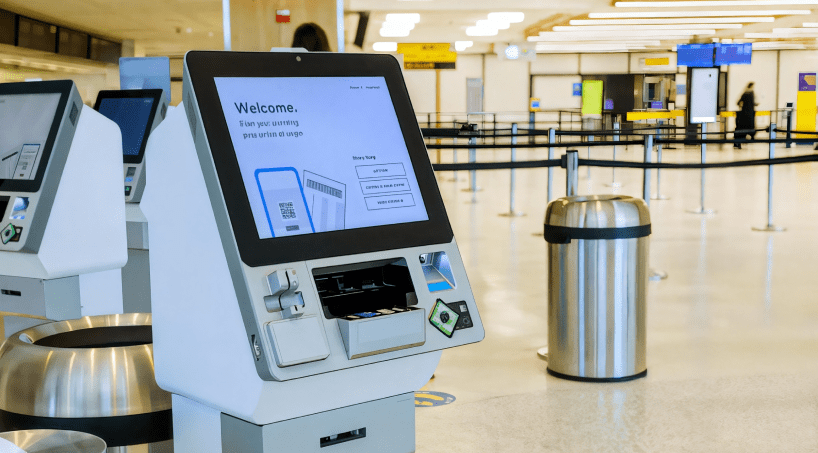
Digital signage streamlines the check-in process by allowing customers to register through self-service kiosks, mobile apps, or websites. This automated process enables users to update personal details, service requests, and contact information, all of which are recorded within the system for a smooth transaction.

3. Real-Time Queue Updates on Digital Signage

A QMS combined with digital signage provides an intuitive real-time dashboard that displays queue status, ticket numbers, and estimated wait times. These digital displays help customers stay informed, reducing anxiety and improving their overall experience. Businesses can use this feature to manage peak hours effectively and ensure smooth service delivery.

4. Customer Feedback Collection

Digital signage can also be leveraged for gathering customer feedback. By integrating interactive survey options, businesses can collect real-time insights on customer satisfaction, identify pain points, and implement necessary improvements to enhance service quality.

5. Seamless Integration with Other Technologies

Nextbrain’s digital signage queue management system works in perfect sync with self-check-in kiosks, mobile notifications, and AI-powered analytics. This interconnected ecosystem ensures a well-rounded approach to queue management, optimizing efficiency and customer experience from the moment of check-in to the point of service.

6. Customizable Content Display

Businesses using Nextbrain’s digital signage solutions can seamlessly customize displayed content based on their branding and customer preferences. The content can include promotional videos, advertisements, safety guidelines, or entertainment clips, keeping customers engaged while they wait.

How Digital Signage is Transforming Industries

1. Banking Sector

The banking industry has significantly benefited from digital signage in queue management. Financial institutions use digital displays to inform customers about their queue status, estimated wait times, and relevant banking services. According to industry reports, leading banks have reduced their average service time by 10% through digital signage integration, ensuring improved customer satisfaction and operational efficiency.

2. Retail Industry

Retailers face significant challenges in managing customer queues, especially during peak shopping hours. Digital signage helps in streamlining the checkout process, reducing customer frustration, and enhancing the overall shopping experience. For instance, Walmart’s implementation of digital signage across its stores resulted in a 15% reduction in perceived wait times, leading to increased customer satisfaction and sales.

3. Healthcare Facilities

With the integration of digital displays throughout healthcare facilities and hospitals, it simplifies navigation, enhances communication, provides real-time information to patients and manages queues.  From displaying important announcements to sharing healthcare information, digital signage software has proven to be an immensely valuable tool in hospitals. 

Future Trends in Queue Management & Digital Signage

1. Personalization through Customer Data

The future of queue management lies in personalized customer experiences. By utilizing customer data, businesses can tailor digital signage content to display relevant promotions, loyalty programs, and personalized messages. This level of customization enhances customer engagement and fosters brand loyalty.

2. AI-Powered Predictive Analytics

Artificial Intelligence (AI) is set to play a crucial role in the evolution of digital signage and queue management. AI algorithms can analyze data trends to predict peak hours, anticipate queue lengths, and adjust staffing levels accordingly. According to Gartner, businesses integrating AI in their queue management systems are expected to witness a 25% reduction in wait times, leading to improved customer experiences.

3. Mobile Device Integration

With the widespread use of smartphones, digital signage will increasingly synchronize with mobile devices, allowing customers to receive real-time queue updates, notifications, and seamless check-ins. This integration will further streamline the customer journey, making services more efficient and user-friendly.

Applications of Queue Management Systems with Digital Signage

The combination of queue management and digital signage is revolutionizing customer service across multiple industries. Nextbrain’s digital signage queue management solutions provide businesses with a strategic advantage by transforming static waiting lines into engaging and efficient processes. From retail stores to healthcare facilities, this technology enhances operational efficiency while elevating customer satisfaction.

Final Thoughts

Queue management systems integrated with digital signage are redefining how businesses handle customer flow and service efficiency. By effectively managing queues, reducing wait times, and optimizing operational workflows, this innovative solution is shaping the future of customer service across industries. From banking to healthcare and retail, the benefits of digital signage in queue management are undeniable.

With features like real-time queue updates, AI-driven analytics, and seamless mobile integration, businesses can create an unparalleled customer experience. If you’re looking to enhance your queue management strategy, Nextbrain’s cutting-edge digital signage solutions provide the perfect blend of technology and customer-centric design.

Get in Touch

Discover how your business can benefit from a digital signage-powered queue management system. Learn from our experts at Nextbrain about the latest innovations in real-time customer flow management, data-driven insights, and customized branding solutions.

Connect with us today to explore the future of queue management!

Design a site like this with WordPress.com
Get started