Clear skies ahead: The impact of computer vision on aviation safety and efficiency

The aviation industry is considered a relevant sector that effectively relies on precision, accuracy and safety. Technological advancements are becoming increasingly popular among various sectors contributing to overall operational efficiency and improving safety measures. Computer vision is an application of AI that allows machines to interpret and comprehend digital images. Applications of computer vision technology are quite varied comprising finding planes and recognizing management, airport security enabling drones to fly and guiding other air jets. In this blog post, we are going to explore the role of computer vision in the aviation industry. As airlines are increasing, airports are adopting the technology to streamline operations and improve safety measures. In recent years, the utilization of computer vision technology has streamlined operations and improved safety measures in the aviation industry. 

What are the challenges faced by the aviation industry?

The aviation industry is filled with a wide range of challenges and some of the relevant challenges involve safety, cost control, security, and regulations. Let’s take a look at the different challenges confronted by the aviation industry.

Safety: Safety is one of the most relevant challenges confronted by the aviation industry. It has made great strides in advancing safety through training, technology and regulation manually. 

Security: Having the increased threat of terrorism and various other security concerns, the aviation industry should continuously adapt and improve its security measures for protecting passengers and aircraft.

Cost control: Airlines are continuously working to cut costs while maintaining quality levels of service. Controlling costs can be difficult in aviation industries as cost distributions are huge. Airport maintenance, labor costs, and airport fees have a valuable impact on the airline’s profitability.    

Regulations: The Aerospace industry is mainly subjected to a complex series of local, international and national regulations. It can be time-consuming for airlines to manually take care of the computer vision in the aviation sector.

Major use cases of computer vision in the aviation industry

Potential security & surveillance

The aviation industry harnesses Computer vision AI and IoT technologies for improving security and surveillance measures detecting security breaches, theft and vandalism. It comprises features such as object detection, facial recognition, and passenger behavior monitoring through IP cameras. The AI video surveillance system can identify potential threats, allow effective operations and improve passenger flow. 

Predictive maintenance
Predictive Maintenance

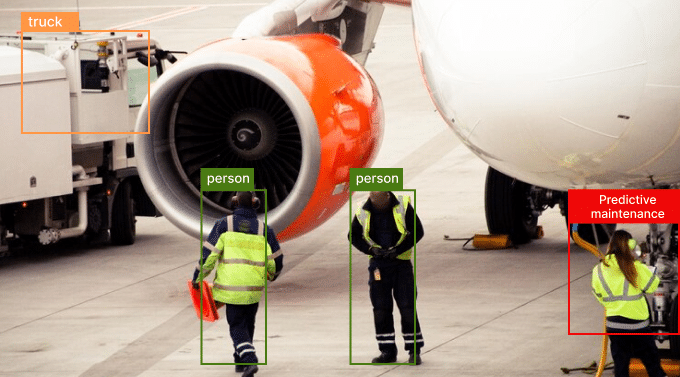
As per the latest report, it can be estimated that the global market size is expected to grow from USD 1.5 billion in the year 2020 to USD 3.8 billion by 2025 at a CAGR of 20%. This ample growth is determined by the increasing demand for automation and safety measures in the aviation industry. From real-time monitoring and analysis of aircraft elements to improving safety and diminishing maintenance costs. With the implementation of predictive analysis, potential maintenance glitches can be detected on time and repairs can be conducted preventing any major faults that could potentially increase expenses. With Computer Vision for Aviation Safetyit is possible to inspect aircraft elements, predict maintenance, enable timely repairs and prevent breakdowns in the aviation sector. 

Real-time tracking of passengers

Computer vision technology can seamlessly track passenger movements in the aviation sector, detect and analyze passenger behavior, recognize potential security risks, monitor crowd density and optimize passenger flow. It is valuable in security checkpoints, boarding gates, and baggage handling areas for embellishing safety protocols.                 

Object detection & recognition
Object Detection

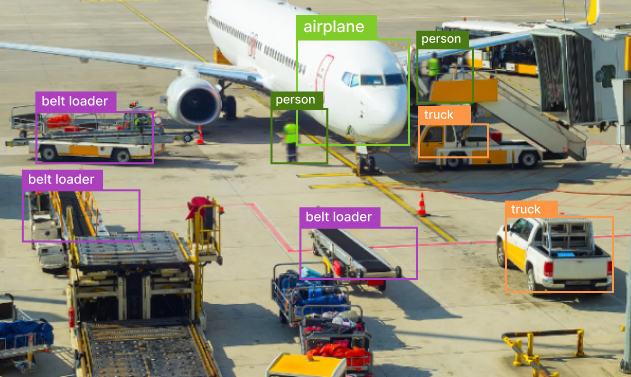
Using computer vision, object detection and recognition can improve security and safety measures within the aviation sector. Empowered with object detection, the technology can track and detect objects in real-time enabling early detection of potential hazards and faster response times. It is majorly used for baggage screening, aircraft maintenance and runway surveillance, thereby effectively streamlining airport operations. 

Intelligent baggage handling
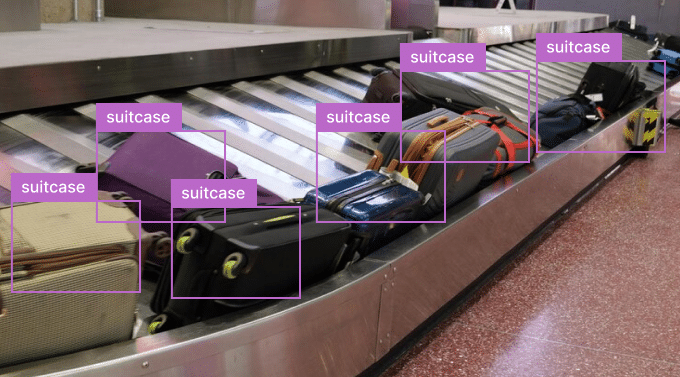
Baggage Handling

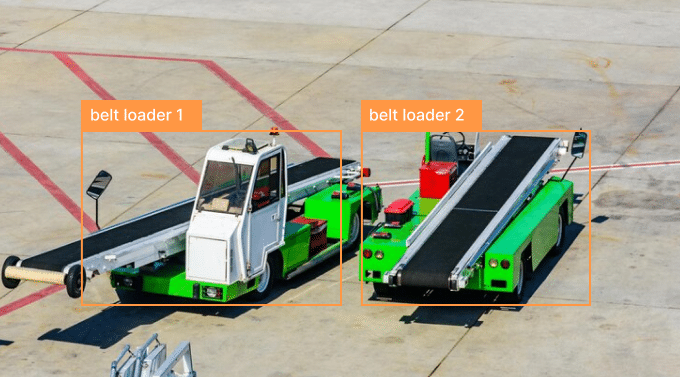
Deep learning systems can automatically read labels with machine vision to detect trolleys and their respective locations. It assists in improving the efficiency of the baggage handling process and diminishes the chances of lost luggage. Computer vision systems harness cameras for scanning the tags on luggage and matching them with valuable data in the airline database. Visual deep-learning applications assist in identifying and localizing ground vehicles at airports. It increases the efficacy of managing and distributing baggage carts. AI in Object detection can be used to prevent major terror incidents by early identification of unknown objects at airports.      

Face recognition

Facial recognition powered by computer vision AI can identify passengers at airports. AI software helps in comparing the passenger’s face to a database of images that have been pre-loaded into the system. It can perform face detection and recognition with IP cameras. The technology is empowered to streamline the boarding process and ensure that all passengers have boarded the plane. For investigation purposes, it is used to identify suspected criminals. 

Cargo inspection & AI computer vision

With the utilization of advanced computer vision algorithms, airport authorities can inspect the cargo for any kind of potential threats comprising weapons, explosives, and narcotics. AI-powered cargo inspection assists in speeding up the process of cargo security processes. Harnessing deep learning models, the technology applies pattern recognition to image data from cameras. Neural networks are trained to detect annotated images of explosive materials.  

Airport safety & security

Computer vision can be seamlessly integrated into airport security applications. Within airport infrastructure cameras placed in important locations enable airport authorities to track people and object’s movements. Data updated in real-time assists in finding possible security threats and improving overall airport security. AI surveillance can be used to identify people trying to climb over fences, create large-scale heatmaps, observe perimeters for intrusions, and analyze movement patterns. 

Some valuable uses of computer vision involve real-time crowd analysis & crowd monitoring, tracking the movement of people & objects, diminishing the number of false positives in security checks, and fire & smoke detection. 

Computer vision AI in missile guidance

Artificial intelligence has come a long way with its immense potential to assist different fields of aerial weapon systems in military and defense applications. Vision AI plays a major role in guiding missiles and automates the process of operation seamlessly. By identifying the location and motion of objects, computer vision helps ensure that missiles target with accuracy. Image processing technology combined with intelligent AI sensors can detect any target while conventional detection is restricted to fire, heat and other signals.  

Key Takeaways

The aviation industry is making valuable use of computer vision for different applications for a wide range of purposes. Latest advances in emerging technologies enable the development of strategic robust machine learning solutions while significantly improving the cost of computer vision. The implementation of computer vision technology comes up with major challenges like extensive data processing capabilities and seamless integration with existing systems. 

Do you want to learn more about AI video analytics software and its applications in the aviation industry? Are you on the lookout for an advanced intelligence solution? Get in touch with our professionals and delve deeper into AI.
Important ways to enhance an engagement of deskless workers using digital signage

In frontline services and operations, the deskless workforce serves a major role that has been hugely accounted for by digital transformation. It has always been essential to look out for strategies to communicate with successful workers. Organizations and enterprises looking out for deskless employee retention rates should look for workplace digital signage solutions that offer better support and establish seamless engagement among deskless employees.   

Considering the deskless workforce comprises more than 85% of workers on a global basis, it is important to adopt more effective digital transformation strategies that support deskless workers in multiple ways. By using digital signage in the deskless workforce, employers can efficiently support deskless workers. In this blog post, we are going to emphasize the varied facets of how digital signage has enhanced the engagement cycle within a deskless working environment. 

Within a frontline working culture, there is very little engagement and opportunity for interaction between a deskless workforce and leadership. This can potentially lead to decreased productivity and work efficiency. Solutions may involve digital workplace stations, digital signage systems, mobile technologies and so forth. 

Digital Signage: Introducing a diversified digital transformation solution

digital signage software is a communication system that comprises multiple screens for showcasing visual and text-based messaging. Workplace digital signage can be harnessed for boosting high-end communications across a company. Herein one can utilize digital signage systems to embellish the engagement of deskless workers. 

Connecting better with the deskless workforce

Connecting Better With The Deskless Workforce

Staying over significant company announcements and updates can be terrifying if organizations utilize sticky-note methods to notify employees. These methods can be easily overlooked by deskless workers who are always on the go. For deskless employees on the job, the common concern most companies face is a lack of connected communication. This can potentially lead to employee dissatisfaction at work and hamper productivity. 

Digital signage used for deskless workspaces easily fills the gap between businesses and their deskless employees. It serves as an important tool to share relevant information and notify employees of news updates, event announcements, and company recognitions. Acting as a cultural tool, digital signage can connect workers across diverse geographics. 

Encourage learning prospects

Workers choose their skills and engage in task-related operations in a more complicated decision-making process. Companies can take the initiative to share information and stimulate discourse by displaying digital content through digital signage. This gives opportunities for employees to learn more and acknowledge internal possibilities.

Strengthen health and safety compliances

Strengthen Health And Safety Compliances

When it comes to businesses and enterprises that are operating in frontline industries such as distribution and manufacturing, employee safety can be of the utmost importance. With the integration of workplace digital signage, employees can acquire consistent messages associated with significant safety protocols that should be followed. Digital screens powered with digital signage systems will display different content before beginning a task. Digital screens can notify them of the various safety measures they need to take before beginning the task.  

Make your workers feel valued 

Low retention rates of deskless employees often complain of not having access to proper software which might place deskless workers at a disadvantage of not having proper communication within a deskless organization. Internal communications through digital signage solutions can gear up worker’s productivity within an organization. As workers begin to feel valued, their interest in company operations will lead to increased work efficiency.

Herein let’s take a look at the ways of implementing digital signage to disseminate information regarding recent company news updates, notifications and many more.  

Implementing digital signage to expand information relating to the company

Digital signage can be used for different functionalities such as disseminating recent corporate events and updates, promoting future events and administering information relating to company events. The utilization of digital signage in place of other time-consuming means like memos and printed leaflets is more effective. Effective communication within a deskless environment is necessary for maintaining a healthy atmosphere in the organization. 

During the last few years, there has been a relevant shift in the ways people communicate in the workplace. As digital signage has become more commonplace, companies now have access to digital signage to boost communication and engagement levels of deskless workers within an organization. 

Inspire staff with targeted information

Inspire Staff With Targeted Information

With advancements in technology, digital transformation has spread over major areas in frontline working culture. This has enforced the majority of usage of digital signage in deskless working environments. For instance, a short message addressed towards workers “Good morning, have a wonderful day” has a positive impact on your company’s team. One can organize better connections with the workforce in this way. By offering periodic recognition to workers for their hard work towards the organization, companies can retain employees.      

Final takeaway 

As companies continue to flourish holding hands with digital transformation, it became relevant for frontline companies to embrace and leverage digital signage solutions. Looking for a digital signage system for your business? Nextbrain is the leading Software Development company having expertise in creating cloud-based digital signage software solutions for clients. Our developers have expert technical knowledge and expertise in crafting effective digital signage for deskless workersThe software assists in reaching and maximizing engagement with the deskless workforce with ease. Connect with our professionals to learn more about digital signage.

Digital signage in manufacturing industry: How it optimizes operational communication

As per the latest digital signage industry statistics, it has been seen that the digital signage market size was worth $21.49 billion during the year 2020. However, it is estimated to reach $31 billion by the end of 2025. Less than 25% of manufacturing industry employees among 100% are engaged in work. This low engagement report has resulted in a productivity decline. Contrarily, higher workplace engagement leads to increased work productivity, better employee retention, greater company profits, and lesser workplace accidents.   

For garnering a powerful sense of employee engagement, workplace digital signage is one of the best strategies that can accomplish efficient communication in the manufacturing industry. With the implementation of live digital dashboards, digital displays and digital screens, workplace digital signage can overcome communication barriers in manufacturing. In this blogpost, we are going to lay emphasis on the optimization of operational communication in manufacturing with digital signage solutions. 

How does the traditional employee communication system lack efficiency? 

Several office environments can easily rely on email, Intranet and face to face meetings for communication. SMS and emails cannot be the only point of communication in factories and industries where these methods are not always available. There are times when employees don’t carry their mobile phones. Therefore, more meaningful ways of communication were important for boosting the overall operational communication within the manufacturing industry. 

Effectiveness of digital signage in manufacturing industry

Effectiveness Of Digital Signage In Manufacturing Industry

Digital signage has major functionalities within a manufacturing ecosystem. Let’s take a look at the major uses for digital displays throughout a manufacturing facility.

Communication of internal facility messages           

Digital signs can be used for displaying several work declarations Digital signage solutions help to manage digital screens placed at different locations throughout a production facility at different times. 

Motivation of workforce

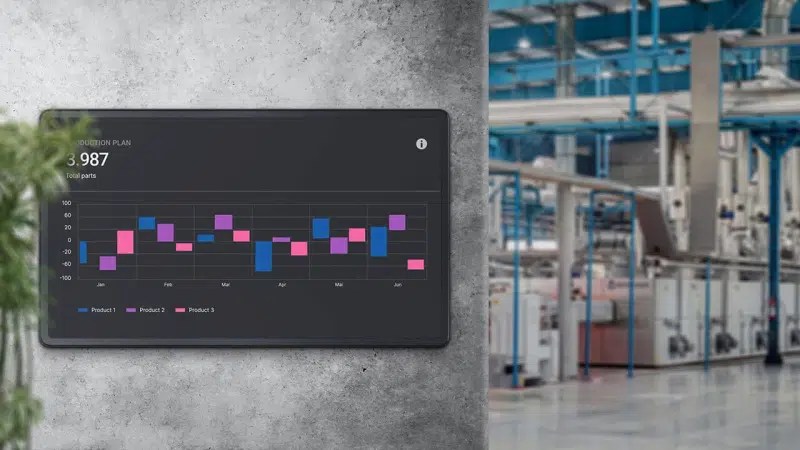
There are times when it becomes difficult to forecast actual production metrics, quality information and many more. Digital signage software solutions have made it possible to livestream company data visualization of healthy safety data, production metrics, quality data and several operational data. Digital signs have the potential to show in a factory the percentage of risk involved in a task and can encourage employees to work from a safer side. It can augment employee productivity and engagement too.

Alerts & notifications of emergency conditions

Alerts  Notifications Of Emergency Conditions

If organizations and manufacturing industries have live digital signage, it can alert employees of emergencies in addition to immediate steps to follow. In this scenario, digital dashboards can be very specific regarding emergency situations  so that employees can take the safest course of action. Dynamic digital signage systems can easily grab the attention of employees rather than static media. Digital signage can remind employees regarding the relevance of wearing PPE, demonstrate security procedures and highlight potential hazards in the workplace. 

Potential tool of communique

Digital signage is considered as the powerful way to communicate with a deskless workforce of the manufacturing industry. Digital screens can convey and broadcast significant information among employees within a manufacturing industry environment. In scenarios of security malfunctions and power outages, digital signage becomes one of the best tools for communication. Digital screens within the workplace can display urgent notifications, emergency contact information and evacuation routes. 

Employee engagement

Having employees that feel detached from their employer can have a drastic effect on their workline. With the implementation of cloud-based digital signage solution, manufacturing workplaces can effectively handle issues resulting from disengaged employees. Most employees will take assistance from advanced technology to fix communication issues. With Nextbrain’s digital signage solution, organizations can easily create a screen to celebrate employee achievements leading to a positive work environment. Recognitions, monthly awards, conference targets, and quality standards can also be displayed using digital signage. Therefore, it motivates employees to strive for excellence.

Skill development & training 

In addition to employee engagement, workers should get a chance to acquaint themselves with self skill development areas. They are in search of continuous learning opportunities and skill development. More than 47% of frontline workers are in favor of using technology to improve employee training. For instance, a digital signage screen closer to a manufacturing machine can show visual instructions on the ways to operate it efficiently. Various manufacturing companies are using digital signage for upskilling current workers, for providing in-depth training, advertising training workshops and many other purposes. 

Time to rebuild internal communications with Nextbrain

In the 21st century, Nextbrain’s digital signage has proved to be one of the powerful means of communication across various industry sectors. Nextbrain works with a broad spectrum of customers in distinct industries including manufacturing, education, corporate, fitness, retail, hospital, and many more.

Nextbrain digital signage offers :

  • Effective digital screen management platform   
  • Manage multiple screens across multiple locations
  • Potential content management system
  • Secure display of business-critical information
  • Creating a business case for demonstrating ROI of digital signage for organizations.

Conclusion

Digital signage has emerged as one of the game-changing technologies in operational communication specifically in manufacturing industries. Henceforth safety and efficiency are of immense importance. With the help of leveraging the power of real-time information, employee engagement, safety notifications and training, organizations are capable of unlocking the complete potential of the workforce. Right from displaying live KPI data to promoting a safety-first culture, from recognizing employee accomplishments to facilitating training experiences, digital signage solutions have covered most of the arenas enhancing communication cycle within an organization. Having a more informed and productive workforce will help in driving success to manufacturing companies. As the leading development company, Nextbrain adopts a proactive approach to building world-class digital signage solutions for manufacturing businesses. Having served clients globally Nextbrain have experienced developers with effective expertise in creating custom digital signage solutions catering to business requirements. Connect with our expert individuals to have a complete knowledge of the digital signage solution.    

Generative AI vs Traditional AI: Understanding the vital differences that sets them apart

Artificial Intelligence (AI) has been reshaping industries, revolutionizing business processes, and optimizing operations across various sectors. AI has evolved from simple automation to complex systems capable of handling decision-making, problem-solving, and even content generation. Among its branches, Generative AI has emerged as a game-changer, surpassing traditional AI by creating entirely new data that mimics human-generated content.

As per economic projections, AI is expected to contribute around $15.7 trillion to the global economy by 2030. Over 85% of businesses have made AI integration a top priority, leveraging its capabilities for improved efficiency and innovation. However, while AI adoption is increasing, many organizations do not fully comprehend the difference between traditional AI and Generative AI.

This article highlights the key characteristics, differences, and real-world applications of both traditional AI and Generative AI. As a leading AI development company, Nextbrain offers innovative solutions that define the significant distinctions between Generative AI and traditional AI, empowering businesses with AI-driven intelligence.

Comprehending Traditional AI

Traditional AI operates on predefined rules and logical structures that mimic human cognitive functions. It analyzes data, interprets inputs, and maximizes efficiency for achieving specific goals.

Core Technologies of Traditional AI

Machine Learning

Machine learning focuses on algorithmic models that identify patterns within data, enabling AI-driven decision-making. It powers recommendation systems that predict user preferences based on historical data.

Deep Learning

Deep learning utilizes neural networks with multiple layers to process large datasets. This technology enables advancements in speech and image recognition, facilitating the development of autonomous vehicles and virtual assistants.

Natural Language Processing (NLP)

NLP allows computers to comprehend, interpret, and generate human language, supporting applications such as chatbots, translation services, and sentiment analysis.

Computer Vision

Computer vision equips AI with the ability to analyze visual data, extract insights, and support industries like healthcare and agriculture. It is instrumental in medical image analysis and monitoring crop health using aerial imagery.

Key Characteristics of Traditional AI

  • Task-Specific Performance: Traditional AI is designed to solve predefined problems and perform specific tasks efficiently.
  • Rule-Based Decision-Making: It relies on structured datasets and established rules to make informed decisions.
  • Data Dependency: Traditional AI depends on structured and labeled datasets to function effectively.
  • Limited Adaptability: It struggles to handle tasks beyond its preprogrammed data and logic.

Despite these limitations, traditional AI offers several strengths, including high accuracy, automation of repetitive tasks, and scalability for large-scale operations. However, with AI evolving, Generative AI presents a new dimension that surpasses traditional AI’s capabilities.

What is Generative AI?

Generative AI focuses on processing and understanding data to create new content, including text, images, music, and videos. Unlike traditional AI, it does not depend on predefined rules but leverages machine learning algorithms to analyze patterns and generate outputs that mimic human creativity.

Generative AI tools are highly adaptive and capable of learning from new data. When compared to traditional AI models, Generative AI exhibits greater flexibility and autonomy.

Core Features of Generative AI

  • Unstructured Data Learning: Generative AI processes and learns from diverse, unlabeled datasets.
  • Enhanced Adaptability: It dynamically tackles tasks without explicit pre-programming.
  • Content Creation: Generates unique outputs based on data patterns.
  • Contextual Understanding: Unlike traditional AI that primarily analyzes data, Generative AI comprehends content to produce relevant outputs.

Core Differences Between Generative AI and Traditional AI

1. Adaptability

Traditional AI requires retraining with new datasets to adapt to evolving requirements, whereas Generative AI dynamically refines its outputs based on new inputs, making it more flexible.

2. Functionality

Traditional AI primarily analyzes existing datasets and identifies patterns, whereas Generative AI creates new data, such as generating images, text, or music based on learned patterns.

3. Data Requirements

Traditional AI relies on structured, annotated datasets, whereas Generative AI learns from unstructured data, requiring greater computational power and cloud-based deployment for optimal performance.

4. Innovation

Generative AI’s ability to generate new content from vast datasets differentiates it from traditional AI, which is confined to rule-based execution.

5. Problem-Solving Approach

Traditional AI relies on logical deduction and predefined rules for problem-solving, whereas Generative AI applies a dynamic approach, learning from patterns and producing innovative solutions.

Impact of AI Across Industries

Warehousing

Warehousing operations involve complex logistics and real-time monitoring. AI-powered computer vision enhances warehouse management by detecting packages, monitoring safety compliance, and optimizing processes. Generative AI complements traditional AI by providing predictive analytics and recommendations to streamline operations.

Manufacturing

Traditional AI, particularly computer vision, has significantly improved manufacturing processes by detecting defects, ensuring product quality, and maximizing efficiency. Generative AI plays a complementary role by generating synthetic datasets to train AI models for predicting machine failures and optimizing production schedules.

Mining

Computer vision AI is extensively used in the mining sector for real-time hazard detection, PPE compliance monitoring, and machinery maintenance. Generative AI enhances these applications by simulating emergency scenarios such as oil leaks, enabling AI models to predict and mitigate risks effectively.

Finance

The financial industry depends on AI for risk assessment and investment strategies. Traditional AI processes historical data to detect fraud and optimize decision-making. Generative AI augments financial intelligence by forecasting market trends and generating predictive models for risk management.

Healthcare

AI is transforming healthcare through data analysis, diagnostics, and resource optimization. Traditional AI analyzes vast medical datasets for disease detection, while Generative AI accelerates drug discovery, patient record synthesis, and personalized treatment plans.

Conclusion

Traditional AI and Generative AI represent two sides of the AI spectrum. While traditional AI is designed for rule-based problem-solving and task automation, Generative AI introduces a new level of creativity and adaptability. Both AI models are integral to industry advancements, enhancing productivity, safety, and innovation.

As AI continues to evolve, businesses must leverage the strengths of both traditional and Generative AI to drive transformation. Nextbrain, a leading Generative AI development company, empowers organizations with AI-driven solutions to optimize business processes and drive intelligent decision-making. If you are looking to integrate AI into your operations, connect with our professionals to discover the best AI solutions tailored to your business needs.

Be transformative & explore the advantages of people counting in smart buildings & offices

In the recent global digitalization, smart buildings and smart offices are gaining immense popularity over time. One of the primordial reasons for the increasing popularity of smart offices lies in their potential to improve productivity, efficiency and sustainability. As entrepreneurs invest more in smart digital solutions, visitor experience can be enhanced by administering real-time data regarding occupancy and usage patterns. 

People counting solutions in smart buildings can be a game-changer in the recent era. It is recognized across a wide spectrum of building types. This blog post sheds light on how people counting solutions have been influential in applications across smart buildings and offices. 

The technology is designed to contribute to the overall security and safety of spaces. It keeps track of the number of people entering or exiting the building. This can be relevant to providing real-time data regarding usage patterns and occupancy. By administering timely and accurate data, the solutions can greatly aid in ensuring the safety of the occupants. 

In this blog, we are going to explore the relevant benefits of people counting technologies. 

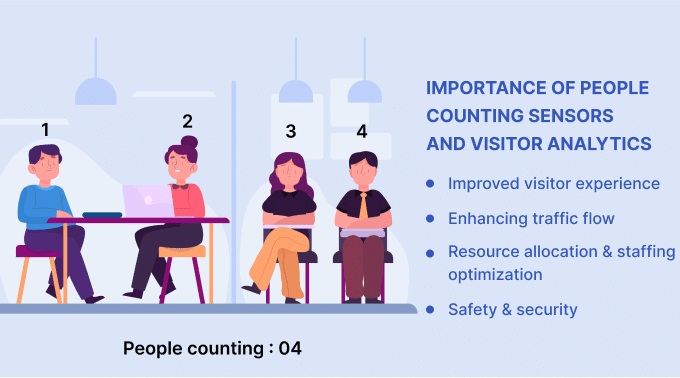
Importance of people counting sensors and visitor analytics 

How Footfall Counting Can Be Used In Retail Businesses 1

In order to execute people counting solutions effectively, technologies are integral to providing accurate insights and real-time actionable insights. It can drive decision-making processes acknowledging a more strategic approach to managing resources. People counting software keeps an overall track of how many people occupy a given space at a given time. 

It provides a rich source of information that can be put into informed decision-making. Additionally, it provides managers with exact data collection and informed strategic decision-making. AI-powered people-counting technology helps in transforming video data into actionable insights making informed decisions and optimizing processes. Visitor analytics seamlessly reveals relevant data including visitor demographics, optimize product offerings, and allocating resources effectively. 

In this context, we can take a look at the major benefits of people counting in smart offices and buildings. By harnessing this data, managers can improve the overall efficiency of the building resulting in a better experience for occupants.               

Improved visitor experience

Public offices like museums, train stations, and buildings are often experiencing high footfall during peak seasons and hours of operation. By executing people counting technology, users can accurately analyze visitor traffic enabling them to identify peak periods. With real-time data on people count, visitors can have a positive experience resulting in satisfaction and repeated visits. 

Enhancing traffic flow

Within a crowded area, traffic flow management can be tedious. Having real-time data on occupancy levels and traffic flow, managers can take proactive measures to improve visitor flow management. The data collected regarding demographics and visitor flow can help retail managers make informed decisions to improve the overall visitor experience.

Resource allocation & staffing optimization

Monitoring of traffic flow in a specific premise assists in optimizing staffing levels and resource allocation. Gathering real-time data regarding the visitor’s count will give a precise idea of the peak periods of visitor traffic. Having accurate data regarding visitors, managers can adjust staffing levels accordingly.

Safety & security

When it comes to offices and buildings, the occupants inside comprise mainly employees and staff. Therefore, safety and security are of utmost importance. It provides real-time updates on the total people count and displays the occupancy levels at all entrances. With visitor analytics promoting real-time monitoring of data, the building and office authority can keep track of safety regulations and prevent overcrowding. 

Live updates play a major role in maintaining the safety and comfort of the building. At Nextbrain, we have crafted an efficient AI video analytics technology for smart buildings and offices. Leveraging video data, it generates actionable insights in real time. 

Major applications of people counting technology

Museums

The data from people counting solutions can be used to comprehend the footfall. Footfall data can be used in museums to help in decision-making about budgets, staff and space.   

Art galleries

Art galleries and public institutions can use data from people counting technology to better comprehend space occupancy. It helps in improving visitor experience and visitor safety through excellent resource allocation.                             

Public libraries

Footfall technology plays a major role in delivering relevant advantages to public libraries. It effectively monitors footfall during peak and non-peak seasons based on real-time data and traffic forecasting.  

Retail & cafeterias

AI video analytics technology uses computer vision and deep learning algorithms to analyze video streams in public places. It generates actionable insights depending on the video data. It enables retail and cafe managers to maximize their resourcing and enhance visitor experience. 

Final thought

By implementing people counting software in smart buildings and offices, businesses can enhance visitor experience, ensure safety, optimize traffic flow and prevent overcrowding. People counting technology helps in adjusting building systems depending on occupancy levels. By leveraging the power of data analytics, businesses can elevate visitor experience, increase efficiency, and promote sustainability.  As the leading development company, Nextbrain has a dedicated team of professionals having many years of expertise in creating solutions for different industries. 

Get in touch with our experts to know more.

Smart factories of the future: How generative AI is reshaping manufacturing processes

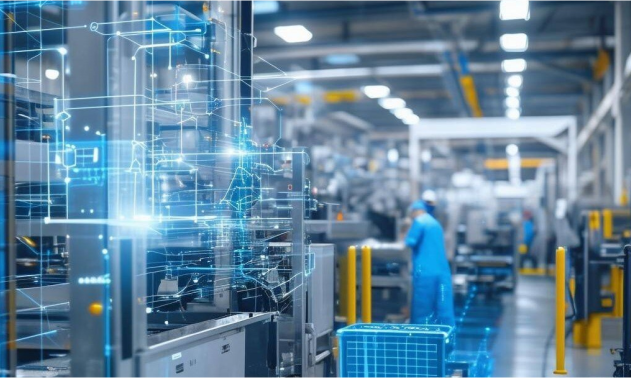
The industrial sector has been at the forefront of technological innovation, from the early days of mechanization to the current age of digital transformation. Emerging technologies are now driving the industry revolution, and one of the most influential among them is generative AI. With the rise of automation, generative AI is replacing traditional manufacturing challenges, such as supply chain disruptions, with streamlined solutions that boost productivity and customer service. In smart manufacturing, generative AI leverages real-time data from sensors and other data streams to enhance processes, driving both innovation and efficiency.

According to the 9th Annual State of Smart Manufacturing Research Report by Rockwell Automation, generative AI is set to remain a top priority for manufacturers in the coming year. In this blog, we will explore how generative AI is reshaping the manufacturing landscape and the key advantages it brings to smart manufacturing companies.

The Importance of Generative AI in Smart Manufacturing

Generative AI is revolutionizing industrial operations by optimizing production processes and enhancing overall efficiency. By using real-time data from interconnected devices, generative AI can automate workflows, accelerate decision-making, and minimize downtime. This innovation enables engineers to explore design options through natural language before refining them with conventional tools, streamlining the design and development cycle.

What is the Scope of Generative AI in Manufacturing?

Generative AI in the manufacturing sector is empowered to create results based on insights and patterns derived from vast data sets. Its applications across the manufacturing domain are creating unprecedented opportunities for efficiency, innovation, and cost reduction. From optimizing production schedules to enhancing product designs, generative AI is at the forefront of transforming manufacturing processes. Let’s explore some of the key applications of generative AI in manufacturing, where its potential is proving to be a game-changer.

1. Process Optimization

Generative AI can optimize manufacturing processes by suggesting production schedules, machine settings, and resource allocation strategies. This results in improved efficiency and productivity across production lines.

2. Product Design & Development

Generative AI is capable of creating and modifying product designs based on performance requirements and manufacturing constraints. By accelerating the design process, it helps manufacturers generate unique and optimized solutions quickly.

3. Quality Control

Generative AI is becoming increasingly important in quality control by creating predictive models that can detect defects in real-time. This reduces the time and costs associated with traditional quality control processes, ensuring superior product quality.

4. Predictive Maintenance

Generative AI can predict potential equipment failures and maintenance needs by analyzing real-time data from sensors and maintenance logs. This proactive approach helps minimize downtime and ensures that machines are running at peak efficiency.

5. Supply Chain Management

Generative AI can significantly enhance supply chain operations by optimizing inventory management, forecasting demand, and assessing risks. It enables manufacturers to navigate complex global supply chains more effectively.

6. Real-time Problem Solving with AI

Manufacturing facilities often face challenges such as lack of real-time visibility and equipment malfunctions. Generative AI, by leveraging real-time data, can identify patterns and irregularities, helping to implement immediate corrective actions, including predictive maintenance solutions.

7. Continuous Improvement

Generative AI encourages continuous learning by generating insights based on real-time feedback. This capability allows manufacturers to stay ahead of industry standards and adapt to evolving demands.

How is Generative AI Effective in Manufacturing and Related Business?

Smart factories can significantly reduce overall organizational expenses ensuring that the right products are available at the right time in the market. If you are looking for the right AI development companythen you should be going through the major criteria that make the  company right for your project. As of the frontline, manufacturing companies should prioritize investments in Generative AI services to stay ahead of the curve. 

1. Strategic Decision-Making

Generative AI analyzes large datasets quickly and provides actionable insights that empower manufacturers to make informed decisions about their operations, from production to resource allocation.

2. Resource Optimization

Generative AI is transforming resource management in manufacturing by identifying areas where resources can be optimized, reducing waste, and cutting costs. By utilizing advanced algorithms, generative AI provides a holistic view of resource utilization, helping streamline operations.

3. Advanced Efficiency

Generative AI supports numerous aspects of manufacturing, from workflow optimization and design ideation to supply chain management and quality control. By automating key processes, it boosts product development and enhances operational efficiency.

Probable Use Cases of Generative AI in Manufacturing

Generative AI relies on advanced technologies like Generative Adversarial Networks (GANs) to create new designs by learning from patterns within large datasets. In the automotive industry, for example, GANs are used to generate car designs based on consumer preferences. Here are some potential use cases for generative AI in manufacturing:

1. Computer Vision

Computer vision powered by generative AI is revolutionizing quality control. By detecting flaws during production, it helps manufacturers minimize defects without human intervention, ensuring consistent quality.

2. Scalable Solutions for Smart Manufacturing

As manufacturing processes become more complex, the need for scalable AI solutions grows. Generative AI can provide a comprehensive solution for seamlessly deploying AI across various manufacturing use cases, enabling smart factories to adapt to changing demands.

Final Thoughts

Generative AI is a transformative force in the manufacturing sector, enabling manufacturers to streamline processes, enhance product development, and optimize supply chain operations. By generating innovative insights and fostering continuous improvement, generative AI unlocks new possibilities for value creation in smart manufacturing. As manufacturers continue to embrace these technologies, prioritizing investments in generative AI services will be key to staying ahead of the competition and adapting to an ever-evolving business environment.

To learn more about the potential of generative AI and how it can advance the efficiency of manufacturing operations, explore our AI-driven manufacturing data analytics solutions.

How Generative AI is Transforming Manufacturing: Revolutionising the Smart Factory

Industrial sectors have consistently embraced technological advancements, evolving from the mechanization era to today’s digital transformation. Among emerging technologies, Generative AI stands out as a game-changer in the manufacturing sector. By addressing traditional challenges such as supply chain disruptions and inefficiencies, Generative AI enables automation, accelerates design iterations, and scales production with ease. It leverages real-time sensor data and diverse information streams to optimize processes and revolutionize smart manufacturing.

According to the 2024 Rockwell Automation’s 9th Annual State of Smart Manufacturing Research Report, Generative AI remains a top investment priority for manufacturers. This blog explores the capabilities of Generative AI in the manufacturing industry, its applications, and how it benefits smart manufacturing companies. By transforming machines into creative partners, Generative AI enables innovation and ideation like never before.

The Role of Generative AI in Smart Manufacturing

Generative AI in the Smart Manufacturing sector is revolutionizing the manufacturing landscape by optimizing production processes and enhancing organizational efficiency. By leveraging real-time data from interconnected devices, this technology automates workflows, accelerates decision-making, and reduces downtime. Unlike traditional methods, Generative AI in the Smart Manufacturing sector introduces rapid iteration cycles that empower engineers to explore and refine design options using natural language and advanced tools.

Applications of Generative AI in Manufacturing

Generative AI unlocks unprecedented opportunities for efficiency and innovation across manufacturing domains. Here’s how it is applied in various aspects of manufacturing:

1. Process Optimization

Generative AI analyzes data to suggest optimized manufacturing processes, including production schedules, machine settings, and resource allocation. This leads to increased efficiency and productivity.

2. Product Design & Development

Generative AI accelerates product design by creating and refining designs based on performance requirements and manufacturing constraints. This results in innovative, high-performing solutions.

3. Quality Control

Generative AI creates advanced models that detect and predict defects in real time. This ensures superior product quality while reducing the time and costs associated with traditional quality control methods.

4. Predictive Maintenance

By predicting maintenance needs and equipment failures, Generative AI enables manufacturers to implement proactive strategies. This minimizes downtime and ensures operational continuity.

5. Supply Chain Management

Generative AI optimizes inventory, forecasts demand, and assesses risks, allowing manufacturers to manage complex global supply chains effectively.

6. Real-Time Problem Solving

Manufacturers often face challenges like equipment malfunctions and lack of real-time visibility. Generative AI identifies patterns in maintenance logs, predicts glitches, and suggests actionable solutions to address issues immediately.

7. Continuous Improvement

Generative AI promotes continuous learning by generating insights based on real-time data and feedback. This helps manufacturers meet current standards and anticipate future industry trends.

How is generative AI effective in manufacturing & related business?

Smart factories can significantly reduce overall organizational expenses ensuring that the right products are available at the right time in the market. If you are looking for the right AI development companythen you should be going through the major criteria that make the  company right for your project. As of the frontline, manufacturing companies should prioritize investments in Generative AI services to stay ahead of the curve. 

Strategic Decision-Making
Generative AI has the remarkable ability to process vast amounts of data swiftly, providing actionable insights that empower manufacturing facilities to make informed strategic decisions.

Resource Optimization
Today, many manufacturing companies are adopting Generative AI as a powerful tool for resource optimization. By leveraging advanced algorithms, this technology offers a comprehensive view of resource utilization, helping companies streamline operations and identify cost-saving opportunities.

Enhanced Efficiency
Generative AI automates a range of processes, from workflow optimization and ideation to design, supply chain management, and quality control. This automation helps improve product development and boosts overall operational efficiency.

Use Cases of Generative AI in Manufacturing

Generative Adversarial Networks (GANs)

Generative AI uses GANs to analyze patterns in large datasets and create new designs. For instance, automotive manufacturers utilize GANs to generate and refine car designs based on consumer preferences.

Computer Vision

Vision AI paired with Generative AI enables automated quality control by detecting flaws during production. It simulates corrections in real time, reducing defects without human intervention.

Scalable Solutions for Smart Manufacturing

Given the growing complexities of manufacturing processes, Generative AI provides scalable solutions that seamlessly adapt across various use cases, ensuring smooth deployment and operation.

The Impact of Generative AI on Manufacturing Businesses

Smart factories equipped with Generative AI can significantly lower operational expenses while ensuring timely delivery of high-quality products. Here’s why manufacturing companies should prioritize investments in Generative AI:

  • Streamlined Operations: Generative AI supports businesses by optimizing every aspect of the manufacturing process, from design to supply chain management.
  • Enhanced Innovation: By acting as a creative partner, Generative AI enables manufacturers to develop innovative solutions that meet evolving market demands.
  • Future-Ready Strategy: Companies leveraging Generative AI gain a competitive edge by aligning with future trends and industry standards.

Final Thoughts

Generative AI is redefining the manufacturing landscape by streamlining processes, accelerating innovation, and optimizing operations. From improving product design to enhancing supply chain management, this transformative technology unlocks new possibilities for creating value. As manufacturing evolves, investing in Generative AI services is no longer optional—it’s a necessity for staying competitive in an ever-changing industry.

If you’re looking to explore the real potential of Generative AI in manufacturing or need advanced AI-driven data analytics solutions, now is the time to act. Empower your business with the latest technological advancements to unlock efficiency, innovation, and long-term success.

Generative AI in healthcare: Unveil the strategic growth & transformative potential of AI

Artificial intelligence has revolutionized the entire tech world. Its potential to revolutionize administrative tasks, supply chain operations and resource management has made it a pivotal innovation in the healthcare sector. As per the latest study research, it has been seen that globally Gen AI technologies are majorly adopted by healthcare verticals. Integration of AI into medical facilities has indeed revolutionized different prospects of healthcare services and management.

In this blog post, we will delve deep into the diverse applications of Generative AI in HealthcareThe context aims at exploring the way Gen AI is reshaping the future of healthcare and improving patient outcomes through data-driven insights and decision-making potentials.

Generative AI capabilities: A game-changer for business transformation   

Trained on vast sets of healthcare data, Generative AI models can generate important insights for healthcare practitioners. Right from boosting efficacy to fostering innovation across the healthcare ecosystem, Generative AI is highly transformative. It empowers healthcare professionals to capture and process patient information in real time thereby improving the accuracy and speed of data handling. 

By implementing Gen AI in healthcare, it generates text-based responses enhancing diagnostic accuracy, streamlining administrative tasks and personalizing patient services. 

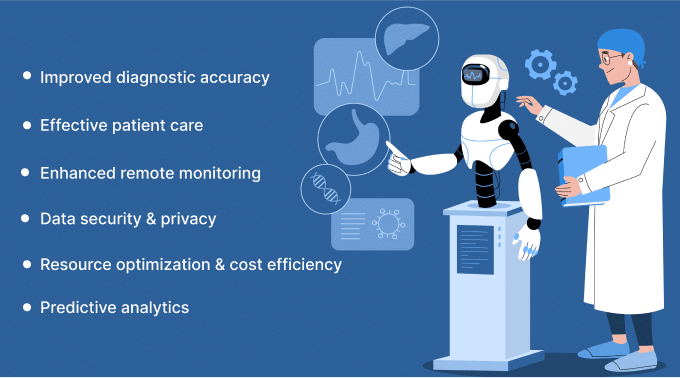
Benefits of AI in healthcare: the paradigm intelligence solution

Benefits Of AI In Healthcare

The integration of AI technology in healthcare comes with a plethora of benefits. 

Improved diagnostic accuracy

Generative AI promotes the development of remote monitoring systems allowing continuous tracking of patient health record 

Effective patient care

The technology has enabled the automation of routine tasks through AI technology. Certain healthcare tasks accomplished manually could lead to potential flaws. Automation resulted in streamlined processes for both providers and patients. 

Enhanced remote monitoring

Supports remote monitoring of patient care in real-time to enable smooth tracking of their records. These insights are important for patients with critical conditions. Real-time monitoring enables medical professionals to stay updated with recent results. 

Data security & privacy

Gen AI has contributed to the overall developmental prospects of telehealth infrastructure. It can easily address concerns relating to patient privacy and data security. This maintains a healthy trust in telemedicine services. 

Resource optimization & cost efficiency

Automation of specific healthcare tasks can result in cost savings for both healthcare providers. It eradicates the requirement for physical infrastructure, travel expenses and other related expenses. 

Predictive analytics

Artificial intelligence allows predictive modelling for forecasting patient outcomes, personalizing healthcare treatment plans, and preventing potential complications. 

Real-world applications of Generative AI in healthcare

Real World Applications Of Generative AI In Healthcare

Medical facilities have been undergoing massive revolution over the recent years. Here’s an overview of the real-world applications of Generative AI in healthcare.

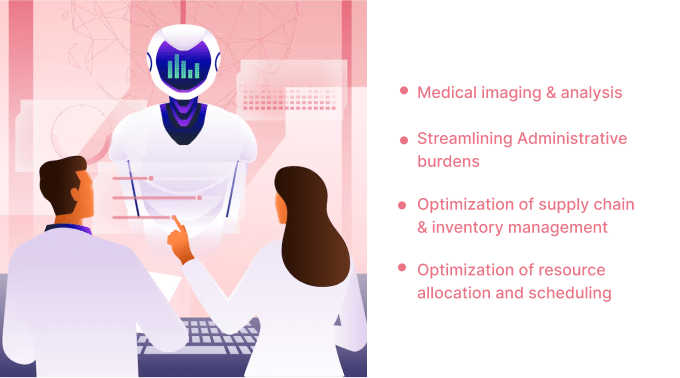
Medical imaging & analysis

Artificial intelligence in Healthcare is one of the revolutionary technological advancements. In medical industry verticals, harnessing AI algorithms can seamlessly analyze medical images such as MRIs, X-rays, and CT scans. The insights are highly accurate and help in treatment. 

Streamlining administrative burdens

Generative AI can make a relevant impact by embellishing administrative burdens. Gen AI models can be trained on medical records and billing data. It automates tasks such as documentation, claim submissions and coding, effectively reducing time spent on the tasks.

Optimization of supply chain & inventory management

Computer vision has a constructive impact on supply chain and inventory management. Implementing Gen AI models can make surveillance systems more searchable and intelligent. The models can easily analyze visual data in real time. It is capable of identifying overstocking or stockout situations, detecting irregularities in product management and many more. Potentially improving operational efficiency and preventing costly shortages, AI has proved influential in healthcare industries.

Optimization of resource allocation and scheduling

One of the challenging applications of generative AI is in the realm of resource allocation and scheduling. AI-driven scheduling systems can easily create optimized schedules that diminish wait times and maximize resource utilization. 

Additionally, there are multiple applications of Generative  Artificial intelligence in Healthcare industries. It can assist in drug discovery by simulating molecules and predicting drug interactions. 

What is the future of AI in healthcare?

AI has paved the way for relevant advancements and innovations that have the potential to transform patient care services. With several ongoing advancements aiming at advancing healthcare services, AI integration results in more informed decision-making and improvement in clinical practices. Gen AI can generate synthetic data quite similar to real-world medical scenarios. It enables healthcare experts to conduct experiments in a controlled environment. 

With responsible AI implementation, organizations need to consider the wider implications of AI technologies. Responsibility for proper AI integration involves leveraging AI potential for business growth and ensuring that AI applications are developed. 

Integration with multi-modal data

Future developments include the integration of AI with multiple data modalities. It involves proteomics, genomics and EHR. 

5G connectivity

Embracing 5G technology will easily contribute to faster and more reliable communication between healthcare services. It supports the growth of telemedicine and ensures improved experience for both patients and healthcare providers. 

Improved communications

Gen AI-driven chatbots and virtual assistants will become more sophisticated in their potential to comprehend and respond to natural language. It helps in seamless communication between healthcare providers and patients. 

Conclusion

The importance of generative AI in healthcare is constantly updating and improving every day. Nextbrain Technologies is the leading Generative AI development company providing a wide range of Gen AI services. With the successful integration of AI, healthcare verticals can leverage the primordial benefits of Generative AI. We have dedicated AI professionals who ensure optimum solutions for business growth across different industries. 

To learn more about Generative AI, connect with our experts and get detailed knowledge about Artificial Intelligence.

Popular Computer Vision Use Cases in the Pharmaceutical Industry

The pharmaceutical industry, which is known for its complex operations and regulatory requirements, is increasingly adopting advanced technologies like computer vision. This branch of artificial intelligence (AI) enables machines to interpret and make decisions based on visual inputs. Computer vision plays a crucial role in automating tasks, improving efficiency, ensuring compliance, and enhancing product quality.

Below are some of the most popular and impactful use cases of computer vision in the pharmaceutical industry:

1. Automated Quality Control and Inspection

In the pharmaceutical industry, maintaining the highest standards of product quality is vital for patient safety. Computer vision in the pharmaceutical industry plays a crucial role in automating quality control processes and ensuring compliance with stringent regulatory requirements.

  • Packaging Inspection: Automated vision systems powered by computer vision are used to detect defects or discrepancies in packaging. These systems ensure that labels, barcodes, and packaging are correctly placed, readable, and free from damage. By employing computer vision, pharmaceutical companies can automatically identify issues such as incorrect labels, missing or double labels, and packaging damage that might have been missed by human inspectors.
  • Tablet or Pill Inspection: Computer vision is used to examine tablets or pills on production lines for defects like discoloration, cracks, or incorrect shapes and sizes. These systems utilize advanced image recognition algorithms to ensure that every unit is of the highest quality before it reaches the consumer. By using computer vision in the pharmaceutical industry, manufacturers can improve precision, reduce human error, and ensure that only high-quality products make it to market.

Incorporating computer vision into the quality control process not only increases efficiency but also helps pharmaceutical companies maintain rigorous standards of quality assurance across production lines.

2. Track and Trace Systems

One of the critical challenges in the pharmaceutical industry is ensuring the integrity of the supply chain. Counterfeit drugs and product diversion are significant concerns, and computer vision provides a solution to these problems.

  • Serializing Products: Computer vision systems can read and verify serial numbers, barcodes, and QR codes on packaging to track products from the production line to the consumer. This serialization ensures that every product can be traced at each stage of its journey, helping to prevent counterfeit drugs from entering the market.
  • Real-Time Monitoring: Computer vision can also be integrated with blockchain technology to provide real-time, transparent tracking of drugs, helping to combat fraud, theft, and counterfeit distribution.

3. Drug Discovery and Development

The pharmaceutical industry’s drug discovery and development processes are both time-consuming and costly. Computer vision can significantly streamline these stages by automating tedious manual tasks and providing more accurate data.

  • Microscopic Imaging: In drug discovery, microscopic images of cells or tissues are often examined to study the effects of potential drugs. Computer vision algorithms can analyze these images to identify patterns or anomalies, helping researchers quickly determine the efficacy of a drug or treatment.
  • Cell Counting and Monitoring: Vision systems can be used to count cells or monitor their behavior in response to various drugs. This helps researchers speed up the process of screening potential drug candidates and developing therapies.

4. Robotics and Automated Production

In pharmaceutical manufacturing, robots play a crucial role in ensuring precise handling of products and materials. Computer vision is integrated into robotic systems to enhance their capabilities, enabling them to perform tasks that were previously impossible or too risky for humans.

  • Assembly Line Automation: Computer vision-equipped robots are capable of identifying and sorting different pill shapes, sizes, and colors during the production process. These systems also perform packaging tasks such as placing blister packs into cartons or stacking products for shipping.
  • Material Handling: In warehouses and distribution centers, computer vision helps robots navigate the environment, identify products, and place them accurately in storage areas. This reduces human labor, increases speed, and minimizes the risk of errors.

5. Personalized Medicine

Personalized medicine, which tailors treatments based on an individual’s genetic makeup or other specific factors, is one of the most promising advancements in healthcare. Computer vision plays a role in improving personalized medicine by analyzing visual data in combination with patient information.

  • Patient Monitoring: Computer vision systems can be used to monitor patients for physical symptoms or side effects of medications. For example, vision systems can assess facial expressions or body movements to determine if a patient is experiencing pain, distress, or other side effects.
  • Drug Response Prediction: By analyzing medical imaging or biological samples, computer vision can aid in predicting how a patient might respond to a particular drug, allowing for more effective and customized treatment plans.

6. Clinical Trial Monitoring

Clinical trials are a critical phase in the drug development process. Computer vision technology helps optimize the management, monitoring, and analysis of clinical trial data.

  • Remote Monitoring: Computer vision systems can analyze medical imaging data from trial participants, enabling remote monitoring without the need for physical visits. This reduces the burden on participants and researchers, making clinical trials more efficient and accessible.
  • Patient Adherence: Computer vision can be used to track patient adherence to trial protocols, including how consistently they take their medication, which is critical for accurate trial results. It can also monitor patients’ reactions to medications, ensuring that side effects or adverse reactions are captured promptly.

7. Regulatory Compliance and Documentation

The pharmaceutical industry is heavily regulated, and companies must comply with strict guidelines related to product quality, safety, and labeling. Computer vision can streamline processes to ensure compliance with regulatory standards.

  • Label and Documentation Verification: Computer vision can read and verify labels on pharmaceutical products to ensure that all necessary regulatory information is included. It also helps verify that the correct batch number, expiration date, and other important details are printed accurately on the packaging.
  • Regulatory Audits: During audits, computer vision systems can quickly retrieve relevant visual documentation, such as packaging images or inspection records, reducing the time spent on manual searches and helping companies stay compliant.

8. Production Line Safety

Safety is paramount in pharmaceutical manufacturing, and computer vision can help ensure that safety protocols are followed. Vision systems monitor workers and equipment on production lines to detect potential hazards or safety breaches.

  • Personal Protective Equipment (PPE) Compliance: Computer vision can automatically check whether employees are wearing the necessary PPE, such as gloves, masks, or safety goggles. This helps reduce workplace accidents and ensures that employees are following safety guidelines.
  • Hazard Detection: Computer vision can also detect hazardous materials, spills, or broken machinery on the production floor. By alerting workers to potential hazards in real time, it can help prevent accidents and maintain a safe working environment.

9. Market Research and Consumer Insights

The pharmaceutical industry is increasingly focusing on consumer behavior and market trends to optimize product offerings and marketing strategies. Computer vision is being used to gain valuable insights from consumer interactions with products.

  • Consumer Interaction Monitoring: By analyzing how consumers interact with pharmaceutical products on store shelves, computer vision can provide insights into buying patterns, product preferences, and packaging effectiveness. This data helps pharmaceutical companies refine their marketing strategies and improve product placement.
  • Visual Search and Recommendation: Computer vision-powered visual search tools allow consumers to scan product packaging for more information, improving their purchasing decisions. Pharmaceutical companies can use this data to personalize marketing efforts based on consumer preferences.

Final Thought

In traditional times, pharmaceutical factories used to be based on manual and semi-automatic quality inspection processes involving operators, training and experience. Several loopholes involved in manual operations can cause issues in subjectivity, consistency and restricted accuracy.  In recent years, with the development of computer vision technology, digital video and image processing has never been easier before. Deep learning has begun achieving human-level performance for different tasks. At Nextbrain, we enable pharmaceutical companies to build and operate AI Video analytics software applications on different next-gen software infrastructure. The high-end platform offers an integrated set of tools for unveiling the full application lifecycle. Right from image annotation and training of specific object detection models to securing deployment and privacy-preserving deep learning at the edge, vision AI models administer machine learning teams with full-scale control. Leveraging advanced visual programming with automated development features can bridge the gap between a business and its processes.

Retail Footfall Counters: How Retail Can Sense Customer Behavior & Pattern with Advanced Technology

In the fast-evolving retail landscape, understanding customer behavior and patterns is no longer a luxury but a necessity. With increased competition and changing consumer expectations, businesses need innovative tools to stay ahead. Retail footfall counters, powered by advanced technology, have emerged as a transformative solution to help retailers gain valuable insights into customer behavior and patterns. This article delves into the importance of footfall counters, their functioning, and how they enable retailers to better understand and respond to customer needs.

The Role of Footfall Counters in Retail

Footfall counters in retail are devices or systems designed to track the number of people entering or exiting a retail store. Beyond simple headcounts, modern footfall counting solutions, such as footfall counting software, provide granular data about customer movement, peak hours, and interaction patterns within the store. This data is instrumental in:

  1. Analyzing Store Performance: Retailers can measure how many customers visit a store during specific periods and correlate this with sales data to determine conversion rates.
  2. Optimizing Staffing: By identifying peak hours, retailers can adjust staff schedules to ensure efficient customer service.
  3. Strategic Layout Design: Understanding how customers move through the store can guide the placement of products, signage, and promotional displays.

How Advanced Technology Powers Footfall Counters

Traditional footfall counters relied on manual clickers or simple infrared sensors. However, advanced technology has revolutionized these systems. The integration of AI, computer vision, and IoT has enhanced the accuracy and functionality of footfall counters. Key technologies include:

  1. AI-Powered Analytics: AI algorithms analyze large volumes of data, providing insights into customer demographics, dwell times, and buying behavior.
  2. Computer Vision: Cameras equipped with computer vision can track individual movements, differentiate between customers and staff, and even recognize repeat visitors.
  3. IoT Connectivity: IoT-enabled devices ensure seamless data collection and integration with other retail systems for real-time insights.
  4. Heatmap Technology: Heatmaps show which areas of the store receive the most foot traffic, helping retailers optimize layouts and product placements.

Understanding Customer Behavior with Footfall Counters

Retailers can use the data from footfall counters to uncover critical insights into customer behavior:

  1. Traffic Patterns: By analyzing entry and exit data, retailers can identify the busiest times and plan promotions or events accordingly.
  2. Dwell Time Analysis: Understanding how long customers spend in different sections helps identify areas of interest or bottlenecks.
  3. Engagement Metrics: Data on how customers interact with specific zones or products allows retailers to evaluate the effectiveness of marketing campaigns and in-store displays.
  4. Conversion Rates: Comparing footfall data with sales figures provides insights into how effectively a store converts visitors into buyers.

Benefits of Footfall Analytics for Retailers

  1. Improved Customer Experience: Insights into customer preferences enable personalized experiences, such as tailored promotions or better assistance during peak hours.
  2. Enhanced Marketing Strategies: Footfall data helps measure the impact of marketing efforts, enabling retailers to refine campaigns for better results.
  3. Data-Driven Decisions: With accurate data, retailers can make informed decisions about inventory management, store layout, and staffing.
  4. Operational Efficiency: Real-time insights help optimize store operations, reducing costs while improving service quality.

Real-World Applications of Footfall Counters

Retail footfall counters are being leveraged across various retail settings to deliver actionable insights:

  1. Malls and Shopping Centers: By tracking overall footfall, mall operators can measure the effectiveness of promotional events and adjust leasing strategies.
  2. Flagship Stores: High-traffic flagship stores use footfall data to enhance customer engagement and align in-store experiences with brand values.
  3. Small Retailers: Even small-scale stores can use footfall counters to manage inventory better and understand local customer preferences.
  4. Pop-Up Stores: Footfall counters provide crucial data for assessing the success of short-term retail initiatives.

Challenges and Solutions

While retail footfall counters offer numerous benefits, they come with challenges:

  1. Privacy Concerns: Tracking customer movement may raise privacy issues. Retailers must ensure compliance with data protection laws and use anonymized data.
  2. Integration with Legacy Systems: Integrating footfall counters with existing systems can be complex. Retailers need scalable and compatible solutions.
  3. Data Overload: Large datasets can be overwhelming without proper analytics tools. Leveraging AI-driven analytics ensures actionable insights.

Future of Retail Footfall Counters

The future of footfall counters lies in increased automation, enhanced analytics, and greater integration with other retail technologies. Trends shaping the industry include:

  1. Predictive Analytics: AI will enable footfall counters to predict customer behavior, allowing retailers to proactively adapt.
  2. Integration with Omnichannel Strategies: Footfall counters will align with online data to offer a unified view of customer journeys.
  3. AR and VR Integration: Augmented and virtual reality can provide additional layers of customer engagement, informed by footfall analytics.

Final thought

During the 21st century, the retail scenario has become increasingly relevant. Therefore it is important to embrace innovative solutions such as door counters, retail footfall tracking software, and others that benefit a clear understanding of customer behavior and preferences. Modern technologies deliver data-driven insights that lay the foundation for a seamless shopping experience.                           

Retail footfall counting systems offer relevant retail solutions analyzing customer pathways. Retailers can ensure visibility and accessibility potentially enhancing the sales conversions. Implementing retail footfall counters enables retail stores to enhance their shopping experience and enter the transforming era of retail solutions. Looking for a footfall-counting solution? Nextbrain is an excellent footfall tracking software that assists retail stores and businesses to ensure sustained growth and success. Get started with our system to acquire actionable insights relating to footfall data.

Design a site like this with WordPress.com
Get started